What an Injury Claim Might Be Worth
The value of an injury claim depends on the facts, not just the injury itself. This guide explains the main things that may affect value, so you can ask better questions and avoid promises that sound too good.
What "claim value" means
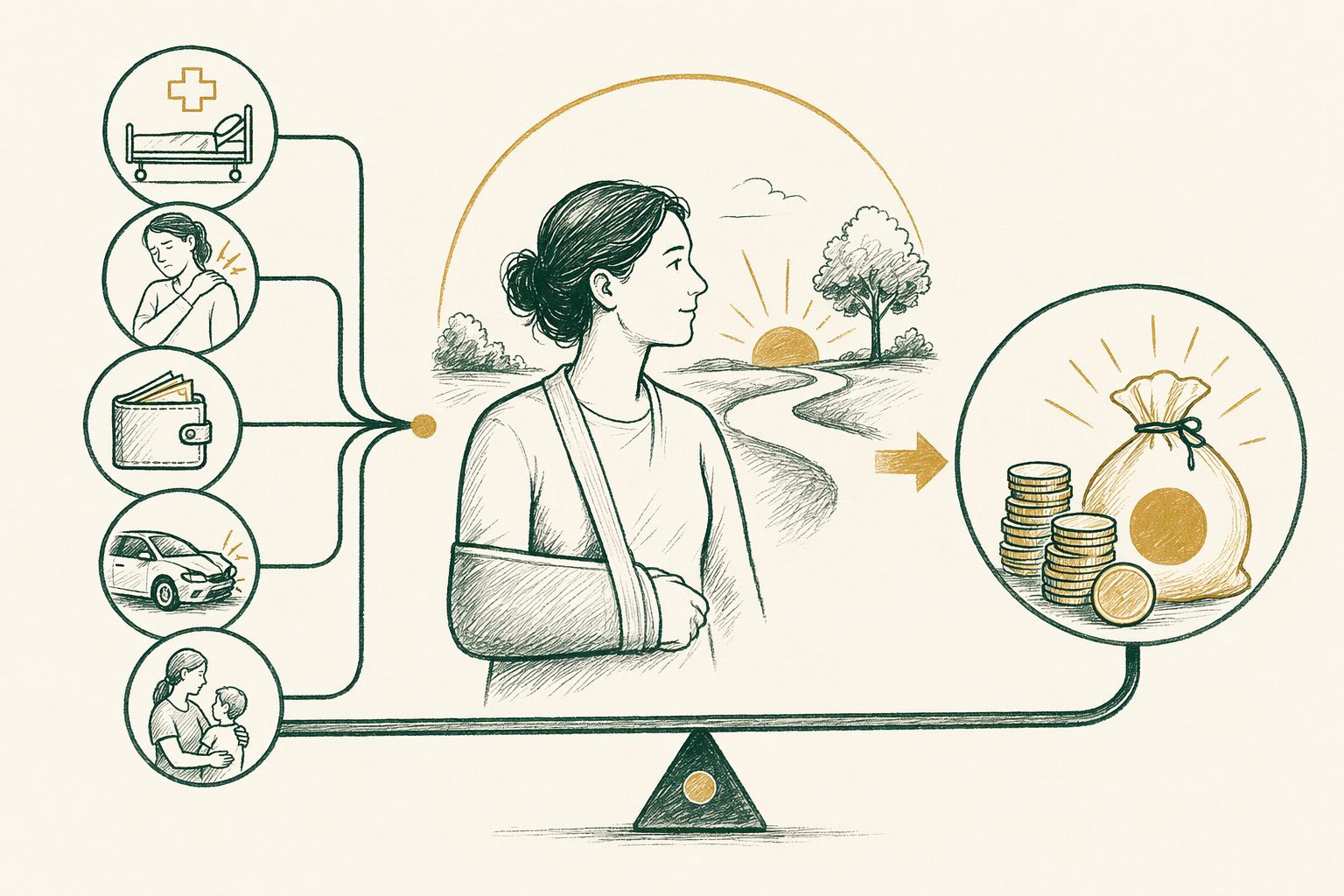
An injury claim is a request for money after someone else may have caused your injury. The money is called damages, which means losses the law may allow you to recover. Claim value means the possible dollar range a case may be worth.
No website can tell you the exact value of your case. Two people can have the same injury but very different claims. That is because the result may depend on medical bills, missed work, pain, insurance limits, state law, and proof.
Be careful with anyone who gives a fast promise. A lawyer may give a rough estimate after reviewing records, but no honest person can guarantee a result. Legal Bearings is not a law firm and does not give legal advice. We offer free education and a free way to get matched with a licensed attorney for advice about your specific situation.
What may increase or decrease an injury claim
- Medical costs. Past and future treatment often matter. This can include hospital bills, doctor visits, physical therapy, medicine, and medical equipment.
- Lost income. If you missed work, used sick days, or may earn less in the future, that may affect value.
- Pain and suffering. This means the physical pain and emotional stress caused by the injury. Some states allow this, but the amount is not based on one simple formula.
- How serious the injury is. Claims involving surgery, long recovery, permanent limits, or visible scars may be valued differently than short-term injuries.
- Clear proof of fault. Fault means legal responsibility for the accident. Strong photos, witness statements, and records may help. Weak proof may lower value.
- Insurance policy limits. A policy limit is the most an insurance company may have to pay under a policy. Even a serious case may be harder to collect if the available coverage is low.
- Your own actions. In many states, if you were partly at fault, your recovery may be reduced. This is often called comparative fault, which means blame can be shared.
- Where the case is filed. State laws differ. Deadlines, damage rules, and local jury trends may affect value.
Common types of damages
Most injury claims have two broad categories of damages. The first is economic damages, which means money losses you can often show with bills, pay stubs, or receipts. Examples include emergency care, follow-up treatment, lost wages, and property damage.
The second is non-economic damages, which means human losses that do not come with a fixed bill. Examples may include pain, loss of normal daily activities, sleep problems, anxiety, or lasting discomfort. These can be real and serious, but they are harder to measure.
In rare cases, some states allow punitive damages. These are extra damages meant to punish very bad conduct, not just repay losses. They are not available in every case and are not common.
A lawyer may also look at future losses. For example, if an injury may need more treatment later, or may affect your ability to work, that could change the value of a claim.
How lawyers and insurers often estimate value
- Start with the records. They often review medical records, bills, photos, witness statements, wage loss proof, and the accident report.
- Look at fault. They ask how clearly the other side caused the injury and whether there is any argument that you were partly responsible.
- Review the treatment timeline. Gaps in treatment, missed appointments, or unclear diagnoses may affect how the claim is viewed.
- Compare similar cases. Lawyers may look at results in similar cases in the same state, but those are only examples, not promises.
- Check insurance coverage. The amount of available insurance may shape what is realistically collectible.
- Adjust for long-term harm. Permanent pain, disability, or future care needs may increase value if supported by evidence.
Fast calculators can mislead
Mistakes that may hurt value
Try not to guess, exaggerate, or hide facts. If your story changes, an insurer may say you are not credible. Credible means believable and trustworthy.
Do not wait too long to get care if you are hurt. A delay may make it harder to connect the injury to the accident. Also keep copies of bills, photos, repair estimates, and messages about missed work.
Be careful on social media. Posts, photos, and videos may be used against you. Even a happy photo can be taken out of context.
There is also a legal deadline called the statute of limitations. This is the time limit to file a lawsuit. The deadline varies by state and the kind of case. If you miss it, you may lose the right to bring the claim.
If language is a barrier, ask for an interpreter or translated explanations. You can also look for attorneys who handle injury matters and communicate clearly with non-native English speakers.
What to do if you want a clearer estimate
You do not need to know the exact value before speaking with a lawyer. In fact, many people get better answers after a lawyer reviews the records. A licensed attorney can explain how your state handles fault, deadlines, and damages.
Before you speak with a lawyer, gather a few basics. Bring the date and place of the accident, photos, names of witnesses, insurance information, and your medical bills or discharge papers. If you missed work, bring pay stubs or a note from your employer.
Ask simple questions. For example, ask what facts may help or hurt value, what deadlines apply, and what documents still matter. You can also ask how fees work. Many injury lawyers use a contingency fee, which means the lawyer may get paid only if there is a recovery. Fee structures and costs vary by state and your situation, so ask for the terms in writing.
If you want help finding someone, Legal Bearings offers a free way to get matched with a licensed attorney. We are not a law firm, and we do not give legal advice. Our service is free for readers, and participating attorneys pay us a flat fee to be part of the service.
Common questions
Can I know my injury claim's exact value right away?
Usually no. A rough estimate may be possible, but the value often becomes clearer after treatment records, bills, proof of lost income, and insurance information are reviewed.
Do bigger medical bills always mean a bigger claim?
Not always. Medical bills are important, but they are only one part of the picture. Fault, future care, pain, state law, and insurance limits may also matter.
What if I was partly at fault?
You may still have a claim in some states. Your recovery could be reduced based on your share of fault. A licensed attorney can explain the rule in your state.
Will I have to pay a lawyer up front?
Some injury lawyers may offer a free consultation, and many work on a contingency fee. That means the fee may come from a recovery instead of an up-front payment. Costs and fee rules vary by state and your situation, so ask for details in writing.
How can Legal Bearings help?
Legal Bearings is not a law firm and does not give legal advice. We provide general education and a free service to match you with a licensed attorney who may be able to review your case.
In plain English: No one can honestly promise what your injury claim is worth, but a licensed attorney may give a clearer estimate after reviewing your records, and Legal Bearings can help you get matched for free.