Family & Divorce Lawyers
Family law covers divorce, child custody, child support, and safety orders after abuse. This page explains the basics in plain language and how to find a licensed lawyer who may speak your language.
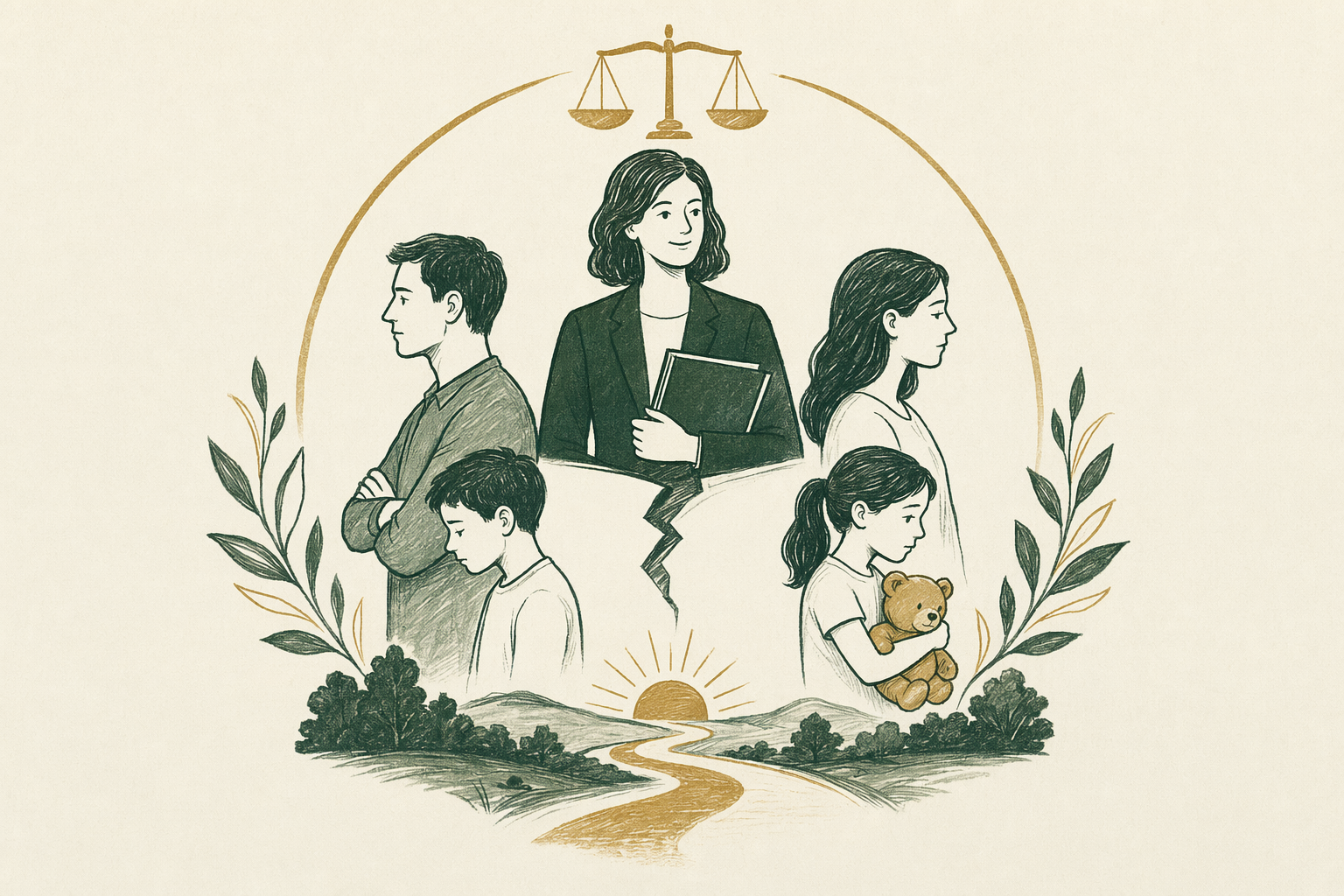
What family lawyers help with
Family lawyers handle legal problems involving marriage, children, and safety at home. A family lawyer is a licensed attorney who works on issues like divorce, child custody, child support, visitation, prenuptial agreements, and protection from abuse.
A divorce is the legal process to end a marriage. Child custody means who makes major decisions for a child and where the child lives. Child support is money one parent may be ordered to pay to help cover a child's needs. A restraining order, also called a protection order in some states, is a court order that may tell an abusive person to stay away from you.
If English is not your first language, family court can feel scary. Forms are long. Hearings move fast. A lawyer may help you understand deadlines, explain your options, and speak for you in court. For a general overview, see divorce steps, child custody basics, child support how it works, restraining orders, and prenup basics.
Legal Bearings is not a law firm and does not give legal advice. We provide general education and a free way to get matched with a participating licensed attorney.
Common family law problems
- Divorce or legal separation, which is a court process where spouses live apart and decide property, support, and parenting issues
- Child custody and parenting time, sometimes called visitation, which covers where a child lives and when each parent spends time with the child
- Child support, which is a court order about money for a child's care
- Domestic violence and emergency protection orders, which may help with safety after threats, stalking, or abuse
- Prenuptial and postnuptial agreements, which are written contracts about property and debt before or during marriage
- Paternity cases, which are cases about legal parentage
- Adoption and guardianship, which involve legal rights and care for a child
- Enforcement and modification, which means asking the court to enforce or change an existing order when life has changed
When it may help to talk to a lawyer
Some family law cases are simple. Many are not. It may be especially helpful to talk to a lawyer if there is abuse, fear, immigration concerns, hidden money, a business, retirement accounts, a home, debt, or disagreement about the children.
A lawyer may also help if the other side already has a lawyer. The same is true if you were served with court papers. Being served means you officially received legal papers and a deadline to respond. Missing that deadline may hurt your case.
If you are an immigrant, you may worry that going to court could affect your status. That depends on the facts. A family lawyer may work with an immigration lawyer when needed. Try to get advice from a licensed attorney about your specific situation.
If you are in immediate danger, call 911 if you can do so safely. You may also ask the court for an emergency order in some situations. A local domestic violence program may help with safety planning, shelter, and court support.
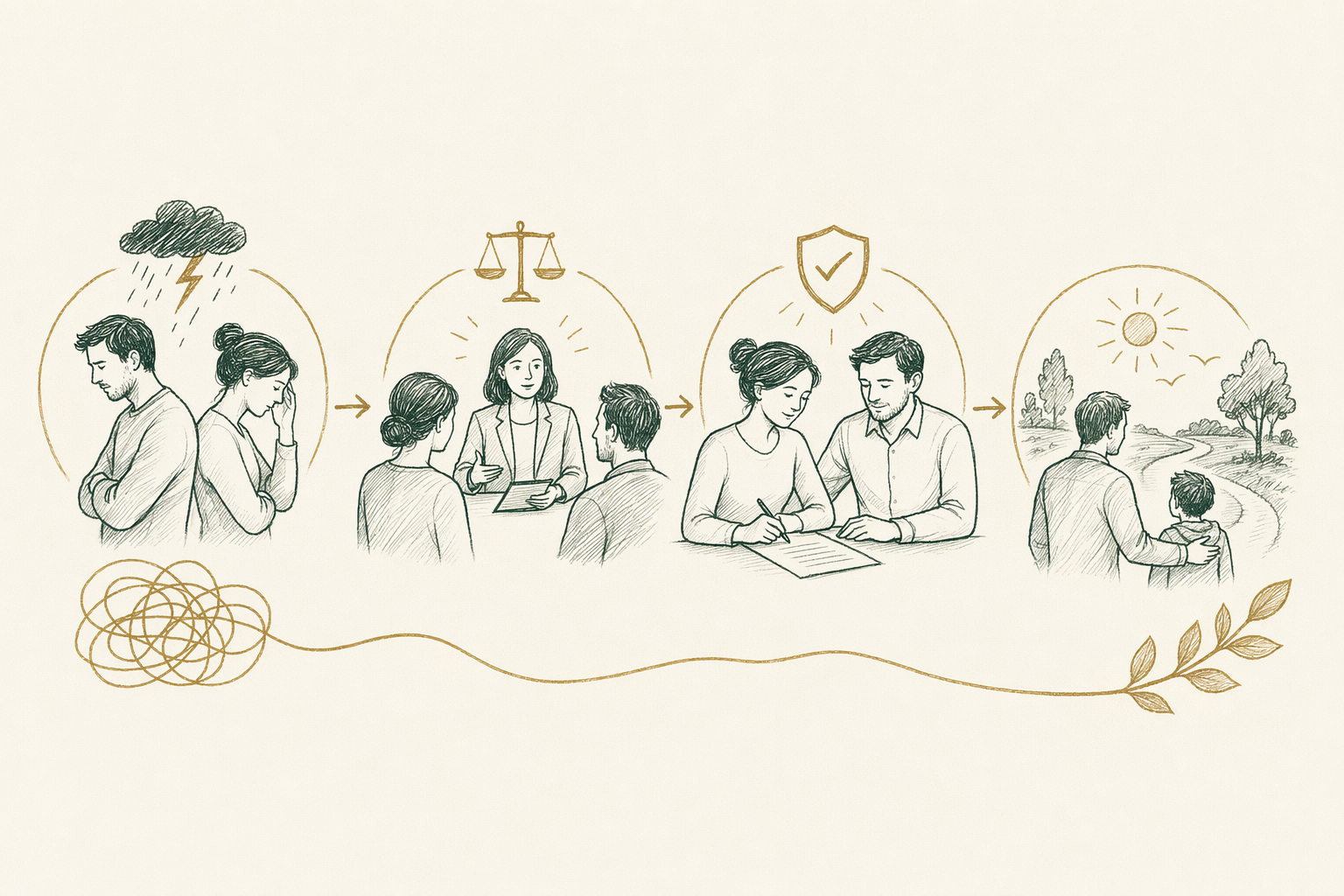
How a family law case often works
- First, gather key papers. This may include your marriage certificate, court notices, proof of income, tax returns, bank statements, lease or mortgage papers, and any messages or photos related to abuse or parenting issues.
- Next, learn what case type fits your problem. You may need divorce, custody, support, paternity, or a protection order. The court forms and deadlines are often different for each one.
- Then, file papers with the court or respond if you were already served. Filing means submitting forms to start a case. Responding means telling the court your side within the deadline.
- After that, the court may schedule hearings, mediation, or both. Mediation is a meeting where a neutral person tries to help both sides reach an agreement. It is not the judge.
- You may need temporary orders. A temporary order is a short-term court rule while the case is still open. It may cover housing, bills, custody, support, or safety.
- Finally, the case may end with an agreement or a judge's decision. If circumstances change later, you may be able to ask for a modification, which means a legal change to an existing order.
What to bring to a first meeting
Try not to worry if you do not have every document. Bring what you can. Good items to gather include court papers, marriage records, children's birth certificates, pay stubs, tax returns, bank and credit card statements, photos of property, and any written agreement between you and the other parent.
If abuse is involved, save texts, emails, voicemails, photos, medical or police records if you already have them, and a written timeline of what happened. Do not put yourself at risk to collect evidence. Your safety comes first.
It can help to write down your questions before the meeting. Examples are: Who stays in the home for now? How is custody decided in this state? What support may apply? What deadlines do I have? What should I avoid doing while the case is pending?
If you need language help, ask whether the lawyer or office has staff who speak your language or can arrange an interpreter. An interpreter is a person who translates spoken language. Some courts also provide interpreters for hearings, but the rules vary by state and by language.
You do not have to know every legal word
How judges often look at custody and support
Every state has its own rules, but courts usually focus on the child's best interests. Best interests means what the judge believes is safest and healthiest for the child. Judges may look at each parent's caregiving history, the child's needs, school and home stability, health and safety, and each parent's ability to support a healthy relationship with the other parent, if safe.
Custody may include legal custody and physical custody. Legal custody means decision-making power about school, health care, and religion. Physical custody means where the child lives most of the time. Parents may share one or both, or one parent may have more responsibility.
Child support is usually based on a state formula. A formula is a fixed method that uses facts like income, child care costs, health insurance, and the number of overnights with each parent. Judges often have some discretion, which means some legal room to decide based on the facts, but they usually start with the state's formula.
If there has been abuse, threats, stalking, or substance misuse, tell your lawyer or the court right away. Those facts may affect safety planning, exchanges of the child, custody terms, and whether a protection order may be appropriate.
Cost, language access, and finding someone trustworthy
Many people wait too long because they fear the price. Family lawyer fees vary by state and your situation. Some lawyers charge a consultation fee, and some offer a first meeting for free. For full representation, some family cases are billed at an hourly rate, which means you pay for the lawyer's time. Others may use a flat fee for a simpler task, which means one set price for a specific service.
Ask clear questions about fees before you hire anyone. You can ask: What does the fee cover? Is there a retainer? A retainer is money paid up front that the lawyer bills against over time. Will I pay filing fees, process server fees, or interpreter costs separately? Can you give me a written fee agreement?
Be careful with anyone who promises a certain result or pressures you to sign right away. No lawyer can honestly promise that you will win. Family cases depend on facts, evidence, the judge, and state law. It is also wise to confirm that the person is a licensed attorney in your state.
Legal Bearings offers a free matching service for people looking for a lawyer. We are not a law firm, and we do not give legal advice. If you want help finding a participating attorney, you can get matched or read how it works. We are paid a flat fee by participating attorneys, not by you.
Common questions
Can I get divorced if my spouse will not agree?
Often, yes. In many states, one spouse can file for divorce even if the other spouse does not want to. The process and timing vary by state and your situation. A licensed attorney can explain the rules where you live.
How is child custody decided?
Courts usually look at the child's best interests, which means what seems safest and healthiest for the child. Judges may consider caregiving history, stability, safety, school, health needs, and each parent's ability to care for the child. The exact rules vary by state.
Do I need a lawyer for a restraining order?
Not always, but a lawyer may help, especially if the other person contests the order or there are also custody or divorce issues. If you are in danger, contact emergency services if you can do so safely, and seek local domestic violence support. Court staff and advocacy groups may also provide general information.
What if I cannot afford a family lawyer?
Ask whether the lawyer offers a short paid consultation, a limited-scope service, or a payment plan. Limited-scope means the lawyer helps with part of the case, not all of it. You may also look for legal aid or court self-help resources. Costs vary by state and your situation.
Can I get help in my language?
Often, yes. Many lawyers have multilingual staff or can work with interpreters. Some courts also provide interpreters for hearings. Ask about language support when you first contact an office or request a match.
In plain English: If family problems involve divorce, kids, money, or abuse, a licensed lawyer may help you understand your options, and Legal Bearings can help you find one for free.