How to Get a Protection or Restraining Order
If you need a court order to help protect you from abuse, threats, stalking, or harassment, this guide explains the basic steps in plain language. Laws differ by state, so use this as general education and talk with a licensed attorney or local court for advice about your situation.
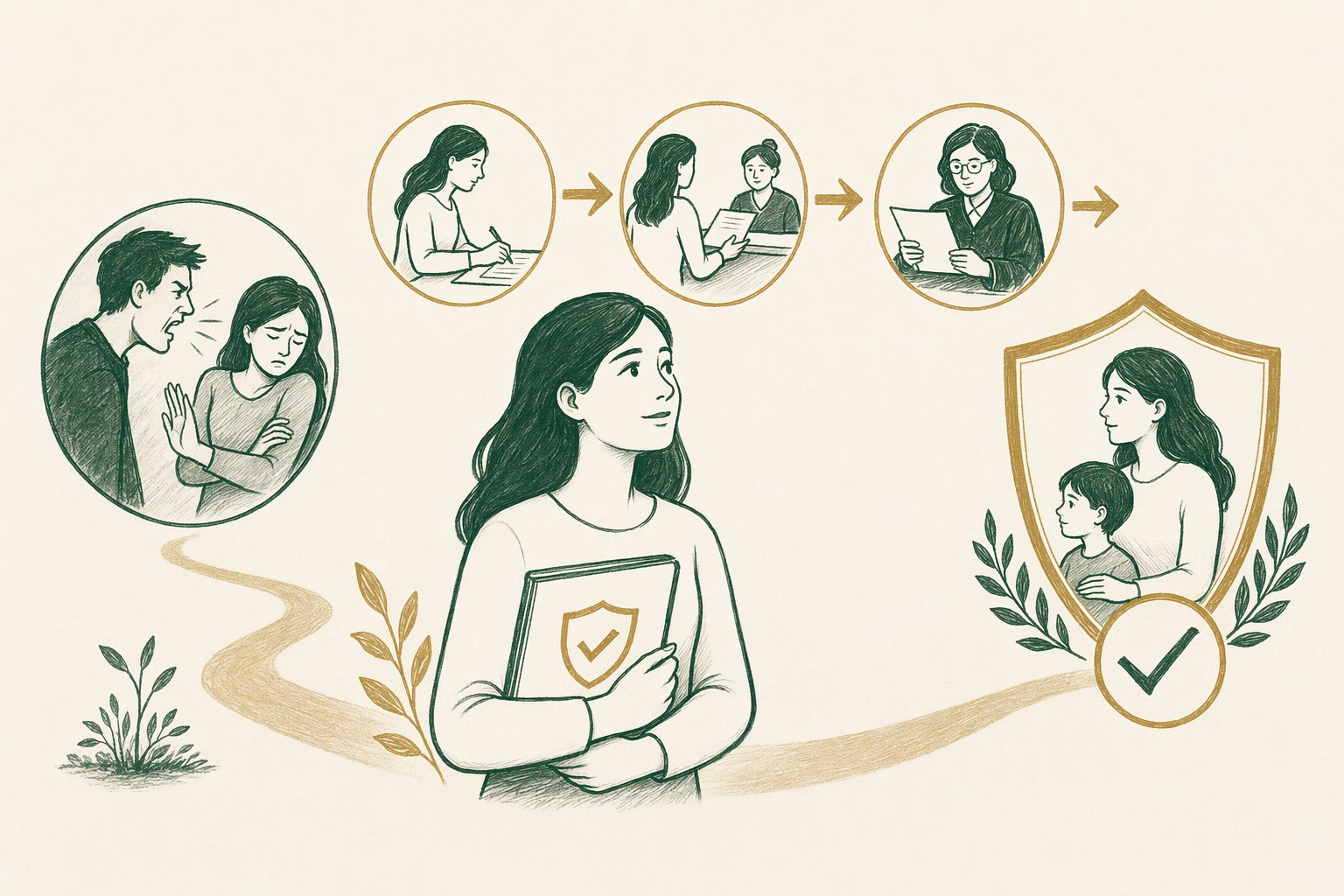
What a protection or restraining order means
A protection order or restraining order is a court order, which means a written rule from a judge. It may tell another person to stay away from you, stop contacting you, leave a shared home, or follow other safety rules. Different states use different names, such as protective order, order of protection, no-contact order, or domestic violence restraining order.
These orders are often used when someone is facing domestic violence, threats, stalking, harassment, sexual assault, or abuse by a family member, partner, or another person. Stalking means repeated unwanted contact or behavior that causes fear. Harassment means unwanted behavior that seriously bothers, alarms, or threatens you.
A protection order is not the same as a criminal case, although sometimes both happen at the same time. A criminal case is brought by the government. A civil case is a court case between people. Many protection orders are part of the civil court system. Because rules vary by state, a licensed attorney can explain what type of order may fit your case.
If you are in immediate danger
Who may qualify
In many states, you may ask for an order if the other person is a spouse, ex-spouse, dating partner, former partner, family member, roommate, co-parent, or someone who has harmed or threatened you. Some states also allow orders against neighbors, coworkers, or other people who stalk or harass you.
The court usually looks for facts, not just a general fear. Helpful facts may include threats, physical harm, unwanted visits, repeated messages, forced sexual contact, damage to property, or behavior that makes you reasonably fear for your safety. Evidence means information that helps show what happened. Evidence can include texts, emails, photos, videos, police reports, medical records you already have, witness statements, or screenshots.
If you are undocumented, you may still be able to ask for protection from a court. Many courts do not require U.S. citizenship to file. Some states and local courts also offer language help. You can ask for an interpreter, which is a person who translates spoken language in court. If you need help finding a licensed lawyer, you can use the free matching service at get matched or learn more about family law help.
Basic steps to ask for an order
- Find the right court. In many places, this is a family court, district court, or county court. The court clerk, which means the court office staff, may tell you which forms to use, but cannot give legal advice.
- Ask for the forms. Some courts let you file in person, online, or by email. Look for forms for a protection order, restraining order, or order of protection.
- Fill out the papers carefully. Write specific facts, dates, places, and what the other person did or said. Short, clear details often help more than broad statements.
- Ask about an emergency or temporary order if you need fast protection. A temporary order is a short-term order that may be issued before the full hearing.
- File the forms with the court. File means officially submit documents to the court. Some courts do not charge a filing fee for domestic violence orders.
- Get information about service. Service means delivering court papers to the other person in a legal way. Usually you should not serve the papers yourself. The sheriff, marshal, police, or a process server may do it, depending on state rules.
- Prepare for the hearing. A hearing is a court meeting where a judge listens to both sides. Bring copies of your evidence, witnesses if allowed, and any interpreter request paperwork.
- Go to court on time. If the judge grants the order, keep copies with you. You may want copies for your job, school, child care provider, or building security if that fits your situation.
Temporary orders, final orders, and what a judge may include
A court may first issue a temporary order, sometimes called an ex parte order. Ex parte means the judge hears from only one side at the start, usually because there may be urgent danger. Temporary orders often last only until the full hearing.
After the hearing, a judge may deny the request, extend the temporary order, or issue a longer final order. A final order may last for months or years, depending on state law and the facts of the case. In some states, it can be renewed.
The order may tell the other person not to contact you by phone, text, social media, or through other people. It may require them to stay a certain distance away from your home, work, or school. In some cases, it may address child custody, which means who a child lives with and who makes decisions, or use of a shared home. Judges decide based on state law and the facts presented.
What can help your case
- A timeline with dates, times, places, and what happened
- Screenshots of messages, call logs, emails, or social media contact
- Photos of injuries or damaged property, if you have them
- Police reports or case numbers, if police were called
- Names of witnesses who saw or heard what happened
- Notes about prior court cases, divorce, custody, or criminal charges connected to the same person
- Copies of any prior protection orders from this or another state
Cost, language help, and getting legal support
Many people worry that asking for protection will cost too much. In many states, there is no filing fee for domestic violence protection orders. Other situations may have fees, and costs vary by state and your situation. You may also need to pay for copies, a process server in some counties, transportation, child care, or attorney fees if you hire a lawyer.
Some lawyers charge a consultation fee, which is the cost of a first meeting. Others offer a free first meeting. If a lawyer represents you, they may charge a flat fee, which is one set amount, or an hourly fee, which means payment for each hour of work. Costs often range from about $0 to $300 for a consultation, and several hundred to several thousand dollars for full representation, depending on the facts, the court, and your state.
If English is not your first language, ask the court for an interpreter as early as possible. You can also ask if forms are available in your language. Be careful with anyone who promises results, pressures you to sign quickly, or asks for large cash payments without a written agreement. For legal advice about your specific case, speak with a licensed attorney. If you want help finding one, Legal Bearings offers a free way to get matched with a participating lawyer. Legal Bearings is not a law firm and does not give legal advice.
Typical costs
| Type of cost | Typical range |
|---|---|
| Court filing feemany domestic violence filings are free, varies by state and your situation | $0–$400 |
| Consultationoften free or low-cost, varies by lawyer | $0–$300 |
| Full attorney helpdepends on complexity, hearings, and state | $500–$5,000+ |
| Service of paperssheriff may be free or low-cost in some areas | $0–$150 |
| Copies, travel, child caresmall case costs can add up | $0–$200+ |
Ranges vary widely by state, city, and the details of your case. Treat these as rough guides, not quotes.
You do not have to figure this out alone
Common questions
Can I get a protection order if I am not a U.S. citizen?
Often, yes. Many courts allow people to request protection regardless of immigration status. Rules differ by state, so ask the court or a licensed attorney about your situation.
Do I need a police report to ask for a restraining order?
Usually not. A police report may help, but many courts will consider your statement, messages, photos, witness information, and other evidence.
What happens if the other person breaks the order?
A violation means the person did not follow the court order. You may be able to call police and report the violation. Keep records, screenshots, or witness names if it is safe to do so. Enforcement steps vary by state.
Can the order protect my children too?
Sometimes. In some cases, a judge may include children or make temporary custody and contact rules. That depends on state law and the facts in your case.
Do I need a lawyer to file?
Not always. Many people file on their own. Still, a licensed attorney may help if the facts are disputed, children are involved, the other person has a lawyer, or you are worried about language barriers or safety planning.
In plain English: If someone is hurting, threatening, or stalking you, a court may be able to order them to stay away, and a licensed attorney can explain the best next step for your case.