The Divorce Process, Step by Step
Divorce is the legal process to end a marriage. This guide explains the usual steps in simple language, so you can understand what may happen and where a licensed lawyer could help.
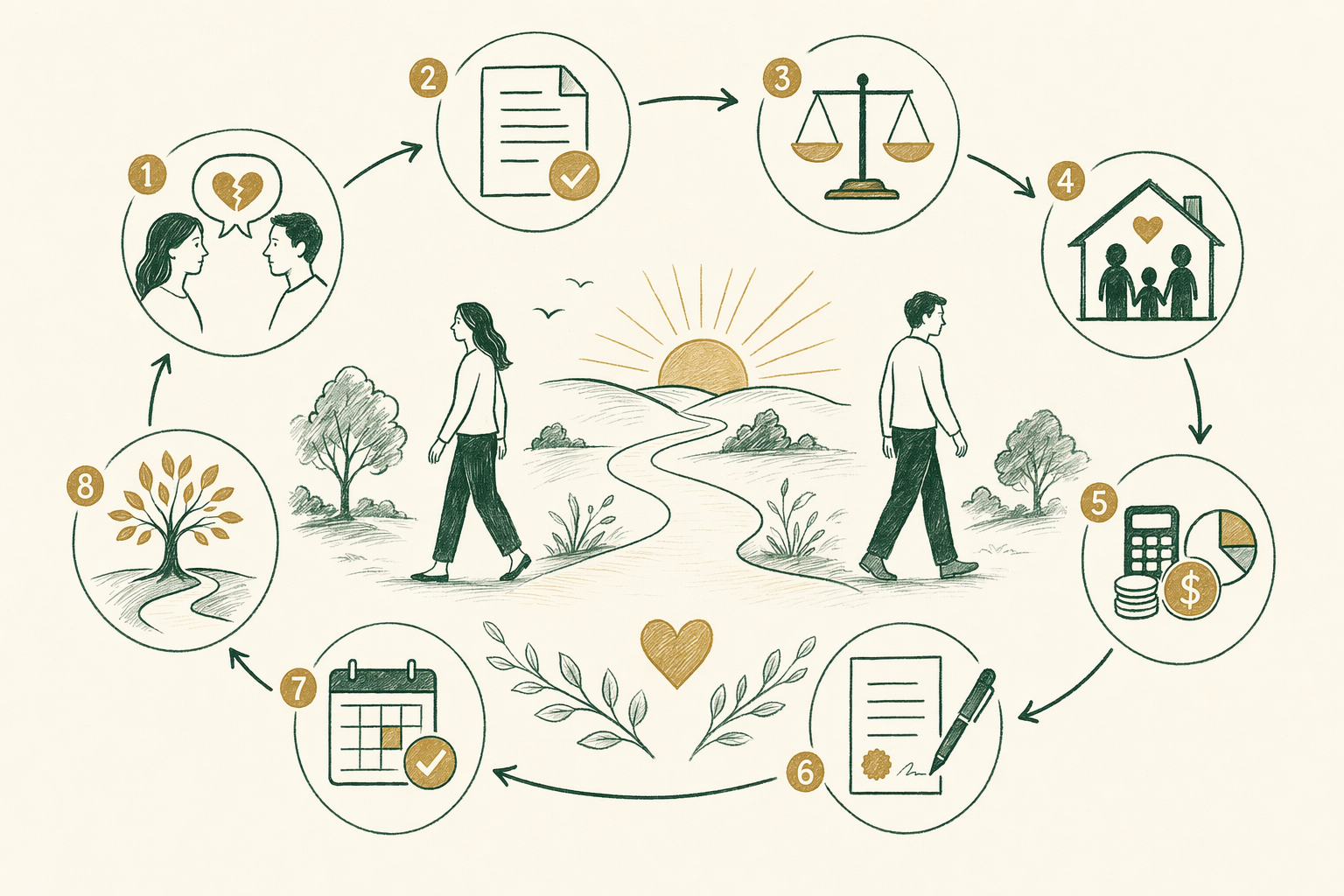
What divorce means
A divorce is a court process that legally ends a marriage. After a divorce, each person is no longer married under the law. A judge, which means a court official who makes legal decisions, usually signs the final order.
Divorce can also decide other issues. These may include child custody, which means who makes decisions for a child and where the child lives, child support, which means money paid to help raise a child, spousal support or alimony, which means money one spouse may pay the other, and division of property and debts.
Every state has its own rules. The steps are often similar, but deadlines, forms, and waiting periods may be different. If you want advice about your exact situation, it is best to speak with a licensed attorney.
The divorce process, step by step
- Step 1: Check where you can file. Most states have a residency rule. This means you or your spouse must have lived in the state, and sometimes the county, for a certain amount of time before filing.
- Step 2: Gather basic information. Collect your marriage certificate, addresses, dates of birth, income details, bank statements, tax returns, lease or mortgage papers, and information about children. Good records can make the process easier.
- Step 3: File the divorce papers. One spouse files forms with the court. This person is often called the petitioner, which means the person who starts the case. The other spouse is often called the respondent, which means the person who receives the case.
- Step 4: Serve the papers. Service means giving the other spouse formal notice of the case in the legal way your state requires. You usually cannot do this yourself. A sheriff, process server, or another adult may do it, depending on state rules.
- Step 5: Wait for a response. The other spouse usually has a deadline to file an answer with the court. If they do not respond, the court may allow a default, which means the case can move forward without their side being filed.
- Step 6: Ask for temporary orders if needed. Temporary orders are short-term court rules while the divorce is pending. They may cover who stays in the home, parenting time, child support, bill payments, or protection from harassment.
- Step 7: Share financial information. Many states require disclosure, which means both sides must exchange important financial facts and documents. This helps the court or the spouses make fair decisions about money and property.
- Step 8: Try to settle. Many couples resolve some or all issues through negotiation, lawyer discussions, or mediation, which is a meeting where a neutral person helps both sides try to reach an agreement.
- Step 9: Go to court if needed. If you cannot agree, the judge may hold hearings or a trial. At trial, each side presents evidence, which means documents, testimony, and other proof.
- Step 10: Get the final divorce order. When the case is finished, the judge signs a final order, often called a decree or judgment. This document explains your rights and duties after the divorce. Keep copies in a safe place.
What the court may decide
If you and your spouse agree on everything, the court may mainly review your paperwork and make sure the agreement follows state law. If you do not agree, the court may decide the open issues.
Property division often includes the family home, cars, bank accounts, retirement accounts, and debts. Some states use community property, which means many marital assets and debts are split equally. Other states use equitable distribution, which means the court tries to divide things fairly, but not always 50/50.
If children are involved, the court focuses on the best interests of the child. This means the judge looks at what arrangement may best protect the child’s safety, health, stability, and daily needs. Immigration status does not automatically decide who is a good parent, but any legal issue can affect a case, so personal legal advice matters.
If you are dealing with abuse, threats, or controlling behavior, tell a lawyer or local help service as soon as you can. In some situations, you may be able to ask for a protection order and safer ways to handle court papers and court dates.
Common documents and information to collect
- Marriage certificate
- Names, addresses, and dates of birth for both spouses and children
- Recent pay stubs or proof of income
- Tax returns from the last few years
- Bank account and credit card statements
- Lease, mortgage, car loan, and other debt records
- Health insurance information
- Retirement account statements
- Any court papers from family, immigration, or criminal cases
- A written timeline of important events, especially if there are child safety concerns or abuse concerns
You do not have to figure this out alone
Special concerns for immigrants and non-native English speakers
If English is not your first language, ask the court or lawyer about interpreter options. An interpreter is a person who helps translate spoken words. Some courts provide interpreters for certain hearings. You can also ask for translated forms or help understanding deadlines.
Divorce may affect more than family law. If your immigration case is connected to your marriage, or if your spouse filed papers for you, speak with a licensed attorney as soon as possible. A family law lawyer and an immigration lawyer may both be important in some cases.
Be careful with anyone who promises a fast result or asks you to sign papers you do not understand. A notary public is not the same as a lawyer in the United States. In many countries, a notary may give legal help, but in the USA that is usually not true. If someone offers legal advice without a law license, that can put you at risk.
If you need help finding the right kind of lawyer, you can read more about family law services or use our free get matched tool. Legal Bearings is not a law firm and does not give legal advice. It is a free matching service for readers and is paid a flat fee by participating attorneys.
How long divorce may take, and what may affect it
Some divorces move quickly. Others take many months or longer. Timing often depends on state waiting periods, how busy the court is, whether both spouses cooperate, and whether there are fights about children, money, or safety.
An uncontested divorce means both spouses agree on the main issues. These cases are often faster and less costly. A contested divorce means there is a disagreement about one or more issues. These cases usually take more time.
You may help your case move more smoothly by keeping copies of all papers, meeting deadlines, staying polite in messages, and focusing on facts. If a lawyer represents you, ask what you should bring to each meeting and what the next deadline is.
Common questions
Do I have to go to court for a divorce?
Maybe not for every step. In some uncontested cases, court appearances are limited or very short. In contested cases, hearings or a trial may be needed. Rules vary by state and your situation.
How much does a divorce usually cost?
Costs vary a lot by state and your situation. You may have court filing fees, service fees, mediation costs, and attorney fees. Some simple cases cost much less than cases with disputes about children or property. Ask a licensed attorney for an estimate based on your facts.
Can I get divorced if I do not know where my spouse is?
Sometimes, yes. Courts often have special rules when you cannot locate a spouse after reasonable efforts. You may need to show the steps you took to find them, and the court may allow another way to give notice. A licensed attorney can explain your state’s rules.
Will divorce affect my immigration status?
It may, depending on the kind of immigration case you have. If your status is tied to your marriage or your spouse filed for you, get legal advice quickly from a licensed attorney. Family law and immigration law can overlap.
Can Legal Bearings give me legal advice or represent me in court?
No. Legal Bearings is not a law firm and does not give legal advice. It provides general education and a free way to get matched with a licensed attorney who may advise you about your specific case.
In plain English: Divorce is a court process with clear steps, and if you are unsure what applies to you, a licensed lawyer can explain your options while our matching service is free to use.