What Lawyers Cost in the U.S. (Plain-Language Guide)
Lawyer fees in the U.S. can feel confusing, especially if English is not your first language. This guide explains the most common ways lawyers charge, what price ranges often look like, and what questions can help you avoid surprises.
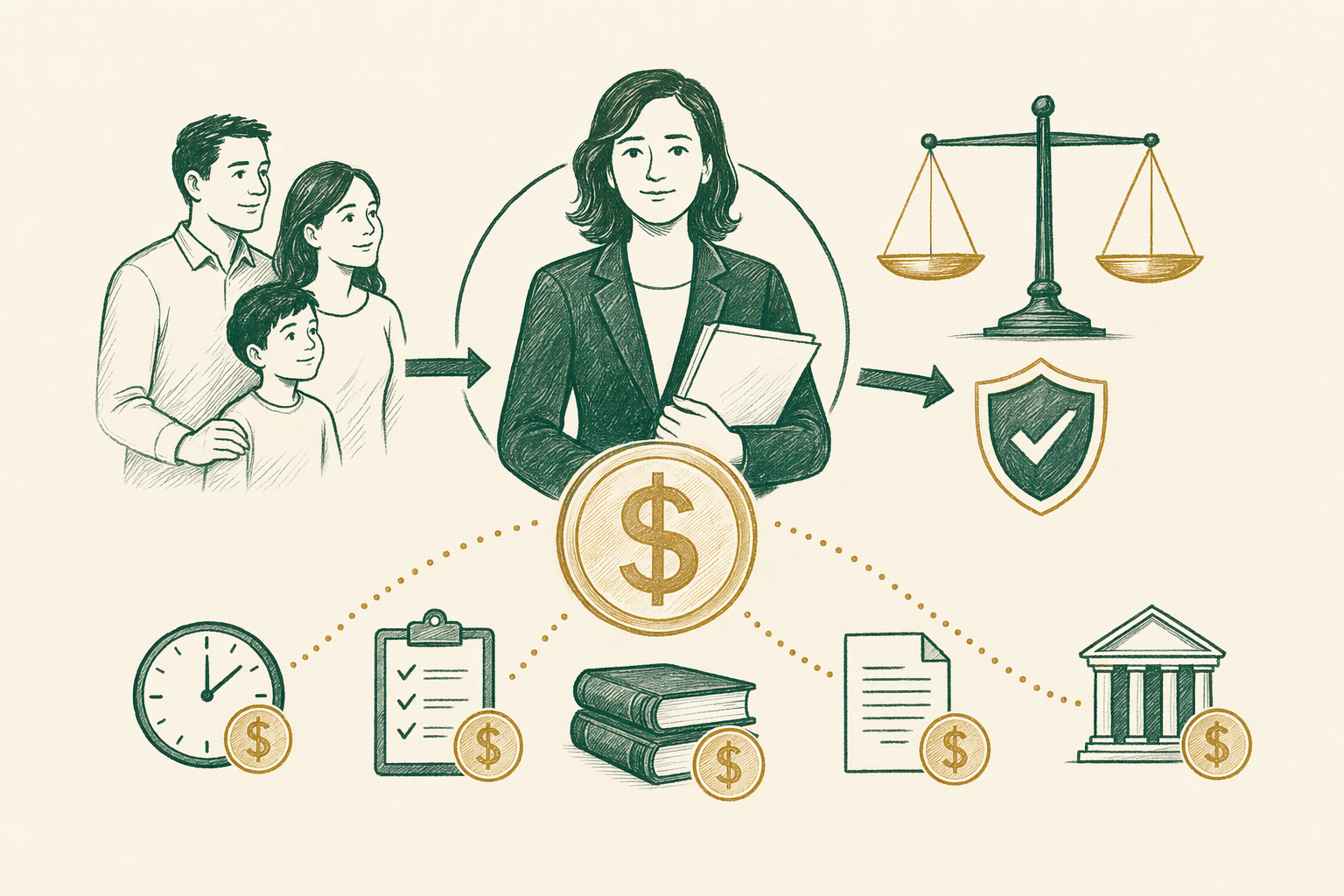
How lawyers charge for help
Lawyers in the U.S. do not all charge the same way. The price often depends on the type of case, how much work is needed, and where you live. Costs also vary by state and your situation.
There are a few common fee types. An hourly fee means you pay for each hour the lawyer works. A flat fee means one set price for a specific service. A contingency fee means the lawyer may get paid only if money is recovered in the case. A consultation fee is what you may pay for a first meeting.
It is normal to feel worried about cost. Many people also worry about language barriers or pressure to sign fast. You have the right to ask for prices in writing, ask what is included, and take time to compare options. For help finding a lawyer who may fit your needs, you can use our free lawyer matching service. Legal Bearings is not a law firm and does not give legal advice.

The main fee types, in plain English
- Hourly fee. You pay for the time the lawyer spends on your case. This may include phone calls, court time, writing papers, research, and emails.
- Flat fee. You pay one set amount for a specific task, such as reviewing a contract, preparing a simple will, or handling some immigration forms.
- Contingency fee. The lawyer's fee may come from money recovered in the case, if there is a recovery. This is common in some injury cases, but usually not in immigration or most family cases. Case costs may still be separate.
- Retainer. A retainer is money paid up front. The lawyer may bill against that amount over time. If the retainer runs out, you may need to add more money.
- Consultation fee. This is the price for a first meeting. Some lawyers offer free first meetings. Others charge a set amount, especially for detailed advice.
- Court costs and case expenses. These are not always part of the lawyer's fee. They may include filing fees, translation, expert witnesses, medical records, serving papers, or copying and mailing. Ask what is separate.
Typical costs
| Type of cost | Typical range |
|---|---|
| Consultationoften free or low-cost, varies by state and your situation | $0–$300 |
| Hourly rate, newer or smaller-firm lawyercommon in many areas, varies by state and your situation | $150–$300 per hour |
| Hourly rate, experienced lawyer or large citycan be higher for complex cases, varies by state and your situation | $300–$700+ per hour |
| Simple flat-fee servicefor a limited task like a document review or basic filing, varies by state and your situation | $300–$2,500 |
| Family law retaineroften used for divorce or custody matters, varies by state and your situation | $2,500–$10,000+ |
| Immigration flat-fee matterdepends on the form, history, and hearing needs, varies by state and your situation | $1,000–$8,000+ |
| Personal injury contingency feeplus possible case costs, where allowed and depending on stage of case, varies by state and your situation | 25%–40% of recovery |
Ranges vary widely by state, city, and the details of your case. Treat these as rough guides, not quotes.
What affects the price
The type of legal problem is a big factor. A simple document review usually costs less than a court fight. Cases with urgent deadlines, many witnesses, long records, or appeals usually cost more because they take more time.
Your location matters too. Lawyers in large cities often charge more than lawyers in smaller towns. A lawyer with many years of experience, special language skills, or a strong background in a narrow area may also charge more.
Another factor is how much of the job the lawyer will do. Some lawyers offer limited-scope representation, which means help with only part of a case. For example, the lawyer may prepare papers but not go to court with you. This can cost less than full representation, but it is not right for every case.
If you need an interpreter or certified translations, ask whether those costs are included. In some cases they are separate. If language access matters to you, it is smart to ask early whether the office has staff who speak your language or works with interpreters.
How to ask about fees before you hire anyone
- Ask, "Do you charge hourly, a flat fee, a retainer, or something else?"
- Ask for a written fee agreement. This is the contract that explains what you pay and what work is included.
- Ask, "What is not included in this price?" Court filing fees, translation, travel, and expert costs may be separate.
- Ask how often you will get bills, and whether the office charges for emails, phone calls, copies, or online payments.
- Ask whether there is a payment plan. Some lawyers allow payments over time.
- Ask who will work on the case. A senior lawyer, junior lawyer, or paralegal may have different rates.
- Ask what may make the price go up. For example, a hearing, appeal, or emergency filing could add cost.
- If English is hard for you, ask for an interpreter or translated summary before you sign. Take the agreement home if you need time to read it.
Typical ranges by case type
Different legal problems often use different fee models. These ranges are general education only. They vary by state and your situation, and a licensed attorney can tell you what may apply to your case.
Immigration matters often use flat fees, but not always. A basic family-based filing might be in the low thousands. A more complex case, waiver, or court-related defense may cost several thousand dollars more. Government filing fees are often separate. If you are looking for help in this area, see immigration services.
Family law cases, such as divorce or custody, often use hourly billing and a retainer. An agreed divorce with no major disputes may cost much less than a contested case with hearings, financial issues, or child custody disputes. For many family cases, costs can start in the low thousands and rise well beyond that if the case becomes a long court fight. You can learn more at family law services.
Personal injury cases often use contingency fees. That means the lawyer may get a percentage of money recovered, if there is a recovery. Case expenses may still be charged separately, so ask how that works.
Criminal defense often uses flat fees for a specific stage of the case, or hourly fees in more complex matters. Costs may be higher if the charge is serious, there are many court dates, or the case may go to trial.
Housing, employment, and consumer cases may use hourly, flat, or contingency fees depending on the issue. Some lawyers in these areas may also offer short paid consultations or limited-scope help.
Watch for red flags
Ways to lower cost and protect yourself
Start by getting clear about your goal. If you need only a document review or one strategy meeting, say that. A short, focused service may cost less than full representation.
Bring organized papers to the first meeting. Put dates, names, notices, and court papers in order. When you are prepared, the lawyer may spend less time finding basic facts. That can lower hourly bills.
You can also ask about free or low-cost options. Some legal aid groups and nonprofit programs help people with low income, certain immigration matters, domestic violence issues, or housing problems. Court self-help centers may have forms and instructions, but they usually cannot give legal advice.
If money is tight, compare more than one lawyer. Ask each one the same fee questions. Compare not just price, but also experience, communication style, and language access. The cheapest option is not always the best value, and the highest price does not always mean better service.
Before you pay, make sure you understand the refund rules. Ask what happens to unused retainer money. Ask whether filing fees are refundable if you change your mind. Keep copies of receipts, contracts, and bills.
If you want help finding someone to speak with, Legal Bearings offers free matching with participating attorneys. It is free for you. Legal Bearings is paid a flat fee by participating attorneys for marketing and matching, and is not a law firm. You can learn more about how it works or get matched.
Common questions
Are lawyer consultations free in the U.S.?
Sometimes. Many lawyers offer a free first meeting, while others charge about $50 to $300 or more for a consultation. It depends on the type of case, the lawyer, and where you live. Ask before you schedule.
What is the difference between a flat fee and a retainer?
A flat fee is one set price for a specific service. A retainer is money you pay up front, and the lawyer may bill against it as work is done. If the retainer runs out, you may need to pay more.
Do all lawyers take payment plans?
No. Some do, and some do not. Payment options depend on the lawyer, the case type, and state rules. Ask whether monthly payments are available and whether there are extra processing fees.
Can a lawyer tell me the exact total cost at the start?
Not always. A simple flat-fee service may have a clear price. But hourly or court-based cases can change over time. A lawyer may be able to give an estimate, but the final cost could go up or down depending on what happens.
How can I avoid being overcharged?
Ask for a written fee agreement, ask what is included and excluded, compare more than one lawyer, and keep copies of bills and receipts. If something is unclear, ask for an explanation in plain language before you sign.
In plain English: Lawyer costs in the U.S. can range from free consultations to thousands of dollars, so ask for the price in writing, ask what is included, and use our free matching service if you want help finding a licensed attorney to discuss your case.