Legal Deadlines You Should Not Miss
Legal deadlines can affect your rights. If a deadline is close, quick action may help, and a licensed attorney can explain your options for your state and your case.
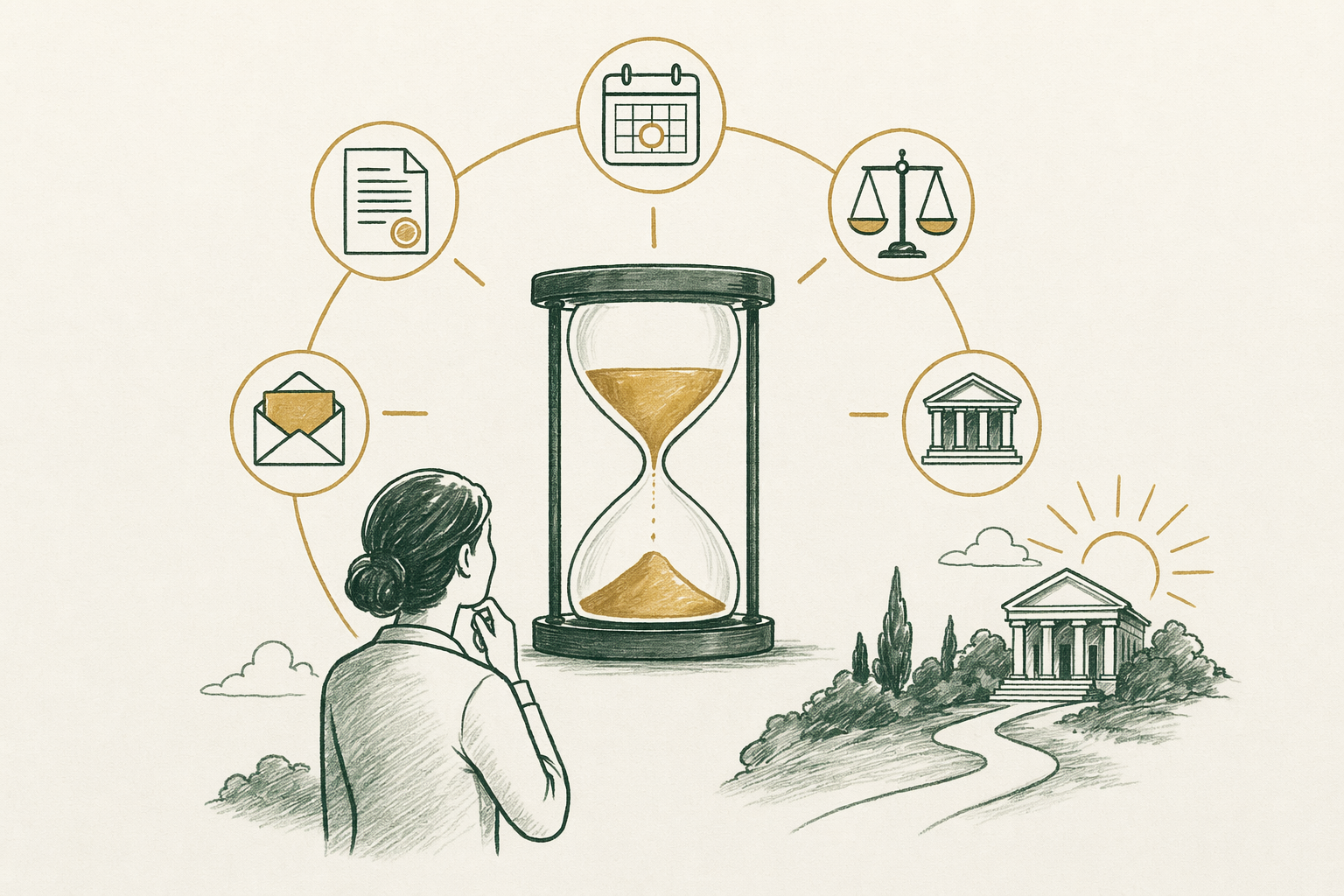
Why legal deadlines matter
Many legal problems have a deadline, which is the last day you can file papers, answer a court case, appeal a decision, or ask for a hearing. If you miss that date, you may lose an important right. In some cases, the court may refuse to hear your case at all.
One common deadline is a statute of limitations. This is a law that sets the time limit for starting a case. The time limit depends on the type of case and the state. Another common deadline is a court deadline, such as the date to file an answer after you are served with lawsuit papers.
Deadlines can come up in immigration, family law, housing, work problems, debt cases, and injury claims. The rules are not the same everywhere. They may depend on where you live, which agency is involved, and what happened in your case. That is why it is smart to get legal advice about your specific facts from a licensed attorney as soon as you can.
If you are worried about cost or language, you are not alone. Many lawyers offer a first meeting for a low cost or no cost, and interpreter help may be available. You can also use our free lawyer matching service to connect with a participating attorney. Legal Bearings is not a law firm and does not give legal advice.

Deadlines people often miss
- Answering a lawsuit after you are served with court papers. "Served" means the papers were officially delivered to you.
- Appealing a court order or agency decision. An appeal asks a higher court or agency to review a decision.
- Responding to immigration notices, interview requests, requests for evidence, or removal deadlines. See immigration services.
- Filing for divorce, custody, child support, or asking to change a family court order. See family law services.
- Filing a complaint with a government agency before you can sue, such as in some job discrimination cases.
- Objecting to wage garnishment, eviction papers, or debt collection judgments.
- Filing insurance claims, disaster claims, or paperwork required by a contract.
- Probate and estate deadlines after a family member dies, including notice and claim deadlines.
Common types of legal time limits
A filing deadline is the date by which paperwork must reach a court or agency. Some places count the document as filed when it is received. Others may allow e-filing, which means filing online. Mailing something before the deadline is not always enough.
A response deadline is the date by which you must answer. For example, if you receive lawsuit papers, you often have a short time to file an answer. An answer is your written response to the claims against you. If you do not answer on time, the other side may ask for a default judgment. This means the court could decide against you because you did not respond.
An appeal deadline is often very short. In many cases, it is measured in days, not months. Missing an appeal deadline can be very serious because courts often enforce these dates strictly.
Some deadlines can pause or change in special situations. Lawyers sometimes call this tolling. Tolling means the clock may stop for a while because of a rule or exception. For example, the deadline may be affected if the person was a minor, if fraud hid the claim, or if a law gives extra time after a notice is sent. These rules are technical. Do not assume they apply to you without speaking to a licensed attorney.
What to do if a deadline is close
- Find every paper related to the problem. Look for dates on envelopes, notices, court papers, emails, and online accounts.
- Write down three dates, the day the problem happened, the day you received notice, and any hearing or response date listed on the papers.
- Do not ignore service papers. If someone handed you papers, left them with a qualified person, or delivered them in another legal way, the clock may already be running.
- Call a licensed attorney quickly. Say, "I think I have a deadline soon," and ask the soonest available appointment.
- If English is hard for you, ask for language help. You can say, "I need an interpreter," or bring a trusted adult to help you understand, if the lawyer allows it.
- Ask the court or agency how to check the deadline, but remember staff usually cannot give legal advice. They may explain procedure, which means the steps of the process.
- If you already have a hearing date, calendar it in more than one place and plan transportation, child care, and time off work now.
- Use our free matching service if you need help finding a participating attorney fast. You can also read how it works.
Do not wait for the "perfect" moment
Special concerns in immigration and family cases
In immigration matters, timing is often critical. Missing a deadline to respond to a notice, appear for an appointment, file a renewal, or challenge a decision may lead to delays, loss of benefits, or other serious problems. Immigration rules can change, and the right next step depends on the type of case. If your issue involves status, work authorization, removal, asylum, family petitions, or a missed interview, it is wise to speak with an attorney who handles immigration cases. Our immigration page is a starting point.
In family law, deadlines can affect divorce, custody, support, protection orders, and requests to enforce or change an old order. A protection order is a court order meant to help protect someone from abuse, threats, or harassment. If you were served with family court papers, read them carefully. Missing the response date can affect parenting time, support, or property issues. Our family law page may help you understand the area before you talk to a lawyer.
If you are afraid of being taken advantage of, trust that concern. Ask clear questions. Confirm whether the lawyer is licensed in your state, what the fee range may be, what language support is available, and what deadlines they think matter first. You deserve plain answers. Legal Bearings is not a law firm. We offer free educational content and a free way to get matched with a participating attorney, and we are paid a flat fee by those attorneys, not a share of your legal fees or any settlement.
How to protect yourself from mistakes
- Open mail from courts, government agencies, police, schools, landlords, and insurance companies right away.
- Keep copies of everything. Take photos or scans of papers and save emails and text messages.
- Use one folder for the case. Put the case number, if there is one, on the front.
- Ask whether the deadline is based on calendar days or business days. Business days usually do not include weekends or holidays.
- Ask what counts as filing. Some offices need the form received by a certain time of day.
- If you move, update your address with the court, agency, and lawyer immediately.
- Be careful with online advice. A rule that helped someone in another state may not apply to you.
- If you think you missed a deadline, do not give up. There may still be steps you can take, but you should ask a licensed attorney quickly.
Common questions
What is a statute of limitations?
It is the legal time limit for starting a case. The time limit depends on the type of claim, the state, and sometimes special facts in the case. A licensed attorney can tell you which rule may apply to your situation.
If I missed a deadline, is my case over?
Not always. Some missed deadlines can be fixed, extended, or challenged, but some cannot. It depends on the type of case, the rule involved, and why the deadline was missed. Get advice from a licensed attorney as soon as possible.
Does mailing my papers before the deadline count?
Sometimes yes, sometimes no. Some courts and agencies require the papers to be received, not just mailed, by the deadline. Always check the specific rule for your court or agency.
Can court staff tell me what to do?
Court staff may explain procedure, which means the steps for filing or checking a date. They usually cannot tell you what you should say in your papers or what legal choice is best for you. That kind of advice should come from a licensed attorney.
How can I find a lawyer if I am worried about cost or English?
Ask about consultation fees, payment options, and interpreter support. Costs vary by state and your situation. You can also use Legal Bearings for free to get matched with a participating attorney. Legal Bearings is not a law firm and does not give legal advice.
In plain English: If you think a legal deadline is coming up, act now, save every paper, and try to speak with a licensed attorney quickly, and you can use our free matching service to find one.