Understanding Common Legal Documents and Notices
Legal papers can feel scary, especially if English is not your first language. This guide explains what common documents often mean, what deadlines to look for, and when it may help to speak with a licensed attorney quickly.

Why these papers matter
A legal document is a paper or electronic notice that may affect your rights, money, housing, family, job, or immigration status. Some are only for information. Others mean you need to respond by a certain date.
If you ignore an important notice, the court, landlord, school, agency, or other side may move forward without your side being heard. That does not always mean you will lose, but it can make things much harder. A missed deadline can lead to a default judgment, which means a court decision made because no response was filed.
Many people feel embarrassed because they do not understand the words. Please do not feel that way. Legal English is hard for many native speakers too. What matters most is acting early, saving every page, and getting clear help when you need it.
This page is general education, not legal advice. Rules vary by state and by your situation. If a paper mentions court, deportation, eviction, custody, or a deadline approaching, it may help to talk to a licensed attorney right away. Legal Bearings can help you get matched with a participating lawyer for a free connection.
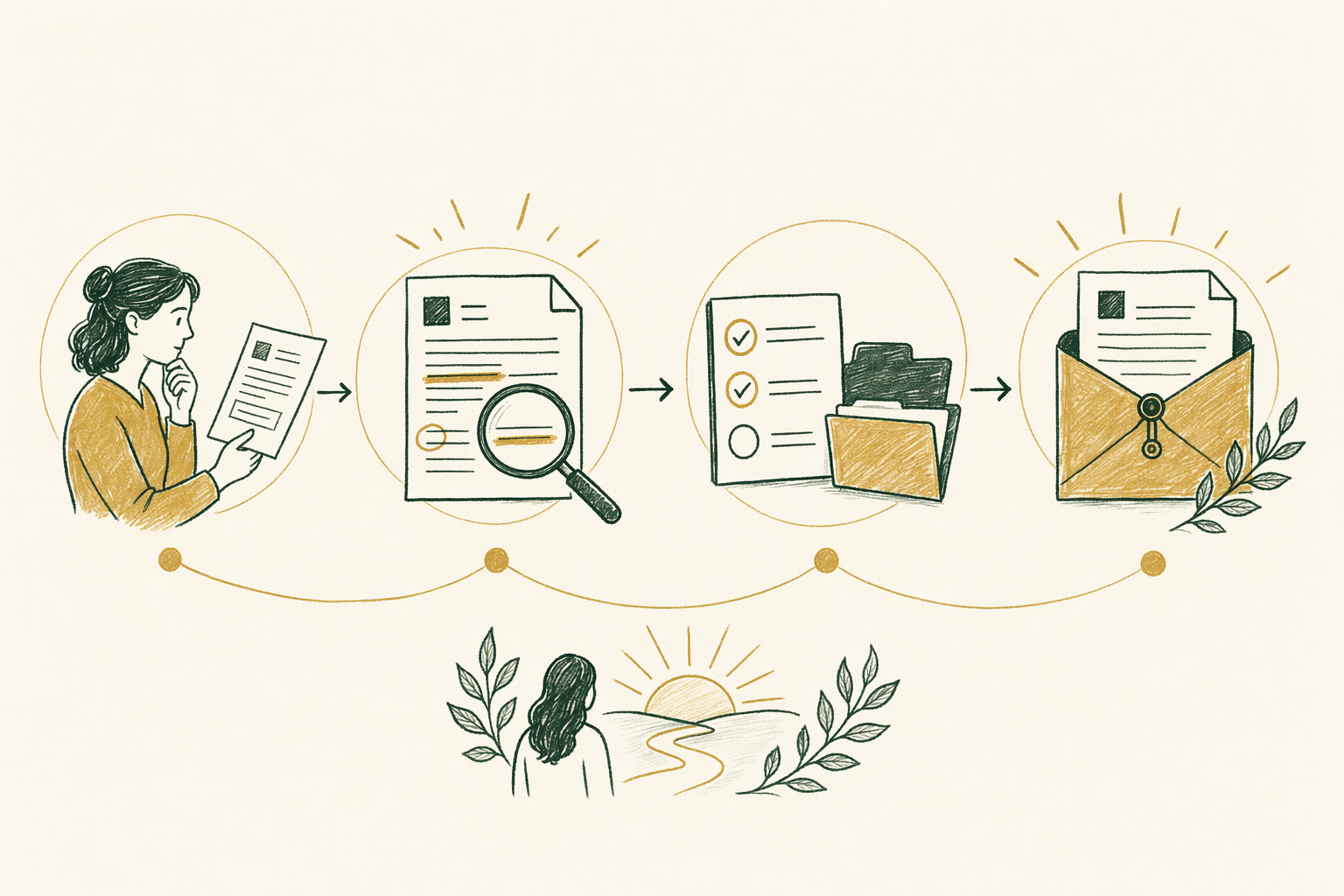
First things to check on any document
- Who sent it. Look for the court name, government agency, landlord, employer, school, debt collector, or lawyer.
- What it is called. Titles matter. Examples include summons, complaint, notice to appear, subpoena, lease, petition, motion, order, and judgment.
- The date and deadline. Find the mailing date, hearing date, response date, or move-out date. Write it down right away.
- Your name and case number. Make sure the paper is really about you. A case number helps you track the matter.
- What action is requested. It may ask you to respond in writing, appear in court, send documents, pay money, or do nothing for now.
- How it was delivered. Some papers are mailed. Some are handed to you. Some are posted on a door or sent online. The delivery method may matter.
- Language help. If you need an interpreter, translation help, or disability accommodation, ask early. Courts and agencies often have a process for this.
- Warning signs. Be careful if the document asks for payment by gift card, wire transfer, or crypto, or threatens immediate arrest over the phone. Those are common scam signs.
Common legal documents, in plain English
A summons is a notice that says a legal case has been started and tells you to respond or appear. It often comes with a complaint or petition, which is the written paper explaining what the other side is asking the court to do. For example, in a debt case, the complaint may say you owe money. In a family case, a petition may ask for divorce, custody, or child support.
A notice to appear can mean different things in different systems. In immigration court, it is often the paper that starts removal proceedings, which are court proceedings about whether a person can stay in the United States. In traffic or local court, it may mean you must come to court on a certain date. Because the phrase is used in more than one area, read the issuing agency and court name carefully. If the notice is about immigration, see immigration services.
A subpoena is an order telling a person to appear, testify, or produce records. Testify means answer questions under oath. Produce records means give documents or other evidence. A subpoena is serious, but it does not always mean you are in trouble. Sometimes you are only a witness.
A court order is a command from a judge. You usually must follow it unless it is changed by the court. A judgment is a formal decision in a case. A motion is a written request asking the judge to decide something. These papers often contain hearing dates and deadlines.
A lease is a rental agreement between a tenant and a landlord. It explains rent, deposits, repairs, guests, and other rules. A notice to quit, pay or quit notice, or other eviction paper may say the landlord claims rent is owed or that you must move. The exact name depends on the state. Some landlord notices are not court papers yet. Others mean a court case has already started.
In family law, common papers include a petition for divorce, custody papers, child support notices, and protective order papers. A protective order, sometimes called a restraining order, is a court order that may limit contact between people for safety reasons. If you got one, read it fully and follow it while you get legal advice. For more help, see family law services.
You may also see letters from schools, child welfare agencies, benefits offices, or debt collectors. These may not look as formal as court papers, but they can still matter a lot. If the letter threatens a hearing, loss of benefits, collections, or immigration consequences, do not put it aside.
What to do when you get a document or notice
- Read the title first. The name of the document often tells you how urgent it is.
- Find every deadline. Check the first page, last page, and any section called notice, response, or hearing.
- Save everything. Keep the envelope, screenshots, emails, text messages, and all pages, even blank-looking pages.
- Do not sign anything you do not understand. Ask for a translation or plain-language explanation first.
- Do not ignore a court paper. Even if you think it is wrong, you usually still need to respond.
- Write down what happened. Note when you received it, who gave it to you, and any conversations about it.
- Ask for language help early. If you need an interpreter in court or at an agency hearing, request one as soon as possible.
- Watch for scams. Real agencies and courts usually do not demand payment by phone using gift cards or threaten instant arrest if you hang up.
- If the matter is urgent, contact a licensed attorney. This is especially important for immigration, eviction, child custody, domestic violence, criminal charges, and large money claims.
- If you want help finding a lawyer, you can get matched through Legal Bearings. The matching service is free for readers, and participating attorneys pay a flat fee to be included.
How to tell if you need to act fast
Some papers need quick attention. A hearing notice with a date next week is urgent. So is a summons with a short response deadline. Immigration notices, eviction papers, and protective orders often need fast review because missing a date can have serious effects.
Look for words such as must appear, response due, final notice, hearing, order, default, removal, eviction, custody, or warrant. These words do not always mean the worst will happen, but they often mean delay is risky.
Even if a document says only "notice," do not assume it is harmless. Some notices are the first step in a process. Others are the last warning before a hearing or penalty. If you are unsure, it is reasonable to ask a licensed attorney to explain your options.
Cost worries are real. Many lawyers offer a first consultation for a low fee or no fee, depending on the case. Fees vary by state and your situation. If money is tight, ask whether the lawyer offers a limited-scope service, which means help with only part of the case, such as reviewing papers or preparing one response.
Do not rely on guesses or social media
Language access, translation, and protecting yourself
If English is not your first language, ask for help in a way that protects you. Try to get a qualified interpreter or a trusted translator who will translate exactly, not someone who adds advice. In some communities, notarios or immigration consultants may present themselves as legal experts. In the United States, a notary public is usually not a lawyer. They often cannot give legal advice unless they are also a licensed attorney.
When possible, ask the court or agency if they provide an interpreter. Some do. If a form is available in your language, compare it with the English version, because the official filing may still need to be in English. Keep copies of both.
Be careful with anyone who promises a certain result, asks you to lie, tells you to hide papers, or pressures you to sign immediately. Those are major warning signs. A trustworthy professional should explain fees clearly, answer questions, and tell you what they can and cannot do.
Before any meeting, gather your papers in one folder. Put them in date order if you can. Bring ID if you have it, but do not hand over original documents unless you understand why. You can also make a short list of questions, such as: What is this paper? What is the deadline? What happens if I do nothing? What are my options?
If you want help finding a licensed attorney, Legal Bearings offers a free matching service. It is not a law firm and does not give legal advice. It connects readers with participating lawyers, and those lawyers pay a flat fee to participate. You can also learn more about how it works.
Common questions
What if I cannot read the document well enough to understand it?
Start by finding the title, sender, and any deadline. Save every page. Then ask for language help or have a licensed attorney review it. If it is from a court or immigration agency, try to get help quickly because deadlines may be short.
If I was handed a summons, does that mean I am guilty or will lose?
No. A summons usually means a case has started and you have a chance to respond. It is important because ignoring it may let the other side move forward without your response. A licensed attorney can explain what the paper means in your state.
I got a notice to appear for immigration court. What should I do first?
Read it carefully for the court location, date, and any charges or allegations. Missing immigration court can cause serious problems. You may want to speak with a licensed immigration attorney as soon as possible. You can also review [immigration services](/services/immigration/).
My landlord taped a paper to my door. Is that already an eviction?
Not always. In many states, a landlord must first give a notice before filing an eviction case in court. In other cases, the paper may already be a court summons or complaint. Read the title and any court name closely, and consider getting legal advice quickly if there is a deadline or hearing date.
Can Legal Bearings tell me what I should do with my document?
Legal Bearings is not a law firm and does not give legal advice. It provides general legal information and can help you get matched with a licensed attorney for advice about your specific situation. The matching service is free for readers.
In plain English: If a legal paper has your name, a deadline, or a court date, do not ignore it, save everything, and get qualified help early if you can.