How a Worker Recovered Months of Unpaid Wages
This is an anonymized example of how one worker got help after months of missing pay. Names and some details were changed for privacy, but the steps and concerns are common.
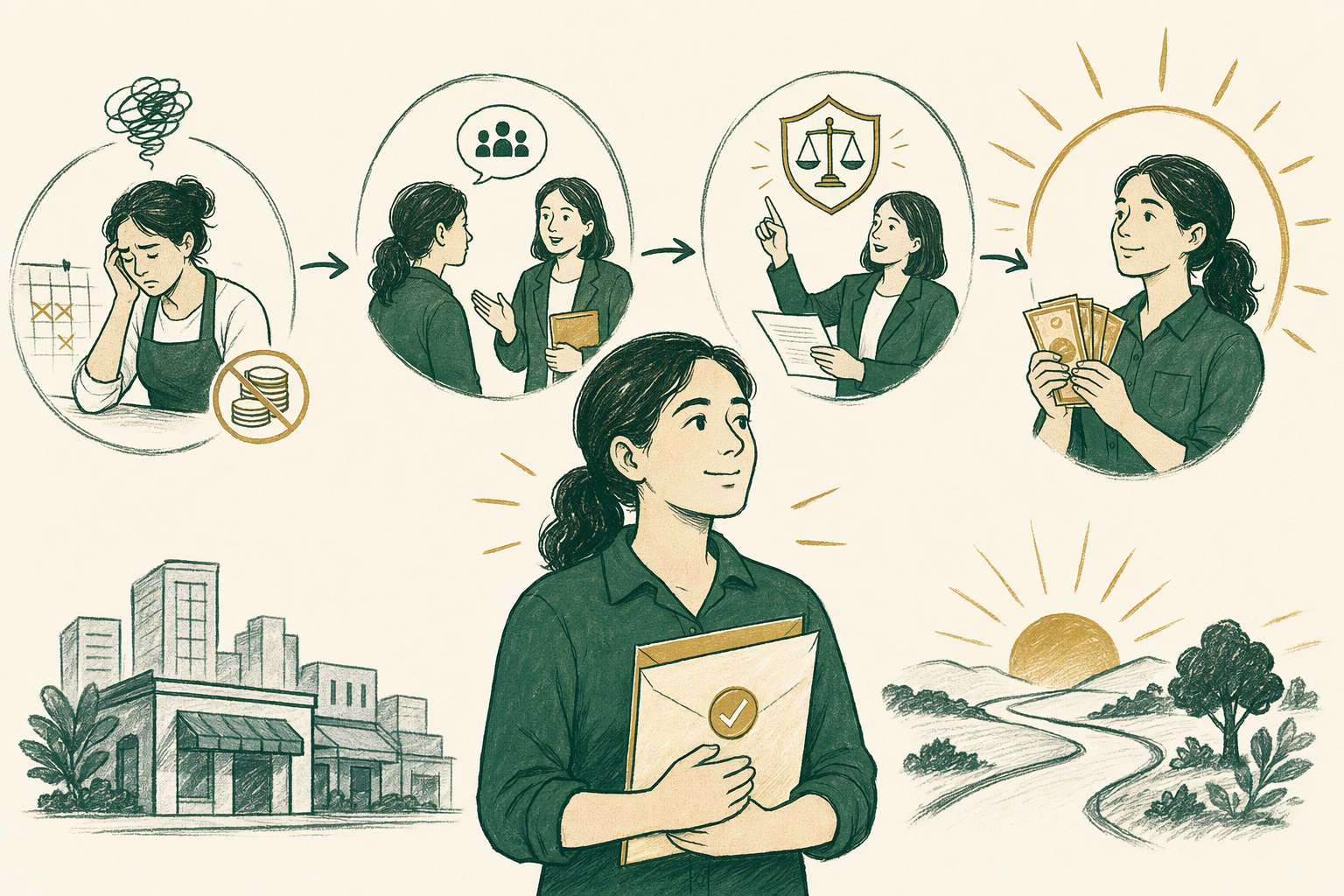
A missed paycheck turned into a bigger problem
A worker we will call Ana had a simple question. Her paychecks were late, short, or missing. At first, she thought it was a mistake that would be fixed soon.
Ana worked long hours at a small business. She says she asked about the missing pay more than once. Each time, she got a different answer. One week it was, "next payroll." Another week it was, "the books are behind." After a while, the unpaid time added up to months of wages.
Ana was scared to push harder. English was not her first language. She worried that if she complained, she could lose her job. She also worried about cost. She did not know if talking to a lawyer would be too expensive.
This page is general information, not legal advice. Legal Bearings is not a law firm. We help people learn about their options and get matched, for free, with a licensed attorney who may handle cases like this. You can also start with our free matching service if you want help finding a lawyer.
Why unpaid wages can be a legal issue
"Unpaid wages" means money an employer should have paid for work you already did, but did not. That can include regular hourly pay, salary, overtime, final pay after leaving a job, or other promised compensation. "Overtime" usually means extra pay, often one and a half times the regular rate, for certain hours over the legal limit.
Not every pay problem becomes a legal claim, but many do. The rules depend on federal law, state law, and the facts of the job. Some workers are protected by wage laws even if they are paid in cash, have no written contract, or do not speak English well.
Ana did not know what records mattered. She had some text messages with her supervisor. She also had a notebook where she wrote down her shifts. She had bank statements that showed missing deposits. Those details may matter in a wage case because they help show when work was done and what was or was not paid.
If your problem involves missing pay, short pay, or unpaid overtime, you can read more about employment law help before you decide what to do next.
What Ana did before talking to a lawyer
- She wrote down the dates she worked, the hours, and what she expected to be paid.
- She saved pay stubs, work schedules, text messages, and any emails about payroll.
- She checked whether co-workers had the same problem, without pressuring anyone to speak up.
- She looked for low-cost or free ways to understand her rights, because she was worried about legal fees.
- She asked for help finding a lawyer who could explain her options in plain language.
How the lawyer review helped
After using Legal Bearings, Ana was matched with a licensed attorney who handles employment matters. "Employment law" is the area of law about work, pay, discrimination, firing, and similar job issues. The lawyer's office explained what a consultation is. A "consultation" is a first meeting or call where you talk about the problem and learn whether the lawyer may be able to help.
During that first review, the lawyer asked basic questions about Ana's job, pay rate, schedule, and records. The lawyer also asked whether she was still working there and whether anyone had threatened her after she complained. The goal was to understand the timeline and see what options might fit.
The lawyer explained that wage claims can be handled in different ways. Sometimes a lawyer sends a demand letter. A "demand letter" is a written request asking the employer to fix the problem, often by paying money owed. In other situations, a worker may file a complaint with a government labor agency, or file a lawsuit in court. A "lawsuit" is a formal legal case filed before a judge.
Ana says the biggest relief was being able to ask questions in a way she understood. She learned that she did not need to have every document perfectly organized before speaking with a lawyer. She just needed to bring what she had and explain the problem honestly.
What information often helps in an unpaid wage case
- Your job title and what kind of work you did
- The dates you worked and your usual schedule
- How you were supposed to be paid, hourly, salary, cash, check, or direct deposit
- Any pay stubs, time sheets, schedules, texts, emails, or messages about work
- Your own notes about missed or short pay
- Names of managers or supervisors involved
- Whether other workers had similar pay problems
- Whether you were fired, threatened, or punished after asking about pay
What happened next in this story
In Ana's case, the lawyer reviewed her records and took steps to pursue the unpaid wages. We are not sharing exact legal strategy because every case is different, and this page is not legal advice. But this is the general path: gather proof, calculate the missing pay, contact the employer or file the right claim, and keep records of every response.
After several weeks, Ana recovered a large part of the wages she said she was owed. In some wage cases, workers may also seek penalties or other amounts allowed by law. A "penalty" is extra money the law may require when an employer breaks certain pay rules. Whether that applies depends on the state and the facts.
The result in any case depends on the evidence, the law, deadlines, and the employer's response. Some cases settle early. A "settlement" is an agreement that ends a dispute without a trial. Others take longer and may need a court or agency decision.
What matters here is not a promise. It is that Ana moved from fear and confusion to clear next steps. She got an explanation of her options from a licensed attorney, and that helped her decide what to do.
Do not wait too long
If this sounds like your situation
Many workers stay quiet because they are afraid of retaliation. "Retaliation" means punishment for speaking up about a legal right, such as asking about unpaid wages. The law may protect workers from some kinds of retaliation, but the details depend on the state and the facts. A lawyer can explain what protections may apply in your case.
Cost is also a real concern. Some employment lawyers offer a free consultation. Others charge a flat fee or another arrangement, and the amount varies by state and your situation. It is okay to ask about fees at the start. It is also okay to ask whether the lawyer can speak your language or provide an interpreter.
If you want, Legal Bearings can help you find a licensed attorney who handles wage and job pay issues. Our matching service is free to you. Legal Bearings is paid a flat fee by participating attorneys for marketing and matching, and we do not give legal advice. You can learn more about how matching works or start here to get matched.
Even if you are not ready to hire anyone, you can start by saving records and writing down what happened. Then consult a licensed attorney for advice about your specific situation.
Common questions
Can I still have a case if I was paid in cash?
Maybe. Being paid in cash does not always remove your legal rights. A lawyer may look at your messages, schedule, notes, witnesses, and other proof of work.
What if I do not have all my pay stubs?
You should still consider talking to a lawyer. Many workers do not have complete records. Bring what you have, including texts, bank records, calendars, and your own notes.
Can my boss fire me for asking about missing pay?
Retaliation may be illegal in some situations, but the rules depend on the facts and your state. A licensed attorney can explain what protections may apply to you.
How much does it cost to talk to an employment lawyer?
It varies by state and your situation. Some lawyers offer free consultations, while others may charge a fee. Ask about cost, language help, and billing before you decide.
What does Legal Bearings do?
Legal Bearings is not a law firm and does not give legal advice. We provide general legal information and a free service that helps connect people with licensed attorneys who may handle their type of issue.
In plain English: If your boss has not paid you for work you already did, you may have options, and Legal Bearings can help you find a licensed lawyer for free.