Preparing for the U.S. Citizenship Test and Interview
The U.S. citizenship test and interview can feel stressful, but many people prepare step by step and do well. This guide explains what usually happens, what to study, and when it may help to speak with a licensed immigration lawyer.
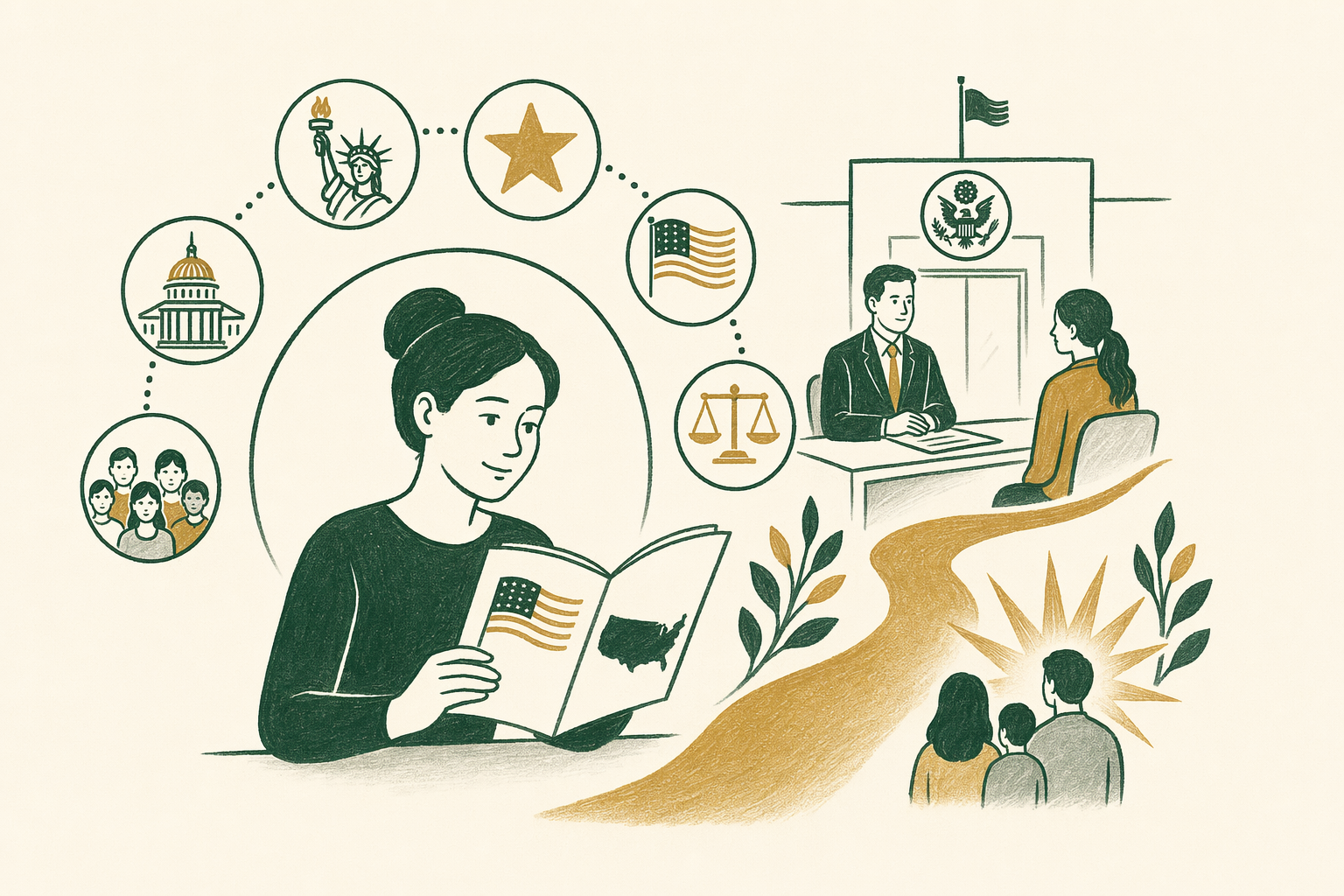
What to expect at the citizenship interview
If you applied for U.S. citizenship through naturalization, that means the legal process to become a U.S. citizen. You will usually be scheduled for a biometrics appointment first, then a citizenship interview with U.S. Citizenship and Immigration Services, often called USCIS.
At the interview, a USCIS officer will review your application, ask questions about your background, and test your English and civics knowledge unless you qualify for an exception. Civics means basic knowledge about U.S. history and government. The officer may also ask about trips outside the United States, your address history, your job history, taxes, and whether anything has changed since you filed.
Many people feel nervous. That is normal. The interview is not only a test of facts. It is also a review of whether your application is complete and truthful. Small mistakes are not always a disaster, but it is important to be honest and clear.
How to prepare before your appointment
- Read your naturalization application carefully before the interview. Make sure you understand every answer on the form, including dates, addresses, work history, travel outside the U.S., and any past contact with police or immigration officers.
- Study the civics questions and practice spoken English if you will be tested. USCIS provides official study materials. Practice answering out loud, not only reading silently.
- Gather your documents early. Common items may include your green card, interview notice, state ID, passport, tax records, marriage or divorce records, selective service proof if required, and any papers related to name changes or past legal issues.
- Check whether you may qualify for an exception or accommodation. Some applicants may take the test in their own language because of age and years as a permanent resident. Others may ask for a disability accommodation, which means help because of a medical condition or disability.
- Plan your trip to the interview site. Know the address, parking or train route, security rules, and what time to arrive. Being late can create problems.
- If anything important changed after you filed, bring proof. Examples include a new address, a new trip abroad, a marriage, a divorce, or a criminal charge. A licensed attorney can advise you about how a change may affect your case.
What is on the English and civics tests
Most applicants must show basic English in three ways, speaking, reading, and writing. The speaking part happens during the interview when the officer asks questions. For the reading test, you usually read one sentence correctly. For the writing test, you usually write one sentence correctly.
The civics test covers U.S. history and government. USCIS asks up to 10 questions from a list of official questions, and you usually need 6 correct to pass. The exact test format may differ for some applicants based on age or when they filed, so check the current USCIS rules.
Do not rely only on videos from strangers online. Use official study materials and trusted legal information. If you need extra help, an immigration lawyer or accredited representative may explain the process, but only a licensed attorney can give legal advice about your specific case.
Common interview questions and problem areas
- Your application details. The officer may ask you to confirm your full name, date of birth, address, and travel history.
- Your time as a permanent resident. Be ready to explain long trips outside the U.S. because they may affect continuous residence, which means keeping the required connection to living in the United States.
- Taxes and financial records. If you owed taxes or did not file when required, bring records and consider legal advice.
- Selective Service registration. Some men who lived in the U.S. between certain ages may have needed to register. Missing registration does not always end a case, but it can raise questions.
- Criminal history. This includes arrests, charges, convictions, expungements, or probation. Expunged means a record was erased or sealed under state law, but immigration authorities may still ask about it.
- Marriage and family questions. If your application is based on marriage to a U.S. citizen, the officer may ask about your relationship and shared life.
- Past immigration problems. Using another name, missing a court date, giving false information, or old removal issues can make a case more complicated. Removal means deportation, or being ordered to leave the country.
Be careful with notarios and unlicensed help
If you need language help, disability help, or legal help
Some applicants may take the civics test in their own language if they meet age and permanent residence rules. If that applies to you, you may bring an interpreter for the interview if USCIS allows it under the current rules. Check your interview notice and the USCIS instructions carefully.
If you have a disability or medical condition that affects testing, you may ask for an accommodation. An accommodation is a change in the process to give fair access, such as extra help, more time, or an exception supported by proper forms. The rules are specific, so read the official instructions closely.
You do not need a lawyer for every citizenship case. But legal help may be useful if you had criminal charges, missed taxes, many long trips outside the U.S., support-payment problems, past immigration fraud concerns, or fear that a past mistake could cause denial. A denial means USCIS says no to the application. For general information about attorney matching, see how it works or get free help finding someone through get matched. Legal Bearings is not a law firm and does not give legal advice. It is a free service for readers and is paid a flat fee by participating attorneys.
After the interview, what may happen next
Some people are approved at the interview. Others get a paper saying USCIS will continue reviewing the case. The officer may ask for more evidence, which means more documents or proof. If that happens, read the notice carefully and respond by the deadline.
If you do not pass one part of the English or civics test the first time, USCIS often gives a second chance to take the part you did not pass. If your case is denied, you may have options to ask for a review or to reapply later, depending on the reason. The right next step depends on your facts, so consider advice from a licensed attorney.
Keep copies of everything you send and every notice you receive. If you move, update your address with USCIS right away. Missing a notice can lead to delays or even denial.
If you want more general immigration information, you can also read immigration services. If your case feels confusing or high risk, free matching with a licensed lawyer may help you ask better questions and understand your options.
Common questions
What should I bring to my citizenship interview?
Bring your interview notice, green card, government ID, passport or travel documents, and any papers that support your application. Depending on your case, that may include tax records, marriage or divorce papers, selective service proof, court records, and documents showing changes since you filed.
Can I take the citizenship test in my own language?
Some applicants may qualify based on age and how long they have been permanent residents. The rules are specific, and they may change, so check current USCIS guidance or ask a licensed immigration attorney about your situation.
What if I fail the civics or English test?
Many applicants get a second chance on the part they did not pass. USCIS often schedules another test date. Read your notice carefully and keep studying the official materials.
Do I need a lawyer for the citizenship interview?
Not always. Many straightforward cases are handled without a lawyer. But if you have arrests, old immigration problems, long trips outside the U.S., tax issues, or other concerns, a licensed attorney may help you understand risks and prepare.
How much does a citizenship lawyer cost?
Costs vary by state and your situation. Some lawyers offer a consultation for about $0 to $300, and full help with a naturalization case may range from a few hundred dollars to several thousand dollars, depending on complexity. Ask for the fee in writing and what services are included.
In plain English: You can prepare for the citizenship test and interview step by step, and if your case has problems or feels confusing, free matching with a licensed immigration lawyer may help you understand your options.