Document Checklist for Your First Lawyer Meeting
Going to your first lawyer meeting can feel stressful. This checklist can help you gather the right papers, save time, and feel more prepared.
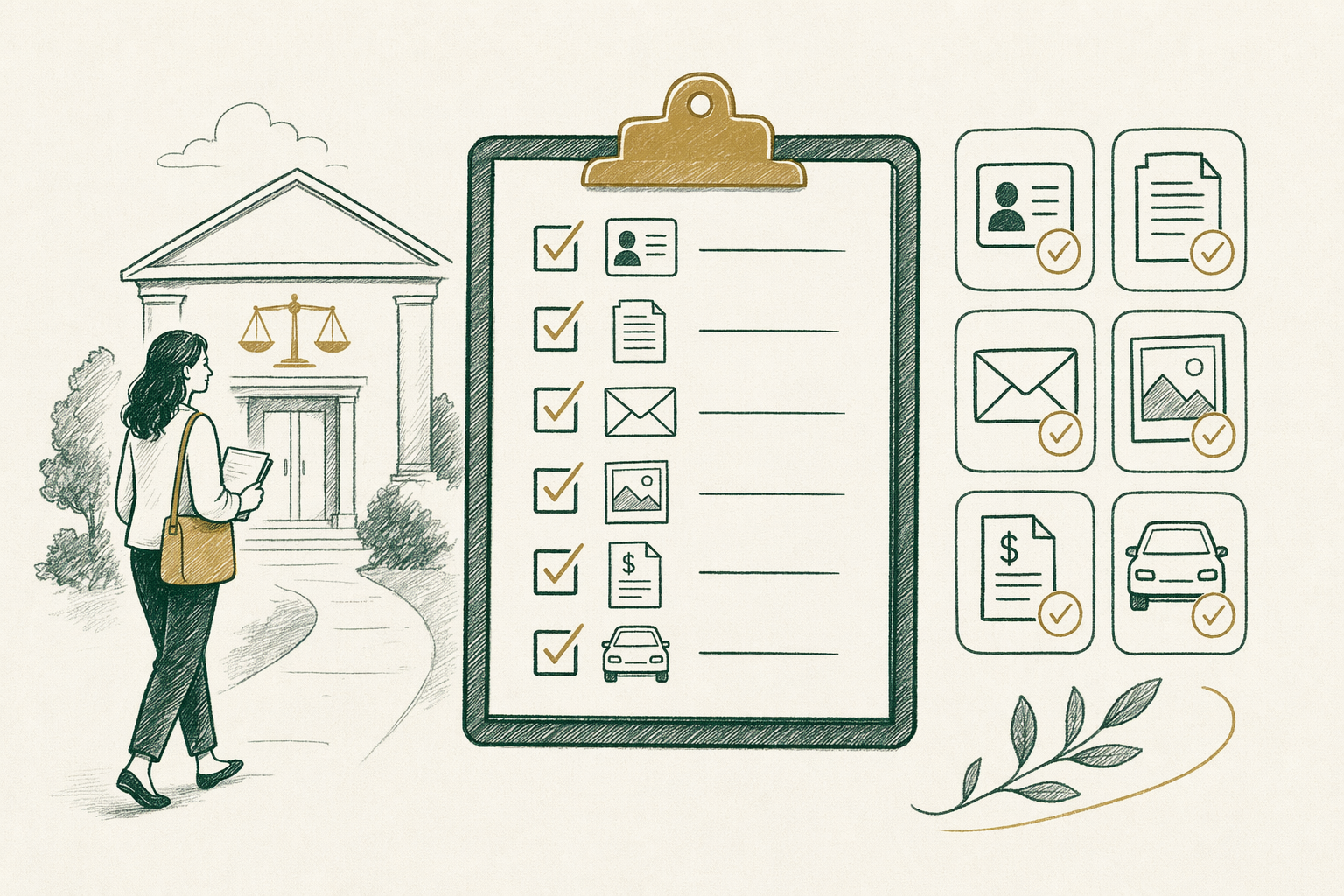
Document Checklist for Your First Lawyer Meeting
Free and no obligation.
What this checklist is for
Your first meeting with a lawyer is often called a consultation, which means a first talk about your problem and your options. Bringing the right documents can help the lawyer understand your situation faster.
You do not need to bring every paper you have. Bring what you can find. If something is missing, that is usually okay. A licensed attorney can tell you what else may help for your specific case.
If English is not your first language, you can also bring translated notes, a trusted interpreter if the lawyer allows it, or a list of words you do not understand. If you want help finding a lawyer, you can use our free matching service. Legal Bearings is not a law firm and does not give legal advice. We provide general information and help connect people with licensed attorneys.
Quick checklist, what to bring
- A photo ID, such as a passport, state ID, driver's license, or consular ID
- Your contact information, including your phone number, email, and safe mailing address
- A short timeline of what happened, with dates, places, and names if you know them
- Any letters, emails, text messages, notices, or court papers related to your problem
- Contracts, agreements, leases, receipts, bills, pay stubs, or invoices connected to the issue
- Names and contact information for witnesses, which means people who saw or know important facts
- Photos, screenshots, videos, or recordings if they relate to the problem and were collected lawfully
- Insurance information, claim numbers, or policy papers if insurance is involved
- Immigration papers if your legal issue may affect your status, such as visas, work permits, or notices from the government
- A list of questions you want to ask, plus a notebook to write down answers
- Information about any deadlines, court dates, hearing dates, or upcoming appointments
- Payment information only if you want to discuss fees, such as a budget range or questions about payment plans
Documents that are often important
Some papers matter in almost every kind of case. Start with identity documents, notices from the government or a court, and anything that shows dates and money. Good examples are leases, job offers, tax papers, pay records, school records, police reports, and medical bills if they relate to the legal problem.
Bring originals if you have them, but keep copies for yourself. If you are worried about losing a document, ask the office if a copy is enough. You can also put papers in a folder by date, oldest to newest. That makes them easier to review.
Messages can matter too. Save emails, text messages, social media messages, and voicemail if they relate to your case. Take screenshots, but also keep the full message if possible. A screenshot may not show the full date, sender, or context.
If your papers are in another language, bring them anyway. If you have translations, bring both versions. If you do not have translations, the lawyer may still be able to review the originals and explain what certified translation, which means an officially confirmed translation, may be needed later.
Case-specific items to consider
- Family law, marriage certificates, divorce papers, birth certificates, custody orders, and school records for children
- Immigration, passports, visas, I-94 travel records, work permits, green card copies, and notices from immigration agencies
- Housing, lease agreements, rent receipts, repair requests, photos of damage, eviction notices, and messages with a landlord
- Employment, pay stubs, work schedules, job contracts, disciplinary notices, emails with a manager, and tax forms like W-2 or 1099
- Injury or accident, police reports, insurance letters, repair estimates, photos, witness names, and bills related to the event
- Criminal defense, charging papers, bond papers, court dates, and any release conditions from the court
- Consumer or debt, collection letters, account statements, loan papers, contracts, and records of payments
- Small business, business licenses, partnership agreements, invoices, bank records, and messages with customers or vendors
What to do before the meeting
Write a simple summary of the problem in your own words. Keep it to one page if you can. Include what happened, when it happened, who was involved, and what you want help with. This helps if you are nervous or if English is hard in the moment.
Make a question list. You might ask, what are my options, what deadlines should I know about, what documents are still missing, and how are fees charged. A retainer is money paid up front for legal work in some cases. A flat fee is one set price for a service. An hourly rate means the lawyer charges for time spent. Costs vary by state and your situation.
If you already spoke with another lawyer, bring any written agreement or notes from that meeting. If you have a conflict, which means a schedule problem, call ahead if you need an interpreter, disability access, or more time.
You may also want to read our guide to choosing a lawyer before the meeting. It can help you compare options and ask clearer questions.
Be careful with originals
How to protect yourself and avoid mistakes
Bring honest information, even if a fact feels embarrassing or may hurt your case. A lawyer can often help more when they know the full story early. Hiding important facts can create problems later.
Do not change documents, delete messages, or ask others to change their story. That can damage your case. Keep papers and digital files in a safe place. If possible, make a backup on your phone, cloud storage, or a USB drive.
It is okay to ask about language help and costs. Many lawyers offer first meetings at low cost or no cost, but not all do. Fees may be a consultation fee, a flat fee, an hourly rate, or another arrangement, depending on the type of case. Costs vary by state and your situation.
If you are not sure where to start, we can help you get matched with a licensed attorney. Legal Bearings is a free matching and marketing service for readers. Participating attorneys pay us a flat fee. We do not take a percentage of legal fees or any settlement.
Common questions
What if I do not have all the documents on the checklist?
That is common. Bring what you have and make a list of what is missing. A licensed attorney can tell you which items matter most for your specific situation.
Can I bring someone with me to help translate?
Often yes, but ask the lawyer's office first. Some offices may prefer a professional interpreter or may have rules about who can sit in the meeting.
Should I bring original documents or copies?
If possible, bring copies and keep the originals safe. Bring originals only if the lawyer asks for them, and ask for a receipt if any original document is left with the office.
What questions should I ask at the first meeting?
You can ask about your options, deadlines, possible next steps, what documents are still needed, and how fees work. You can also ask who will handle your case and how the office will communicate with you.
How much does a first lawyer meeting cost?
Some first meetings are free, and some may cost about $0 to $300 or more. The amount varies by state, the type of case, the lawyer's experience, and whether the meeting is short or detailed.
In plain English: You do not need perfect papers, just bring what you have, stay organized, and ask clear questions so a licensed lawyer can better understand your problem.