Avoiding Legal and Immigration Scams
Scams often target people who are worried, in a hurry, or new to the U.S. You can protect yourself by learning a few warning signs and checking whether a person is a real licensed attorney.
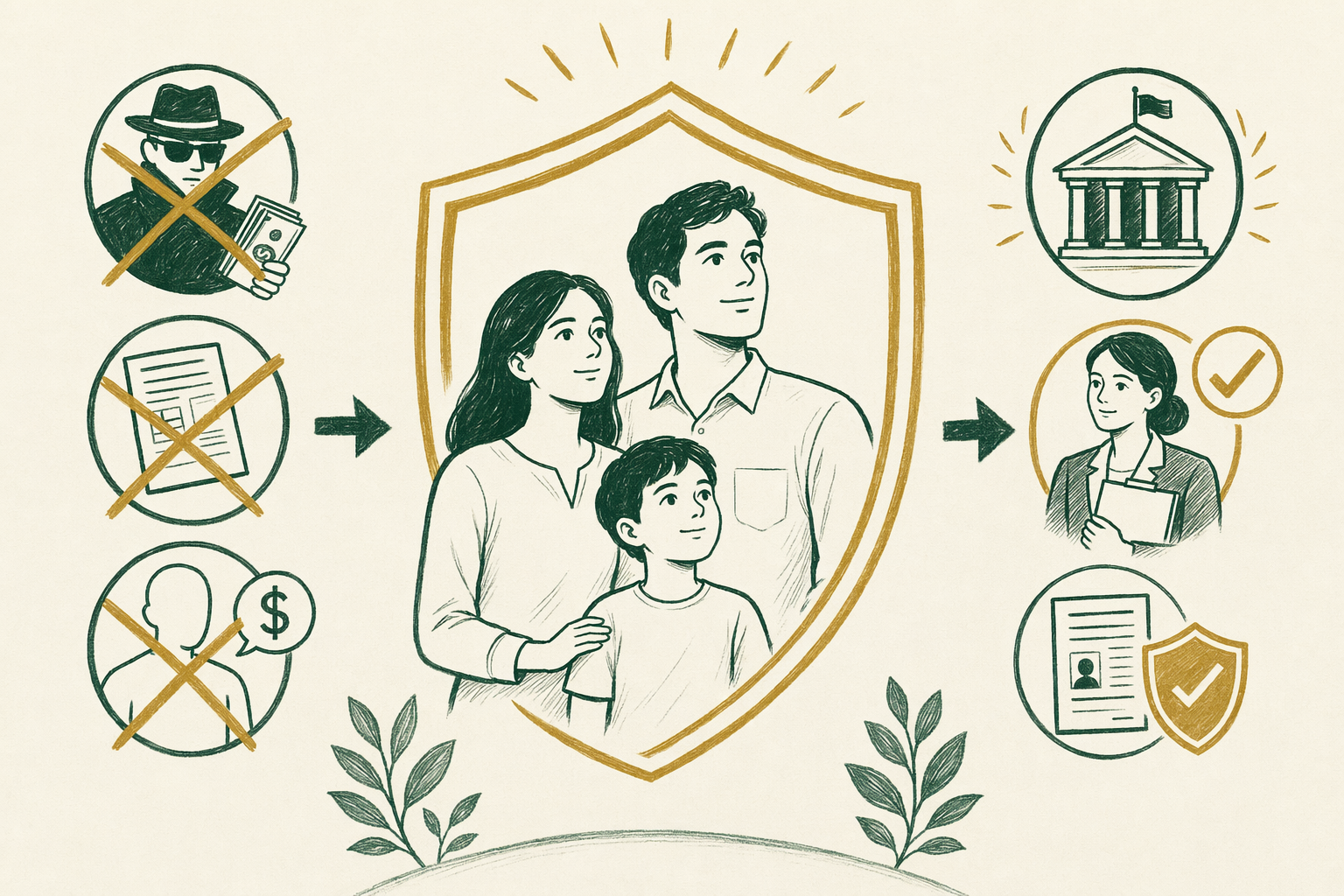
Why this matters
If you need help with immigration or family problems, you may feel pressure to act fast. Scammers know that. They may promise quick results, ask for cash, or pretend they have special power with the government.
A common scam is notario fraud. In many Latin American countries, a notario is a trained legal professional. In the United States, a notary public is usually only a person allowed to witness signatures and check identity. A notary public is not automatically a lawyer and usually cannot give legal advice.
Another scam is a fake lawyer or "consultant" who says they can handle your case but is not licensed by any state. Some people also charge very high fees for simple forms, or they take money and disappear. Knowing the signs can help you avoid losing money, missing deadlines, or harming your case.
This page is general education, not legal advice. For advice about your specific case, talk to a licensed attorney. If you want, you can use our free matching service to be connected with a participating lawyer.
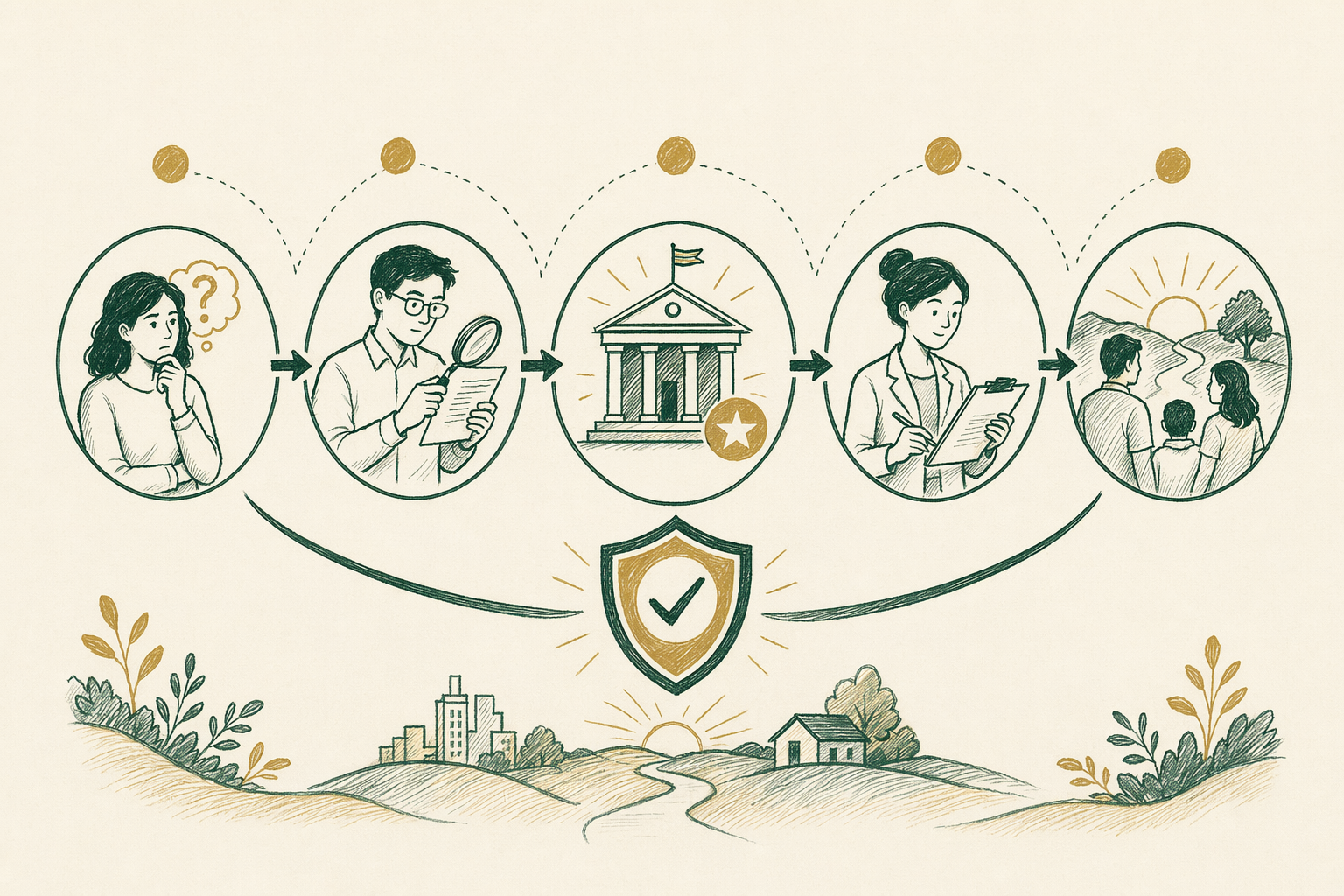
Common scam warning signs
- They call themselves a notario, immigration consultant, visa expert, or document specialist, but will not clearly say whether they are a licensed attorney.
- They promise approval, a green card, a work permit, or citizenship. No honest person can guarantee a government decision.
- They say they have a special connection inside USCIS, immigration court, the police, or another agency.
- They tell you to sign blank forms or forms you cannot read.
- They refuse to give you copies of what they filed for you.
- They ask you to lie, use fake documents, or hide facts. That could lead to denial, removal, or criminal charges.
- They push you to pay in cash only, wire money, or use gift cards.
- They will not give you a written agreement that explains the work and the fee.
- They tell you not to talk to any other lawyer or not to get a second opinion.
- They use fear, like saying you will be deported tomorrow unless you pay right now.
- They use social media messages that look official, but the account is not linked to a real law office or government agency.
- They advertise in your language, but cannot explain their license, office address, or who will actually handle your case.
How to verify a real licensed attorney
- Ask for the lawyer's full name, the state where they are licensed, and their bar number. A bar number is the lawyer's registration number with a state.
- Check the lawyer on the official state bar website. Most state bars have a public lawyer search. Look for active status and any discipline history.
- Ask whether the lawyer handles immigration, family, or another area regularly. Experience matters, even if the lawyer is licensed.
- For immigration matters, ask who will prepare and review your forms. A lawyer should explain this clearly.
- Confirm the office address, phone number, and email. Be careful if everything happens only through messaging apps and there is no real office information.
- Ask for a written fee agreement. This is a paper that says what work the lawyer will do and what you may have to pay.
- Make sure you understand whether you are hiring a lawyer, a law office staff member, or a non-lawyer assistant. Only a licensed attorney can give legal advice.
- Before signing, ask for an interpreter or translated explanation if you need one. If something is unclear, stop and ask questions.
How real legal help usually works
A licensed attorney is a person approved by a state to practice law. That does not mean every lawyer is right for every case, but it does mean the person must follow professional rules. Those rules often include honesty, protecting client information, and handling money in certain ways.
In many cases, a lawyer or staff member will first ask basic facts about your problem. They may explain the next steps, possible risks, and the documents you should gather. They should not pressure you to sign immediately if you do not understand the plan.
For immigration cases, be careful with anyone who says they can speed up the government because they know someone inside. Government agencies follow their own rules and timelines. A lawyer may help you prepare a stronger application and avoid mistakes, but no one can promise approval.
If your problem also affects your family, such as divorce, custody, or protection orders, it may help to ask whether the lawyer handles both immigration and family issues or works with another attorney. You can learn more about immigration help and family law help.
Do not sign what you do not understand
Protect yourself before you pay
Always ask for a receipt. A receipt is proof of payment. Keep copies of receipts, contracts, forms, letters, emails, and text messages. Put them in one folder, paper or digital.
Try to pay in a way that creates a record, such as a card, check, or another traceable method. Cash can be harder to prove later. If you do pay cash, get a signed receipt that shows the date, amount, and reason for payment.
Read the fee agreement carefully. A fee agreement is the paper that says what services are included and what they cost. It should explain whether the fee covers filing forms, going to court, translations, mailing, or government filing fees. Costs often vary by state and your situation.
Ask who will talk to you about updates. Ask how quickly they usually answer calls or messages. If language is a concern, ask whether the office can communicate in your language or provide an interpreter. You can also read how matching works if you want help finding a participating attorney who may meet your language needs.
Questions to ask before hiring anyone
- Are you a licensed attorney. If yes, in what state are you licensed.
- What is your bar number, and where can I verify it.
- Who will work on my case day to day.
- What services are included in the fee, and what costs are separate.
- Will you give me copies of everything filed in my case.
- What are the main risks or possible problems in my case.
- How will we communicate, and in what language.
- If I move or change my phone number, how should I update you.
- What happens if my case takes longer than expected.
- Can I take time to review the agreement before I sign.
If you think you were targeted by a scam
Act quickly, but stay calm. First, collect your records. Save receipts, screenshots, emails, text messages, business cards, ads, and copies of forms. Write down dates, names, and what happened.
If someone filed papers for you, try to get copies right away. If the case involves immigration, check your case status directly through the official government website if you have a receipt number. If you do not know what was filed, a real lawyer may be able to help you review the situation.
You may also want to report the scam. Depending on what happened, reports may go to a state attorney general, a consumer protection office, a state bar, police, or a federal agency. If the person falsely claimed to be a lawyer, the state bar may want to know. If the person was a notary public, the state office that regulates notaries may also take complaints.
If you need help finding a licensed attorney to review the damage, you can use our free matching service. Legal Bearings is not a law firm and does not give legal advice. We help connect people with participating attorneys, and the service is free for you.
Common questions
Is a notary public the same as a lawyer in the U.S.?
Usually no. In the United States, a notary public usually only checks identity and witnesses signatures. A notary public is not automatically a licensed attorney and usually cannot give legal advice.
Can anyone guarantee my immigration case will be approved?
No. Government agencies and courts make those decisions. A licensed attorney may help you understand your options and avoid mistakes, but no one can honestly promise approval or a specific result.
What if I already paid a scammer?
Save every record you have, including receipts, messages, and copies of forms. You may want to talk to a licensed attorney quickly to understand any deadlines or damage to your case. You may also be able to report the scam to a state bar, consumer protection office, police, or another agency.
How much does it cost to talk to a real lawyer?
It varies by state and your situation. Some lawyers offer a free first consultation, and others charge a fee. Before you agree to anything, ask for the price range, what is included, and whether government filing fees or other costs are separate.
I am worried about language barriers. What should I do?
Ask whether the lawyer or staff can speak your language or provide an interpreter. Ask for written terms in a language you understand if possible. Do not sign papers you cannot read or do not fully understand.
In plain English: If someone promises quick legal results, hides their license, or pressures you to pay fast, stop, check their credentials, and talk to a real licensed attorney before you move forward.