How to Read a Lease Before You Sign
A lease is a contract, which means a written agreement that can create legal duties. Before you sign, take time to read each part, ask questions, and get help if any term is unclear.
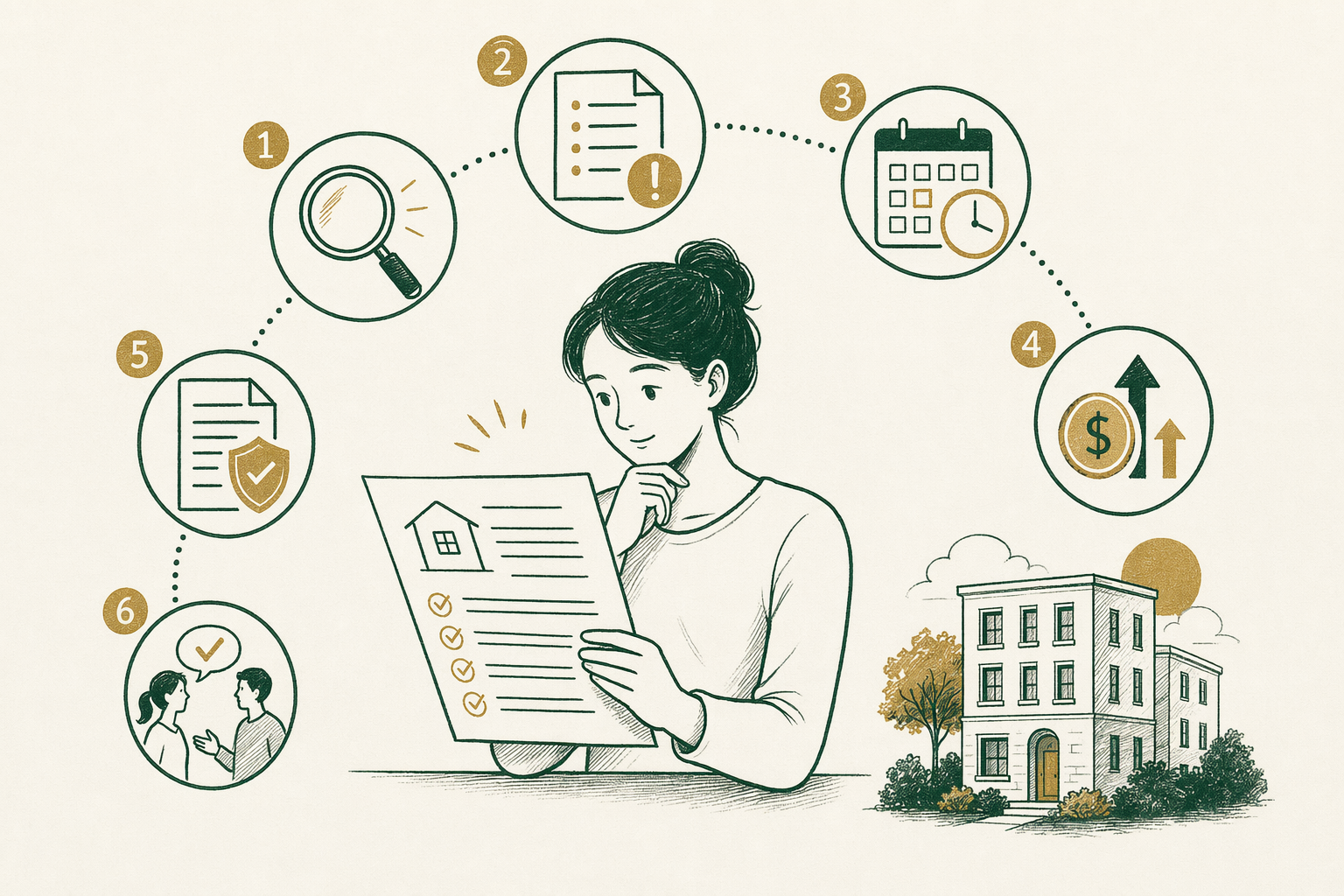
Why reading the lease matters
A lease is a contract between you and the landlord, which is the owner or manager of the home. Once you sign it, you may be responsible for rent, rules, fees, and other promises written in the document. That is why it is important to slow down before signing.
If English is not your first language, this step matters even more. Some leases use legal words or long sentences that are hard to understand. It is okay to ask for time, ask questions, and ask for a copy you can review with someone you trust.
This page gives general education, not legal advice. Housing laws vary by state and city, and your rights may depend on the exact words in the lease. If you want advice about your specific situation, you may want to speak with a licensed attorney. If you need help finding one, you can use our free lawyer matching service.
What to check before you sign
- Read the full lease, not just the first page. Make sure you receive every page, including rules, add-ons, and attachments.
- Confirm the names and address. Check that your name, the landlord's name, and the rental address are correct.
- Look for the lease term, which is how long the lease lasts. It might be month-to-month or for a fixed time such as 12 months.
- Find the total rent and due date. Check how much you pay each month, when it is due, where to pay it, and what payment methods are allowed.
- Check the security deposit, which is money held in case of damage or unpaid rent. See the amount, when it must be paid, and the rules for getting it back.
- Read every fee. Watch for late fees, parking fees, pet fees, move-in fees, key fees, utility charges, and cleaning fees.
- See who pays utilities. Utilities are services like electricity, gas, water, trash, and internet. The lease should say what you pay and what the landlord pays.
- Review repair rules. Look for who handles repairs, how to report problems, and what to do in an emergency.
- Check entry rules. Entry means when the landlord can come into the home. Many states require notice, which is advance warning, except in emergencies.
- Read the rules about guests, pets, smoking, noise, parking, and subletting. Subletting means renting the home to another person while your lease is still active.
- Find the renewal and ending rules. Renewal means continuing the lease after it ends. Look for how much notice you must give before moving out.
- Never sign a lease with blank spaces. Ask for changes in writing, and keep a copy signed by both sides.
Words in a lease that often cause problems
Some lease terms may look small, but they can matter a lot later. One example is a late fee clause. A clause is a section of the contract. It should clearly say when a fee starts, how much it is, and whether there is a grace period, which is a short extra time to pay.
Another important part is the repair section. The lease may say how to report broken heat, leaks, mold, pests, or unsafe conditions. Mold is a type of fungus that can grow in wet places. Pests are insects or animals like roaches or mice. If the lease puts all repair duties on the tenant, read carefully. In many places, landlords still have legal duties to keep a rental safe and livable, but the exact rules vary by state and city.
Watch for automatic renewal language. This means the lease may continue unless you give notice by a certain date. Also check for penalties for ending the lease early. A penalty is a money charge or other consequence. If you think you may need to move for work, school, or family reasons, this section is especially important.
You should also look for rules about eviction. Eviction is the legal process a landlord uses to try to remove a tenant from the home. A lease cannot take away rights you have under state or local law, but confusing language can still create stress and disputes. If something sounds unfair or hard to understand, ask questions before signing.
Red flags to take seriously
- The landlord pressures you to sign right away and will not let you take a copy home.
- The lease has blank spaces, handwritten changes you do not understand, or missing pages.
- You are asked to pay cash without a receipt, or pay before you get a signed copy.
- The rent amount in the ad is different from the rent in the lease.
- There are many extra fees that were not explained before.
- The lease says the landlord is never responsible for any repairs or safety problems.
- The document is not in a language you understand, and no one will explain it clearly.
- You are told that verbal promises count, but those promises are not added in writing.
- The person renting to you cannot show they have authority to rent the home.
- You are asked for personal information that does not seem related to renting.
How to protect yourself
Ask for time to review the lease. If possible, take it home, translate it, and compare it to the listing or messages you received. Keep screenshots, emails, texts, and receipts. If the landlord promises to fix something before move-in, ask to put that promise in writing inside the lease or in a signed addendum, which is an extra written page added to the contract.
When you move in, take photos and video of the home right away. Save proof of existing damage, dirty areas, broken appliances, stains, or missing items. Send a written list to the landlord and keep a copy. This may help later if there is a dispute about your security deposit.
If you do not understand a term, ask what it means in simple words. You can also ask a local housing group, interpreter, or licensed attorney to review it. A lawyer can explain your rights in your state and tell you what risks the lease may create. To learn more about housing-related help, you can visit housing services or use our free matching tool.
Legal Bearings is not a law firm and does not give legal advice. We are a free matching and marketing service for people looking for legal help. Participating attorneys pay a flat fee to be featured, and costs for legal help vary by state and your situation.
Do not rely on verbal promises
When to consider talking to a lawyer
You may want legal help if the lease has unusual fees, strict penalties, unclear repair duties, or language you think may be unfair. The same is true if the landlord refuses to explain parts of the lease, changes terms at the last minute, or asks you to sign something different from what was advertised.
A licensed attorney may also help if you are dealing with a possible scam, discrimination, unsafe conditions, or pressure based on your immigration status. Discrimination means being treated unfairly because of who you are, such as your race, national origin, religion, disability, sex, or family status. Different rules may apply in different places.
If you want help finding a lawyer, our service is free to use. You can start at get matched and decide whether you want to speak with an attorney. Getting information early may help you avoid bigger problems later.
Common questions
Can I ask for a lease in my language?
You can always ask. Some landlords may provide translations, but they are not always required to do so. If you do not fully understand the lease, it is wise to review it with an interpreter or a licensed attorney before signing.
What if the landlord says I must sign today?
Pressure is a red flag. A lease is a contract, and you may be bound by what it says after you sign. If possible, ask for time to read it carefully and get help understanding any part that is unclear.
Is a security deposit the same as last month's rent?
Not always. A security deposit is money held for possible damage or unpaid rent, while last month's rent is rent paid in advance for the final month. The lease should clearly say what each payment is for.
Can a landlord enter my apartment whenever they want?
Often no. Many states require notice before entry, except in emergencies, but the exact rule varies by state and city. Check the lease and local law, and speak with a licensed attorney for advice about your specific situation.
What if I already signed and now I see a problem?
Act quickly. Read the lease again, gather copies of messages and receipts, and put your concerns in writing. You may want to speak with a licensed attorney about your options, because your rights depend on state law and the exact lease language.
In plain English: Before you sign a lease, read every page, get important promises in writing, and ask for help if anything is unclear.