Who Pays Medical Bills After an Accident
After an accident, the hospital usually wants payment now, even if fault is still being decided. This guide explains the common ways medical bills may get paid, and when a licensed lawyer may help you understand your options.
The short answer
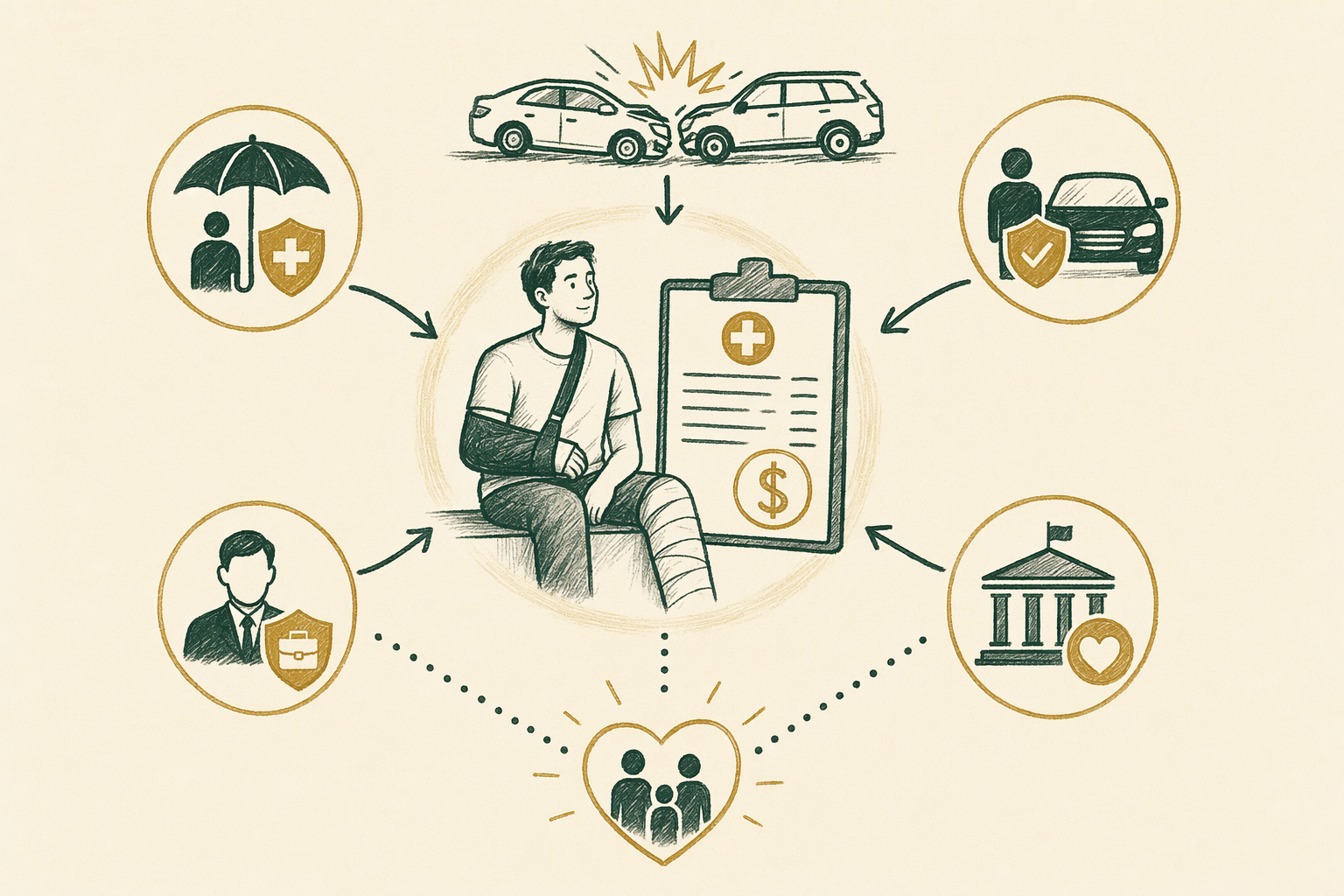
After an accident, more than one source may pay medical bills. It depends on the type of accident, what insurance exists, what state you live in, and who may be legally responsible.
In many cases, your own health insurance pays first. Sometimes car insurance pays first, especially in states with no-fault rules. "No-fault" means your own auto policy may cover some medical costs after a crash, no matter who caused it. If the accident happened at work, workers' compensation may pay. "Workers' compensation" is insurance that often covers medical care and part of lost wages for job injuries.
If another person caused the accident, their insurance may not pay your doctor right away. Often, that insurer pays later through a settlement. A settlement is an agreement to resolve a claim, usually with payment. Until then, bills may still come to you.
That is why many people try to learn early what coverage they have, what deadlines apply, and whether they should speak with a licensed attorney. If you want help finding one, you can use our free lawyer matching service. Legal Bearings is not a law firm and does not give legal advice.
Common ways medical bills may be paid
- Health insurance. Your private health plan, marketplace plan, Medicaid, or Medicare may cover treatment, subject to copays, deductibles, and network rules. A copay is a fixed amount you pay for care. A deductible is the amount you pay before insurance starts paying.
- Your auto insurance. Depending on your state and policy, Medical Payments Coverage, often called MedPay, or Personal Injury Protection, often called PIP, may help pay medical bills after a car accident. PIP may also cover some lost income in some states.
- The other driver's insurance. This may pay later if that driver was at fault, but it often does not pay the emergency room directly while the claim is being investigated.
- Workers' compensation. If you were hurt while doing your job, this insurance may pay for reasonable medical treatment related to the work injury.
- A medical lien or letter of protection. In some cases, a provider agrees to wait for payment until a claim ends. A lien is a legal claim on money from a settlement. A letter of protection is a promise, usually arranged through a lawyer, that the provider may be paid from a future recovery if there is one.
- Your own payment plan. Some hospitals and clinics offer monthly payments or financial assistance while an insurance claim is pending.
How it often works after a car accident
Right after a crash, the ambulance, emergency room, urgent care, and follow-up doctors may bill whoever information they have first. That may be your health insurer, your auto insurer, or you.
If you have PIP or MedPay, send that information to the provider as soon as you can. These coverages may help with early bills. The exact rules and limits vary by state and your situation.
If your health insurance pays, it may later ask to be repaid from a settlement. This is often called subrogation or reimbursement. Subrogation means an insurer that paid your bills may seek money back from the person or insurer that caused the injury. This can affect how much money you keep, so many people ask a licensed attorney to review it.
If you do not have insurance, ask the provider's billing office what options exist. Some offices offer discounts for prompt payment, charity care, or a hold on collections while a claim is active. Get any payment agreement in writing if possible.
What to do if bills are already coming
- Get a folder or phone note and save every bill, insurance letter, explanation of benefits, and receipt. An explanation of benefits is a statement from insurance showing what it paid and what it did not pay.
- Call the billing office and say the bills may be related to an accident. Ask whether they need health insurance, auto insurance, or workers' compensation information.
- Report the accident to the right insurer quickly. For a car crash, this may be your auto insurer. For a work injury, tell your employer right away and ask how to file a workers' compensation claim.
- Ask if the provider offers a payment plan, financial aid, or a temporary pause while insurance reviews the claim.
- Be careful before signing broad releases or repayment papers you do not understand. A release is a document where you give up legal claims.
- If the injuries are serious, fault is disputed, or you are confused about liens, reimbursement, or denied coverage, consider speaking with a licensed attorney. You can learn more about injury-related legal help or use our free matching page.
Do not ignore the bills
Special situations that change who pays
If the accident happened at work, workers' compensation may be the main payer, even if you also have health insurance. In many states, you must tell your employer within a short time. Missing deadlines can create problems.
If you were a passenger, pedestrian, bicyclist, or rideshare user, there may be multiple insurance policies. Your own auto policy, the driver's policy, and sometimes a company policy may all matter. The order of payment is not always simple.
If the person who caused the accident has no insurance or not enough insurance, your own uninsured or underinsured coverage may matter. Uninsured means no liability insurance. Underinsured means the coverage is too low to pay the full loss. These rules vary a lot by state and your situation.
If you are undocumented or do not speak English well, you still have the right to ask for an interpreter, translated billing help when available, and a clear explanation of charges. A hospital or insurer should not pressure you to sign papers you cannot read. You can bring a trusted person, but for legal advice about your case, talk to a licensed attorney.
When a lawyer may help
A lawyer may help when the bills are large, the injuries may last a long time, insurance is denying treatment, or several insurers are arguing about who should pay first. A licensed attorney may also explain liens, settlement offers, and repayment claims in plain language.
Many injury lawyers offer a free or low-cost first meeting, but fees and costs vary by state and your situation. Legal Bearings is not a law firm. We provide general educational information and a free way to get matched with a participating licensed attorney. Legal Bearings is paid a flat fee by participating attorneys, not by you.
If you want, you can see how matching works or start at get matched. Talking with a lawyer does not mean you must hire one. It may simply help you understand your choices.
Common questions
Do I have to pay medical bills if the accident was not my fault?
You may still receive bills before fault is decided. A hospital or doctor often wants payment from available insurance or from you while the claim is pending. Later, another insurer may reimburse some costs, depending on the facts, state law, and coverage.
Will the other person's insurance pay the hospital directly?
Sometimes, but often not right away. Many liability insurers investigate first and may pay later through a settlement instead of paying each doctor bill as it comes in.
What if I have no health insurance?
Ask the provider about payment plans, financial assistance, cash discounts, or whether it will wait for payment under a lien or similar arrangement. The options depend on the provider, the type of case, and state rules. A licensed attorney may help explain the risks.
Can Medicaid or Medicare pay after an accident?
They may pay for covered care, but they may also have rights to reimbursement from a settlement in some cases. The rules can be strict, so many people ask a licensed attorney for advice about their specific situation.
How much does it cost to talk to a lawyer about accident bills?
Some lawyers offer a free consultation, while others charge a modest fee. Costs and fee structures vary by state and your situation. Legal Bearings offers free matching to participating attorneys, and Legal Bearings is paid a flat fee by those attorneys.
In plain English: After an accident, your bills may be paid by health insurance, car insurance, workers' compensation, or later by a settlement, and if you are unsure who should pay, a licensed attorney may help explain your options.