Common U.S. Work Visa Types Explained
Work visas let some people come to the U.S. for a job, training, or special work. This guide explains common visa types in plain language so you can ask better questions and decide when to get legal help.
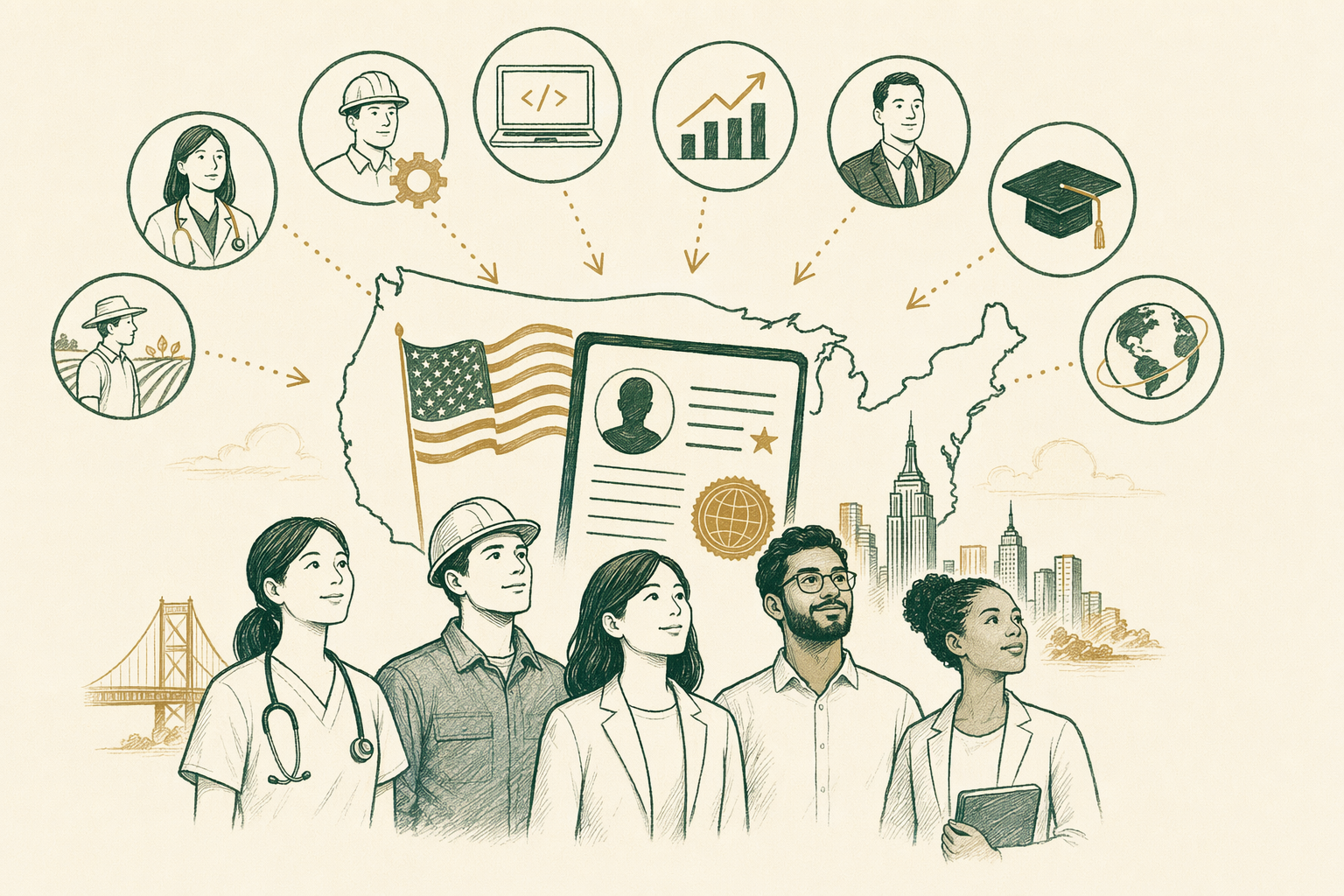
What a work visa is
A visa is a government document or stamp that may let you travel to the United States for a specific reason. A work visa is a visa connected to a job, work training, or work in a special field. Some work visas are for a short time. Some may be extended. A few may connect to a path toward a green card, which is lawful permanent residence.
Not every person who works in the U.S. needs the same visa. The right option depends on your job, your education or skills, your country, your employer, and your immigration history. Rules can change, and small facts can matter a lot.
This page is general education, not legal advice. If you want advice for your case, talk to a licensed immigration attorney. If you want, you can use our free lawyer matching service to get connected with a participating attorney.
Common U.S. work visa types
- H-1B. For some jobs that usually require at least a bachelor's degree or similar training. These are often called specialty occupations. Many tech, engineering, finance, and health care jobs use this visa.
- H-2A. For temporary or seasonal agricultural work, such as farm work.
- H-2B. For temporary or seasonal non-agricultural work, such as hospitality, landscaping, seafood processing, or construction support.
- L-1. For workers moving from a related company abroad to a U.S. office. This is often called an intracompany transfer.
- O-1. For people with extraordinary ability, which means a very high level of achievement in fields like science, business, education, athletics, or the arts.
- TN. For certain Canadian and Mexican professionals under a trade agreement. Only some listed occupations qualify.
- E-2. For treaty investors from certain countries who invest a substantial amount in a U.S. business, or certain employees of that business.
- J-1. For exchange visitors, including some trainees, interns, teachers, physicians, au pairs, and researchers. Some J-1 categories involve work or training, but the main purpose is exchange.
- R-1. For religious workers coming to work for a nonprofit religious organization or related group in the U.S.
How the most common visas usually work
The H-1B is one of the best-known work visas. In many cases, the employer must sponsor, which means the employer files paperwork to support the worker's visa. There is often an annual limit called a cap, and many people enter a random selection process called a lottery. Because timing is strict, people often prepare months early.
The H-2A and H-2B visas are for temporary labor needs. Usually, the employer must show there are not enough available U.S. workers for the job and that hiring foreign workers will not unfairly lower wages or working conditions. Workers should be careful about recruitment fees. In many situations, charging workers certain fees is not allowed.
The L-1 visa may help if you already work for a company abroad that has a qualifying relationship with a U.S. company, such as a parent, branch, subsidiary, or affiliate. The O-1 visa may fit people with strong awards, press, major projects, judging experience, or other proof of high achievement. The standard is high, and the evidence matters.
The TN, E-2, J-1, and R-1 visas each have special rules. TN depends on your citizenship and job title. E-2 depends on your nationality, your investment, and the business structure. J-1 can come with a two-year home residence rule in some cases, which means some people must return home for two years before they can use certain other immigration options, unless they get a waiver. R-1 cases often need proof about the religious organization and the worker's role.
A visa lets you ask to enter the U.S., but it is not the same as status. Status means your lawful category while you are in the U.S. A person may have a valid visa stamp in a passport, but still need to protect their status by following the rules after entry, such as working only for the approved employer and not staying past the allowed date.
How to figure out which visa may fit
- Start with the job. Ask what work you will do, whether it is temporary or long-term, and whether the employer is willing to sponsor you.
- Look at your background. Your degree, training, experience, awards, licenses, and past immigration history may change your options.
- Check your country and category rules. Some visas depend on nationality, treaty country status, or a listed profession.
- Ask about timing. Some visas have annual limits, slower processing times, or fixed start dates.
- Review the risks before you apply. A denial, a status problem, or missing documents may affect future applications.
- If you are unsure, speak with a licensed immigration attorney. You can also learn more about immigration legal help or use our free matching page.
Watch for scams and bad advice
Questions to ask before you sign anything
It is okay to slow down and ask simple questions. Ask who will file the petition, what documents are needed, what deadlines apply, and what happens if processing is delayed. A petition is a formal request sent to the government asking for an immigration benefit.
You should also ask who is paying which fees. Some fees are paid by the employer in many cases, and some costs may not legally be passed to the worker. Get fee details in writing. If a document is not in your language, ask for an explanation in plain words.
If you are already in the U.S., ask whether the application is for a visa abroad, a change of status, or an extension. A change of status means asking to move from one lawful category to another without leaving the U.S. An extension means asking for more time in the same category. These are different processes.
If cost or language is a worry, say that early. Many lawyers offer phone or video meetings. Some have staff who speak more than one language. Legal Bearings is not a law firm and does not give legal advice, but we can help you find a participating licensed attorney through our free get matched service.
Common questions
What is the difference between a work visa and a green card?
A work visa is usually temporary and tied to a specific purpose, employer, or time period. A green card is lawful permanent residence. Some work visas may connect to a green card process, but many do not.
Can I apply for a work visa without a job offer?
Sometimes, but often no. Many common work visas need a U.S. employer to sponsor you. A few categories, such as some investor or high-achievement cases, may work differently. A licensed immigration attorney can explain what may fit your situation.
Can I change employers on a work visa?
Maybe. It depends on the visa type and your exact status. Some categories need a new petition or new approval before you start with a different employer. Do not assume you can switch jobs safely without legal advice.
What if my employer or recruiter asks me to pay improper fees?
That can be a warning sign. In some visa categories, certain costs must be paid by the employer, and charging workers some recruitment fees may be unlawful. Keep records, do not hand over cash without proof, and talk to a licensed immigration attorney about your options.
How can I find a lawyer if English is not my first language?
Ask whether the lawyer or staff can speak your language or provide interpretation. You can also use our free matching service to look for a participating attorney for immigration help. Legal Bearings is not a law firm and does not give legal advice.
In plain English: There are several U.S. work visas, and the right one depends on your job, background, and timing, so if you are unsure, getting matched for a free consultation with a licensed immigration attorney may help.