How the Green Card Process Works
Getting a green card can take time, but the basic path is easier to understand when you break it into steps. This guide explains the process in plain language and shows where a licensed immigration lawyer may be able to help.
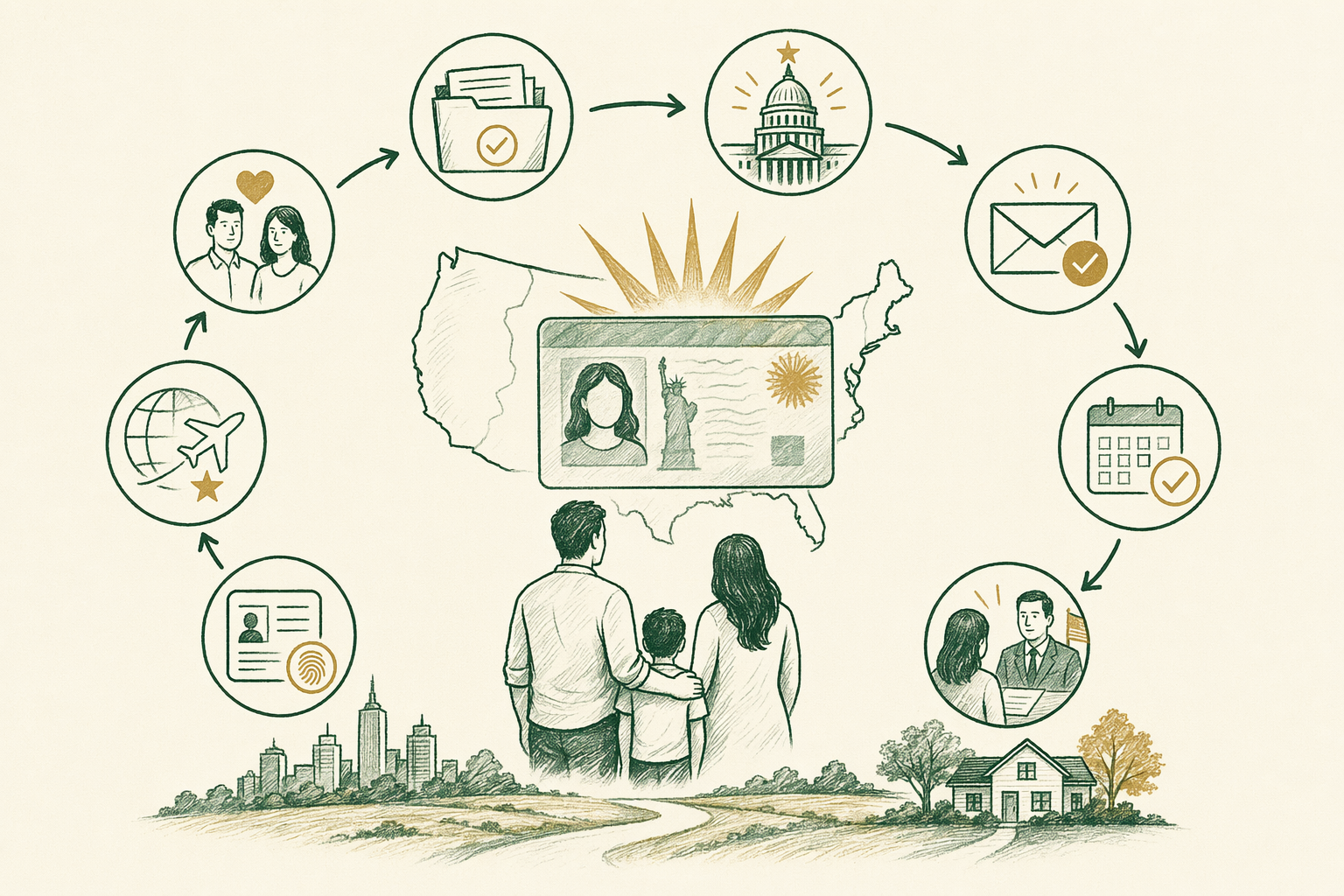
What a green card means
A green card is a document that shows you are a lawful permanent resident. That means you have permission to live and work in the United States on a long-term basis.
Many people use the words "green card" to mean permanent residence. A green card is not the same as U.S. citizenship. Citizenship gives more rights, like voting in federal elections. Some permanent residents may later apply for citizenship if they qualify.
There is no one green card process for everyone. The steps depend on why you qualify, where you are now, and whether a visa number is available. A visa number is a spot in line for a green card under certain categories.
Common ways people qualify
- Family-based. A close family member who is a U.S. citizen or lawful permanent resident may be able to file for you.
- Employment-based. A U.S. employer may sponsor you for permanent residence through your job or skills.
- Refugee or asylee status. People granted asylum or admitted as refugees may be able to apply later for a green card.
- Humanitarian programs. Some people qualify through programs for survivors of abuse, trafficking, or serious crimes.
- Special categories. This can include certain juveniles, religious workers, investors, and others under federal immigration law.
- Diversity visa. Some people from countries with low rates of immigration to the U.S. may qualify through a lottery program.
The basic steps in the green card process
For many people, the process starts with an immigrant petition. A petition is a request filed with the government to show that you fit a legal category. For example, a U.S. citizen spouse may file a family petition, or an employer may file an employment petition.
Next, the government looks at whether a visa number is available for your category. Immediate relatives of U.S. citizens, such as spouses, unmarried children under 21, and parents of adult U.S. citizens, often do not have to wait for a visa number in the same way other groups do. Many other categories have waiting lines that can last months or years.
After that, you usually apply for the green card itself in one of two ways. Adjustment of status means applying from inside the United States, if the law allows it. Consular processing means applying through a U.S. consulate or embassy outside the United States.
Most applicants must also give fingerprints, attend a biometrics appointment, and go to an interview. Biometrics means your fingerprints, photo, and signature are collected so the government can check your identity and background. In some cases, the government asks for more documents with a notice called a Request for Evidence, often shortened to RFE.
At the end, the government approves or denies the application. If approved, you may first receive a stamp or notice, and then your green card card arrives later by mail. Processing times vary a lot by category, office, and your situation.
A simple step-by-step overview
- Find the category that may fit you, such as family, work, asylum, or another special program.
- Check whether someone must file a petition first, and whether a visa number is available for your category.
- Gather records that support your case, such as identity papers, birth and marriage records, and immigration records.
- File the right forms with the correct government agency and pay the filing fees, if required.
- Go to your biometrics appointment and respond quickly if the government asks for more evidence.
- Attend your interview, if one is scheduled, and bring originals or certified copies of important documents.
- Wait for a decision. If approved, follow the instructions for your card or next steps. If denied, ask a licensed attorney about your options as soon as possible.
Documents and issues that often cause delays
Small mistakes can slow a case down. Names, dates, and places should match across your documents as much as possible. If something does not match, there may still be a solution, but it helps to explain it clearly and provide proof.
Common documents include passports, birth certificates, marriage or divorce records, prior immigration notices, court records if any, and proof of the family or work relationship. If a document is not in English, you usually need a full written translation. The translator normally signs a statement saying the translation is complete and accurate.
Some cases need extra care. Past visa overstays, unauthorized work, prior removal orders, criminal charges, or missing entries and exits can affect eligibility. Eligibility means whether the law allows you to apply. If any of these apply to you, it is wise to speak with a licensed immigration attorney before filing.
Be careful with notarios or immigration consultants who promise fast approvals or guaranteed results. In the United States, a notary public is usually not a lawyer. They may not be allowed to give legal advice. If someone asks you to sign blank forms, lie on an application, or pay only in cash without receipts, those are warning signs.
Watch for scams
What legal help may look like, and what it may cost
A licensed immigration lawyer may help you choose the right path, prepare forms, organize evidence, and spot problems before you file. They may also help if you receive an RFE, have a prior denial, or are worried about an interview. For case-specific advice, talk with a licensed attorney.
Costs vary by state and your situation. Some lawyers offer a first consultation for free, while others charge a fee. Full representation for a green card case may cost a few thousand dollars or more, depending on the category and how complex the case is. Government filing fees are separate and can also be significant.
If cost or language is a concern, ask practical questions up front. You can ask whether the lawyer offers interpretation, payment plans, a written fee agreement, and a clear list of what is included. You can also ask whether they handle cases like yours often. If you want, Legal Bearings offers a free way to get matched with a participating immigration lawyer, and you can also learn more about immigration services.
Common questions
How long does the green card process take?
It depends on your category, where you apply, whether a visa number is available, and government processing times. Some cases move in months, while others take years.
Can I apply for a green card while I am in the United States?
Maybe. Some people can use adjustment of status, which means applying from inside the U.S. Others must use consular processing outside the country. A licensed immigration attorney can tell you which path may fit your case.
Do I need a lawyer for a green card application?
The law does not require a lawyer in every case. Still, legal help may be useful if your case is complex, if you have prior immigration issues, or if you want help avoiding mistakes. Legal Bearings is not a law firm and does not give legal advice, but it can help you get matched with a licensed lawyer for free.
What if my documents are not in English?
You will often need a full English translation. The translator usually signs a statement saying the translation is complete and accurate. Rules can vary depending on the document and agency instructions.
What happens if my application is denied?
A denial does not always mean the end of the road. Some people may refile, appeal, or use another process, depending on the reason. Get advice from a licensed attorney quickly, because deadlines may apply.
In plain English: The green card process depends on your category and your history, and if you are unsure or worried, you can use Legal Bearings for a free match with a licensed immigration lawyer.