What to Do If You Receive a Notice to Appear
A Notice to Appear can feel scary, but it is not the end of your case. It is a paper from the government that starts immigration court, and there are steps you can take now to protect yourself.
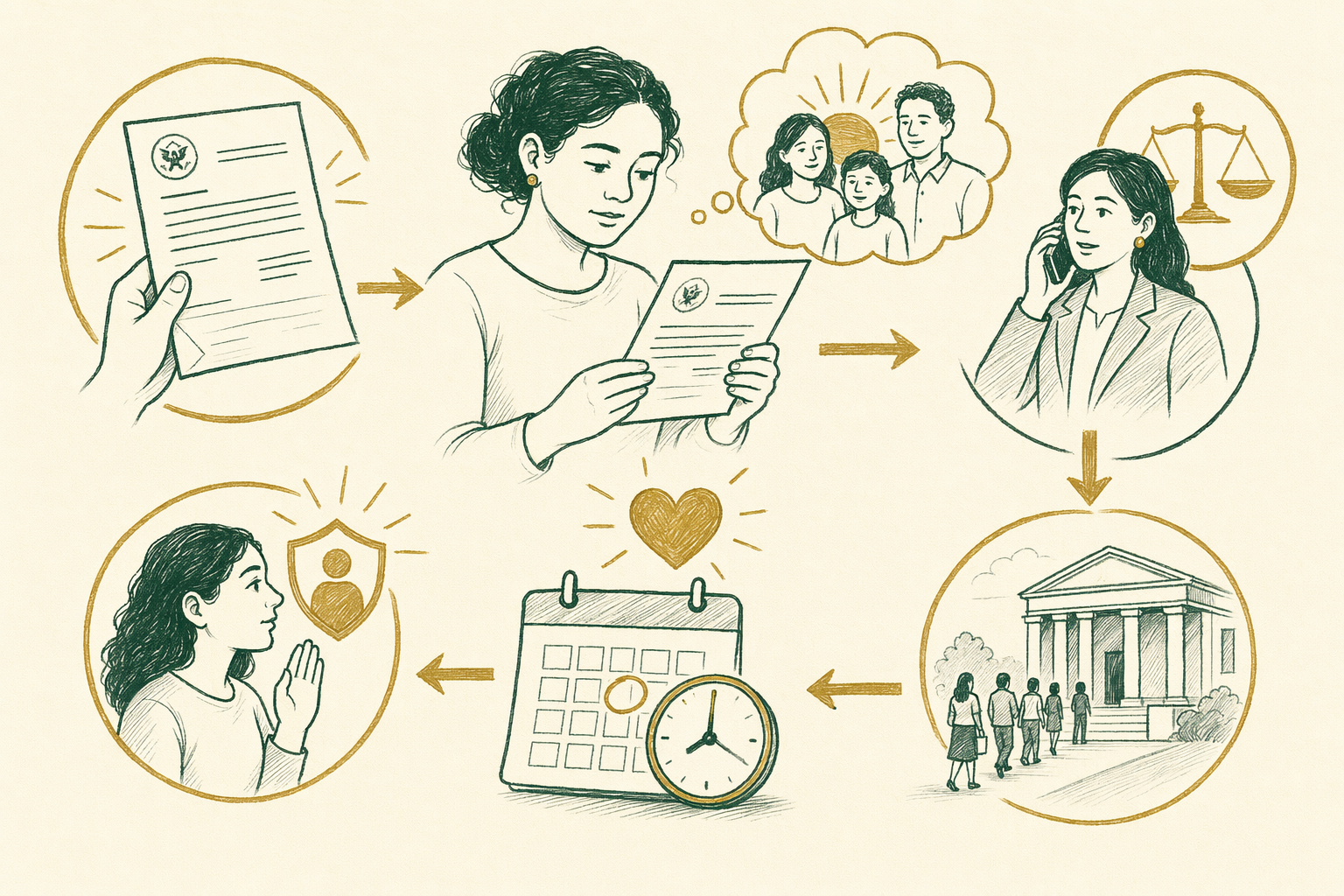
What a Notice to Appear means
A Notice to Appear, often called an NTA, is a paper from the U.S. government that says it believes you should go to immigration court, which is a court that decides some cases about a person’s right to stay in the United States. The NTA usually lists your name, your country of citizenship, and reasons the government says you can be removed, which means forced to leave the country.
Getting an NTA does not automatically mean you will be removed. It means the government has started a court case. You may still have defenses, applications, or other options. A licensed immigration lawyer can review your papers and explain what may apply in your situation.
If you feel lost, that is normal. Many people do not understand the papers at first, especially if English is not their first language. Try to stay calm and keep every page you received in a safe place.
What to do right away
- Read every page and look for the date, time, and place of any hearing. A hearing is your court date.
- Save the envelope and all documents. Write down when and how you got them.
- Check that your name, address, and "A-number" are correct. An A-number is your immigration case number.
- Do not ignore the notice, even if you think there is a mistake.
- If you move, tell the immigration court your new address right away. If the court does not have your correct address, you may miss important notices.
- Try to speak with a licensed immigration attorney as soon as you can. You can get matched for free with a participating lawyer who may be able to help.
- If you need language help, ask for an interpreter when you speak with a lawyer or the court. An interpreter is a person who translates spoken language.
Why the details on the notice matter
Look closely at the facts on the NTA. Small details can matter. The notice may say how you entered the country, when you entered, and why the government believes you can be removed. If any of this is wrong, tell your lawyer. Bring proof if you have it, such as passports, visas, I-94 records, marriage records, court papers, or letters from immigration.
You should also find out whether the notice includes a hearing date. Some NTAs do not list the first court date on the paper. If that happens, the court may later send a separate hearing notice. That is one reason your address must stay current.
Missing a hearing can cause very serious problems. The judge may order removal without hearing your side. This is sometimes called an in absentia order, which means an order made because you were not there. If you miss court, fixing the case later may be hard and time-sensitive.
Bring these documents when you ask for help
- Your Notice to Appear and every page that came with it
- Any hearing notice from the immigration court
- Your passport, visa, work permit, or other immigration papers
- Your A-number, if you have one
- Proof of how long you have lived in the United States, such as leases, school records, or bills
- Marriage certificates, birth certificates, or records about close family members in the U.S.
- Any records from criminal court, even if charges were dismissed. Dismissed means the case was closed without a conviction.
- Any papers from past immigration applications or past court cases
Common options people may ask about
What options you may have depends on your history. This page is general education, not legal advice. A licensed attorney can tell you what may fit your case.
Some people may ask about asylum, which is protection for people who fear harm in their home country for certain legal reasons. Others may ask about cancellation of removal, which is a request to stop removal if a person meets strict rules. Some may have a family-based option through a U.S. citizen or lawful permanent resident relative. Others may qualify for relief under a visa for crime victims, trafficking victims, or abuse survivors.
In some cases, a person may ask the court to terminate the case, which means end it, or to change venue, which means move the case to a different court. Some people may also ask for more time to find a lawyer. The right step depends on the facts, the state where the case is filed, and the person’s immigration and criminal history.
Be careful with anyone who promises a fast fix or a guaranteed result. No honest professional can promise that. Immigration cases often move slowly, and the result depends on the law and your facts.
Watch out for scams
How to get help without feeling pressured
If cost is a worry, ask about fees before you hire anyone. Many immigration lawyers offer a first consultation, which is a first meeting to talk about your case, for free or for a set fee. Total costs vary by state and your situation. Ask for a written agreement that explains what the lawyer will do and what you will pay.
If language is a barrier, say that early. Many law offices can use interpreters or have staff who speak other languages. You have the right to understand who is helping you and what they are asking you to sign.
Legal Bearings is not a law firm and does not give legal advice. It offers free education and a free way to get matched with a participating licensed attorney. Legal Bearings is paid a flat fee by participating attorneys, and the service is free for you. You can also learn more about immigration help.
Common questions
Do I have to go to court if I got a Notice to Appear?
Usually yes. An NTA starts an immigration court case. If you miss a hearing, the judge may order removal without hearing your side. Read your notice carefully and talk with a licensed immigration attorney about your case.
What if the Notice to Appear has wrong information?
Do not ignore it. Save the notice and gather proof that shows what is wrong. A licensed attorney may be able to explain how to raise those issues in court or with the government.
Can I get deported right away after receiving an NTA?
Not always. Receiving an NTA means the government has started a case. Many people still have a chance to appear before a judge, ask for time, or apply for a form of relief. The timeline depends on the facts of the case.
How much does an immigration lawyer cost for this kind of case?
Costs vary by state and your situation. Some lawyers offer free consultations, while others charge a set fee for the first meeting. Full representation in court can cost much more, depending on the work involved. Ask for a written fee agreement before you hire anyone.
Can Legal Bearings give me legal advice about my NTA?
No. Legal Bearings is not a law firm and does not give legal advice. It provides general education and a free way to get matched with a participating licensed attorney who can review your specific situation.
In plain English: If you got a Notice to Appear, do not ignore it, keep your papers, and try to speak with a licensed immigration lawyer quickly because you may still have options.