Divorce When You Are Undocumented: What to Know
You may still be able to get a divorce in the United States even if you do not have lawful immigration status. This guide explains the basic rules, common worries, and when it may help to speak with a licensed family law attorney.
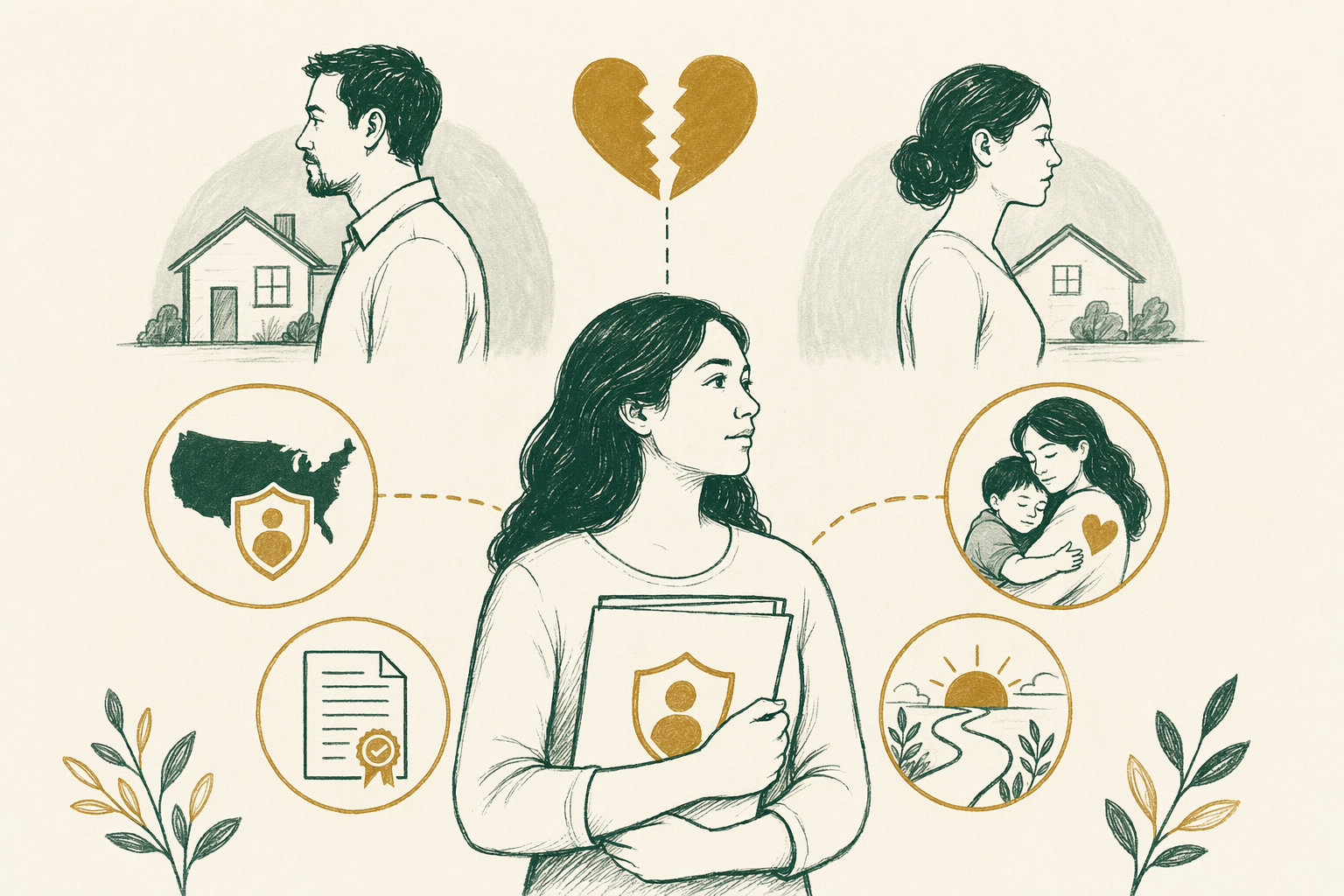
Yes, you may be able to divorce even if you are undocumented
In most states, divorce means the legal end of a marriage by a court. Your immigration status often does not stop a state court from handling a divorce. Family law, which is the area of law about marriage, divorce, children, and support, is usually separate from immigration law.
What matters most is often where you live now, not whether you have a green card or visa. Many states let a person file for divorce if they meet a residency rule, which means living in that state, and sometimes that county, for a certain amount of time before filing.
A divorce case can still involve serious risks and choices. It may affect children, property, support, and in some situations your immigration options. That is why it can help to learn the basics first, then talk with a licensed attorney about your specific case.
What a divorce case may cover
- Ending the marriage through a court order
- Child custody, which means who makes decisions for the child and where the child lives
- Parenting time or visitation, which means when each parent spends time with the child
- Child support, which is money one parent may have to pay to help support a child
- Spousal support or alimony, which is money one spouse may have to pay the other after separation or divorce
- Property division, which means how the court may split money, debts, a car, furniture, or other things the couple owns
Common fears, and what to know
Many people worry that going to divorce court will automatically lead to immigration enforcement. In general, state family courts are deciding family issues, not checking whether someone has lawful status. Still, every situation is different, and fear is understandable, especially if there has been abuse, threats, or control.
Some spouses use immigration status as a tool of control. They may say, "If you leave, I will get you deported," or "You cannot go to court without papers." These threats are often meant to scare you. A spouse usually cannot block a divorce just because you are undocumented.
Language can also be a barrier. If you do not read English well, ask about an interpreter. An interpreter is a person who translates spoken words. Some courts provide interpreters for some hearings, and some attorneys work in more than one language or with trained interpreters.
If you are worried about being taken advantage of, be careful with notarios or immigration consultants who are not licensed attorneys. In some countries, a notario is a lawyer. In the United States, a notary public is usually not a lawyer and cannot give legal advice unless they are also a licensed attorney.
Basic steps in a divorce case
- Check the residency rule in your state. You usually must live in the state for a set time before you can file.
- Gather basic papers if you can. This may include your marriage certificate, lease, tax records, pay stubs, bank records, and your children’s school or medical records.
- File the divorce papers in the right court. Filing means officially submitting forms to start the case.
- Have the other spouse formally notified. This is called service, which means giving legal notice in the way the law requires.
- Ask the court for temporary orders if needed. Temporary orders are short-term rules about children, support, or who stays in the home while the case is pending.
- Try to protect important records and money. Make copies of documents and keep them in a safe place.
- Get legal advice if the case involves abuse, immigration concerns, children, or major property issues. You can learn more about family law help or use our free lawyer matching service.
How divorce may connect with immigration
Divorce and immigration are different areas of law, but they can affect each other. For example, if your immigration status depends on marriage to a U.S. citizen or lawful permanent resident, a divorce may change your options. In some cases, a person may still have other ways to apply for status, but the details matter a lot.
If there has been abuse, there may be immigration options for some survivors. Abuse can include physical harm, threats, sexual abuse, controlling money, or extreme emotional control. The right path depends on your facts, and this is one reason it may help to talk with both a family law attorney and an immigration attorney.
Be careful about signing papers you do not understand. Divorce settlement papers can affect property, support, and parenting rights. Immigration forms can affect your ability to stay in the country. Ask for a translation or an explanation in plain language before you sign anything.
Legal Bearings is not a law firm and does not give legal advice. We provide general education and a free way to get matched with a participating licensed attorney. If you want help, you can start at get matched.
Situations where getting legal help quickly may matter
- Your spouse is abusive or threatens to call immigration authorities
- You depend on your spouse for immigration papers or financial support
- There are children, and you fear kidnapping, hiding the child, or being cut off from the child
- Your spouse controls all the money, bank accounts, or important documents
- You signed papers in English that you did not understand
- You own a home, business, or have large debts together
- Your spouse already filed a case and you were served with court papers
- You are afraid to go to court alone because of language barriers or safety concerns
Watch for scams and pressure
Cost, safety, and finding the right help
Cost is a real concern. Divorce costs vary by state and your situation. Some people pay only filing fees and handle simple paperwork themselves. Others may need to pay for service of papers, interpreters, mediation, which is a guided settlement meeting, or attorney fees. Many attorneys offer a first consultation at a low cost or no cost, but that depends on the lawyer and the case.
If money is tight, ask whether the court can reduce filing fees. This is often called a fee waiver, which means the court may let you file without paying upfront if you have low income. Ask the clerk or a lawyer if that option exists in your state.
Safety matters too. If you are leaving an abusive spouse, make a plan before telling them. Save copies of key documents. Think about where you and your children can stay. Change passwords if it is safe to do so. A local domestic violence group may also help with planning and support.
If you want help finding a lawyer, Legal Bearings offers a free matching service. We are paid a flat fee by participating attorneys, not by you. We are not a law firm, and we do not give legal advice. You can also read more about how family law services work before deciding what to do next.
Common questions
Can I file for divorce without a Social Security number?
Maybe. Many courts have ways to file using other identifying information, and rules vary by state and county. A licensed family law attorney or court clerk may be able to explain the local process.
Will the court ask about my immigration status?
Family courts are usually focused on divorce, children, support, and property. They do not usually decide immigration status. Still, facts in your case matter, so it is smart to get legal advice if you are worried.
Can my spouse stop the divorce because I am undocumented?
Usually no. A spouse often cannot block a divorce just because the other person lacks lawful status. But they may still dispute issues like children, money, or property.
What if my spouse is threatening me with deportation?
That may be a form of abuse or control. Try to save messages or other proof if it is safe. You may want to speak with a licensed attorney quickly, especially if there is abuse, immigration dependence, or a custody dispute.
How do I find a lawyer if I need language help?
Ask whether the office speaks your language or uses a trained interpreter. You can also use our free [lawyer matching service](/get-matched/) to look for a participating attorney for your type of case.
In plain English: Even without lawful status, you may still be able to get divorced in the U.S., but it is wise to talk with a licensed attorney if your case involves children, abuse, money, or immigration questions.