What to Do When You Get an Eviction Notice
An eviction notice can feel scary, but it does not always mean you must leave right away. This guide explains common next steps, what papers matter, and how to get general help fast.
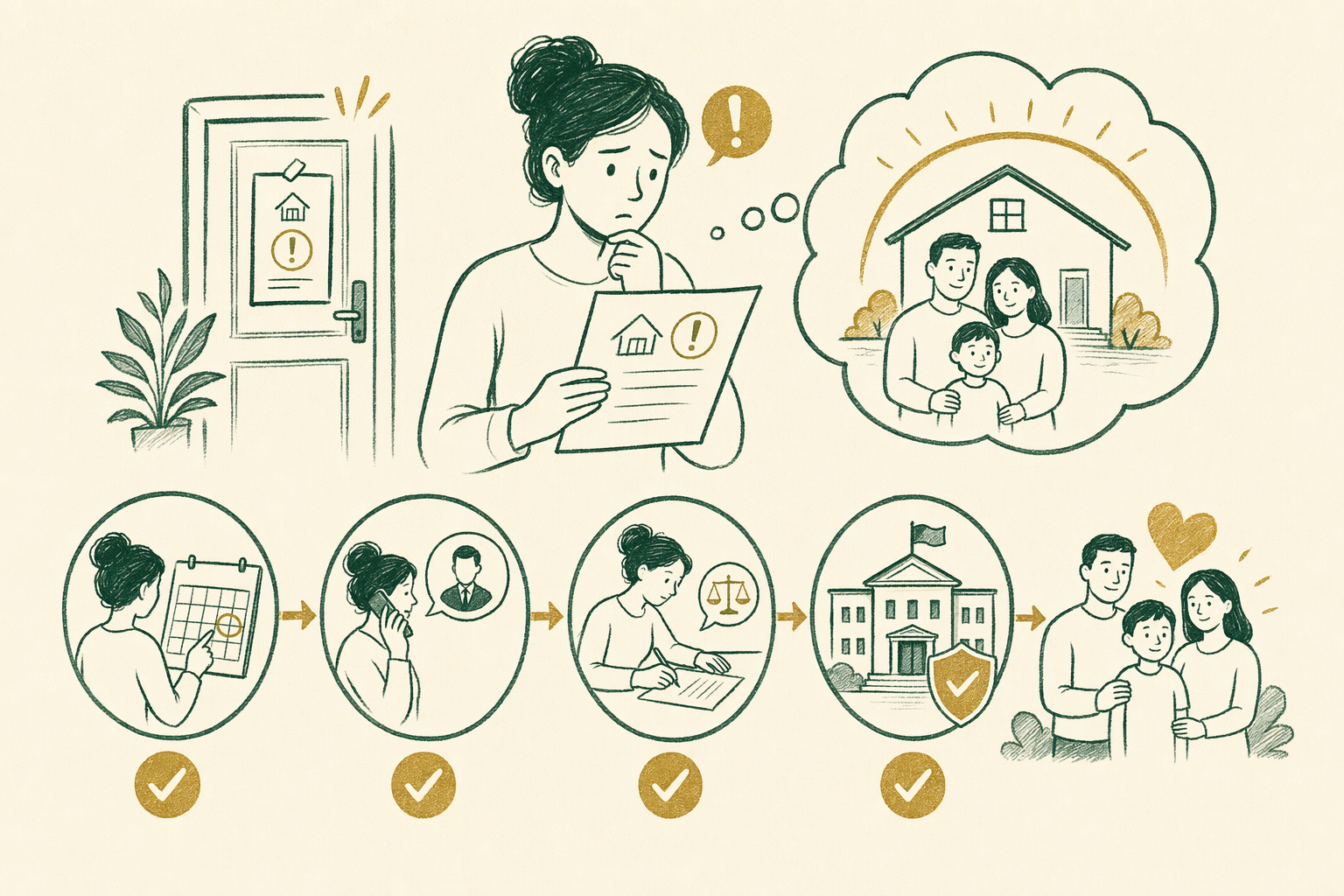
First, pause and read the notice carefully
An eviction notice is a paper from a landlord that says they want you to fix a problem, pay money, or move out. In many states, this is the first step in the process. It is not always a court order.
Look for key details. Check the date, your name and address, the reason given, and any deadline. Some notices say you can stay if you pay rent by a certain day. Others say the landlord plans to file a case in court.
A court order is a written decision signed by a judge. In most situations, a landlord cannot legally force you out without going through court first. Rules vary by state and your situation, so read every page and keep copies.
If English is hard to read, ask a trusted person to help translate the notice as soon as possible. You can also get matched for a free connection to a licensed lawyer who may be able to explain your options in plain language.
What to do in the next 24 hours
- Take photos or scans of the notice and save them in your phone and email.
- Check the deadline. Write it down. Missing a date can hurt your options.
- Gather your papers, including your lease, rent receipts, bank records, texts, emails, repair requests, and any photos of the home.
- Do not ignore court papers. If you got a summons or complaint, that usually means a court case has started and you may need to file a written response fast.
- If you feel unsafe or someone is trying to lock you out, shut off utilities, or remove your things without a court process, call local law enforcement or a tenant help line right away.
Know the difference between a notice and a court case
Landlords often start with a notice. Common reasons are unpaid rent, claimed lease violations, or the end of a lease term. A lease is the rental agreement between you and the landlord. Some notices give time to fix the problem. This is sometimes called a chance to cure, which means correct the issue.
If the landlord files in court, you may get a summons and complaint. A summons tells you that a case has been filed and gives hearing or response information. A complaint is the document that states what the landlord says happened. Read both closely.
Do not move out just because a landlord tells you to leave today, unless you choose to. In many states, only a judge can order an eviction, and only a sheriff or other authorized officer can carry it out. Changing locks, taking doors off, shutting off water, or throwing out your property without the legal process may be illegal in your state.
For more general information about housing problems, see housing services and how matching works.
Papers and proof that may help
- Your lease, renewal papers, and any house rules
- Rent receipts, money order stubs, bank statements, or payment app records
- Texts, emails, letters, or voicemail screenshots from the landlord
- Photos or videos of repairs, leaks, mold, pests, broken heat, or other conditions
- Inspection reports or repair requests you sent
- Witness names and phone numbers, if someone saw what happened
- Any court papers, notices, or prior agreements with the landlord
Common defenses tenants may have
A defense is a legal reason you tell the court why the landlord should not win, or why the case should be delayed, corrected, or dismissed. Not every defense fits every case. A licensed attorney can tell you what may apply in your state.
Examples may include wrong dates, improper notice, payment already made, the landlord refusing rent, discrimination, serious repair problems, or retaliation. Retaliation means a landlord tries to evict you because you complained about conditions, asked for repairs, or used a legal right. Discrimination means unfair treatment because of a protected trait, such as race, religion, disability, national origin, sex, or family status.
If you live in subsidized housing, public housing, or housing tied to your job, extra rules may apply. If you have an immigration concern, many tenants still have rights under landlord-tenant law. Do not assume you have no rights because of your language, income, or status. Get advice about your specific case from a licensed attorney.
Watch for illegal lockouts
If you have to go to court
If you receive court papers, act fast. There may be a deadline to file an answer, which is your written response to the landlord's claims. Missing that deadline can lead to a default judgment, which means the judge may rule against you because you did not respond.
Bring all your documents to the hearing. Arrive early. If you need an interpreter, ask the court as soon as possible. Many courts provide language access, but you may need to request it before the hearing date.
You can also ask whether rental assistance, mediation, or a payment plan is available. Mediation is a meeting where a neutral person tries to help both sides reach an agreement. It is not always right for every case, but it may help in some situations.
If you need help finding a lawyer, Legal Bearings is not a law firm and does not give legal advice. It offers free matching with participating attorneys who pay a flat fee to be part of the service. You can get matched and ask about language help, experience with eviction cases, and next steps.
Common questions
Does an eviction notice mean I have to leave immediately?
Not always. In many cases, a notice is only the first step. A landlord often must follow a court process before you can be legally removed. Rules vary by state and your situation, so read the notice and any court papers carefully.
What if I cannot read the notice well in English?
Try to get it translated right away by a trusted person, community group, or lawyer. Keep a copy of the original notice. If a court case has started, do not wait for a perfect translation before you act, because deadlines may be short.
Can my landlord lock me out or shut off utilities?
Often no, not without following the legal process. In many states, changing locks, cutting off water or power, or throwing out your things without a court order may be illegal. Save proof and speak with a licensed attorney about your specific case.
How much does it cost to talk to an eviction lawyer?
Costs vary by state and your situation. Some lawyers offer a free consultation, while others may charge about $50 to $300 for a first meeting. Full representation may cost more, and some legal aid groups help people who qualify at low or no cost.
Can Legal Bearings give me legal advice?
No. Legal Bearings is not a law firm and does not give legal advice. It provides general education and free matching with licensed attorneys who may advise you about your specific situation.
In plain English: An eviction notice is serious, but it may not mean you must leave today, and a licensed lawyer can help you understand your options fast.