How to Legally Change Your Name
Changing your name in the United States is often possible, but the steps depend on why you want the change and where you live. This guide explains the usual process in plain language, so you can understand your options and decide if you want help from a lawyer.
What a legal name change means
A legal name change means asking the government to recognize a new name for you. After approval, you usually update your records with places like the Social Security Administration, the DMV, your bank, your school, and immigration agencies if needed.
People change their names for many reasons. Common examples are marriage, divorce, gender identity, religious reasons, family unity, safety concerns, or simply wanting a different name. In many states, adults can ask for a name change unless the reason is fraud, meaning cheating or lying to avoid debts, criminal records, or other legal duties.
The exact rules vary by state and your situation. Some people can use a marriage certificate or divorce order to update their name. Others need to file a court petition, which is a written request to a judge. If you are not sure which path fits you, a licensed attorney can explain the rules for your state and your personal case.
When you may not need a full court case
Not every name change starts with a separate court hearing. If you got married, your marriage certificate may let you take your spouse's last name, combine last names, or sometimes make another change allowed by your state. If you got divorced, your divorce judgment may restore a former name, which means give you back a name you used before.
For immigration records, there can be extra steps. A green card, work permit, visa, passport from your home country, or naturalization certificate may each have their own update process. The order matters. In some cases, it helps to change your name with one agency first so your documents match.
Children's name changes are often more complicated. A parent may need consent from the other parent, notice to the other parent, or a court hearing about the child's best interests, meaning what is healthiest and safest for the child. Rules can be strict, especially if there is a custody case, no contact with the other parent, or concerns about abuse.
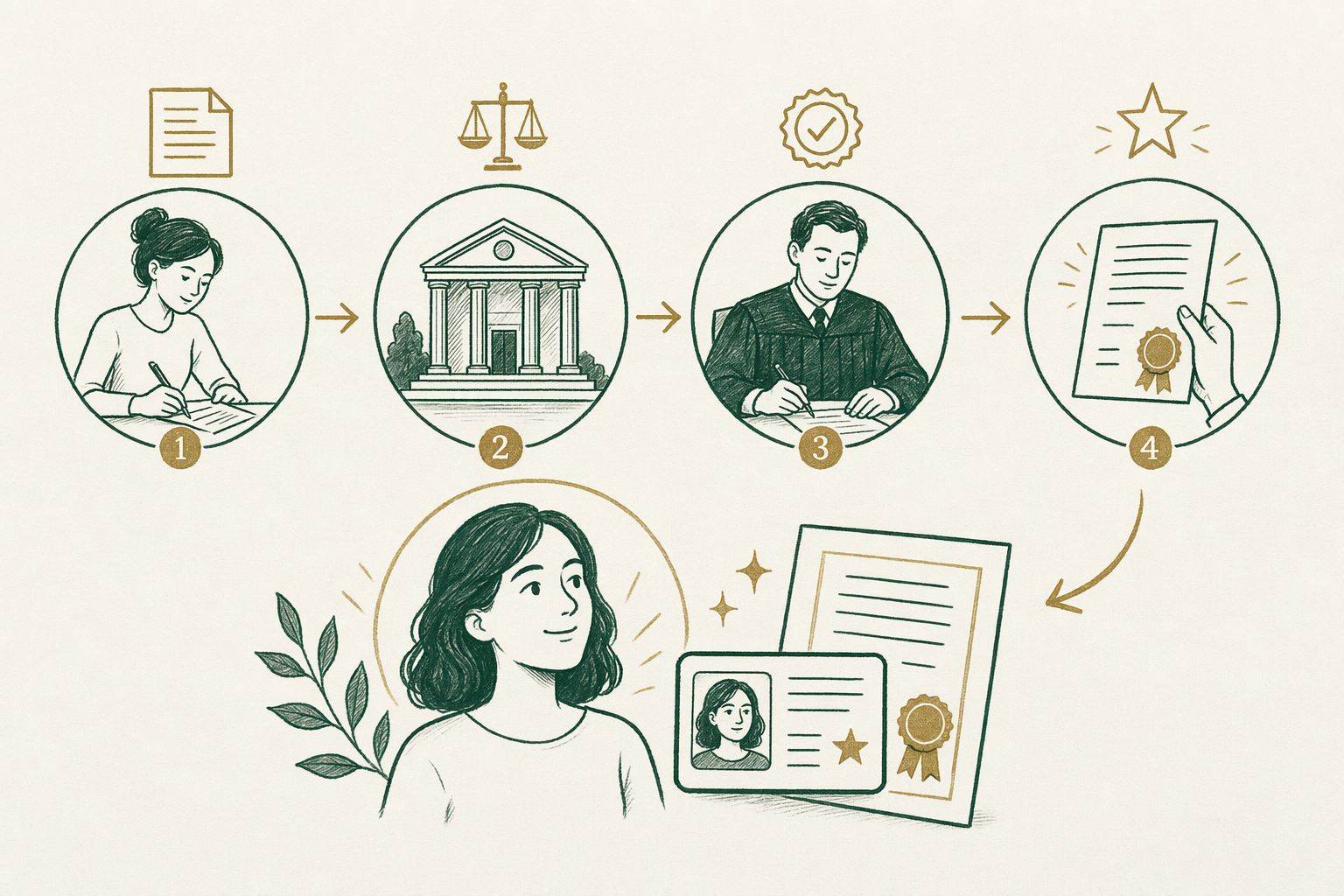
Typical steps for a court-ordered name change
- Check your state's rules and local court forms. Some courts have special packets for adult name changes, minor child name changes, or sealed cases for safety concerns.
- Fill out a petition, which is the written form asking the court to approve your new name. You may also need a proposed order for the judge to sign.
- File the forms with the court clerk. The clerk is the court worker who accepts papers and collects filing fees.
- Pay the filing fee, or ask for a fee waiver if you cannot afford it. A fee waiver is a request to let you file without paying because of low income.
- Complete any notice requirement. Some states require publication, which means printing notice in a newspaper, unless the court waives it for privacy or safety.
- Go to a hearing if the court schedules one. A hearing is a short meeting with a judge. The judge may ask why you want the name change and confirm that you are not trying to avoid legal duties.
- Get certified copies of the signed order. A certified copy is an official copy with the court's seal or stamp. You often need these to update your records.
- Update your name with each agency and company. This may include Social Security, the DMV, your employer, school, bank, landlord, and immigration agencies if they apply to you.
Documents you may need
- A government photo ID, if you have one
- Your birth certificate, passport, or other proof of identity
- Proof of where you live, such as a lease or utility bill
- Marriage certificate or divorce judgment, if your change is related to marriage or divorce
- Court forms required by your state or county
- Information about any criminal case, bankruptcy, or sex offender registration, if your state asks for it
- For a child's case, the child's birth certificate and papers about custody, parentage, or support, if they exist
Watch for fraud concerns
How much it may cost
Costs vary by state and your situation. A basic adult court filing often costs about $100 to $500. Certified copies of the final order may cost about $5 to $25 each. If your state requires newspaper publication, that may add about $30 to $400 or more.
You may also have costs for updating records after the court order. For example, a new driver's license or state ID often has a replacement fee. A new passport may also have a fee unless you qualify for a lower-cost option. Some updates, like Social Security, are often free.
If you hire a lawyer, the cost can vary a lot by state and by how simple or complicated the case is. A straightforward adult name change may cost a few hundred dollars to a few thousand dollars in attorney fees. Cases involving a child, a missing parent, safety issues, or immigration documents may cost more. Ask for a written fee agreement so you know what is included.
Legal Bearings is not a law firm and does not give legal advice. We offer free information and a free way to get matched with a licensed attorney. Participating attorneys pay Legal Bearings a flat fee for marketing, and that does not change what you pay the lawyer.
Language help, immigration concerns, and getting trustworthy support
If English is not your first language, ask the court if interpreter help is available. An interpreter is a person who translates spoken words. Some courts provide interpreters for hearings. For forms, you may still need help reading and preparing papers.
If your immigration status or identity documents are involved, try to keep every record consistent. Small differences in spelling, middle names, and family names can cause delays. Before you file, it may help to make a list of every document you have now and every agency you may need to update later.
Be careful with notarios, immigration consultants, or document services that act like they are lawyers when they are not. In the United States, a licensed attorney is a lawyer approved by a state to give legal advice. If someone cannot clearly explain their license and what they will do for you, be cautious.
You can learn more about family-related legal help at family law services. If you want, Legal Bearings can help you get matched with a licensed attorney who handles name changes in your state. The matching service is free to you, and you can decide whether to contact the lawyer.
Common questions
Can I change my name if I am not a U.S. citizen?
Often, yes, but the process depends on your status and the documents you need to update. A state court may allow a name change, but you may also need to update immigration records with federal agencies. Because the order of updates can matter, it is smart to talk with a licensed attorney about your specific situation.
How long does a legal name change take?
It varies by state and your situation. Some cases take a few weeks. Others take a few months, especially if there is a hearing, publication requirement, or issue with notice to another parent. Updating all your records can take additional time.
Do I need a lawyer to change my name?
Not always. Some adults complete a simple name change on their own using court forms. But a lawyer may help if the case involves a child, immigration records, safety concerns, a criminal record, or confusion about state rules. Legal Bearings is not a law firm, but we can help you get matched with a licensed attorney for more specific advice.
Can I change my child's last name without the other parent agreeing?
Maybe. In many states, the other parent must get notice, and the judge will look at the child's best interests. If the other parent cannot be found, objects, or there are custody issues, the case may be harder. A licensed attorney can explain the rules in your state.
Will a court keep my name change private?
Sometimes, but not always. Some states require public notice in a newspaper. If you have a safety concern, such as abuse or stalking, you may be able to ask the court to seal records, waive publication, or protect your address. These options vary by state and by the facts of your case.
In plain English: You may be able to change your name, but the steps and costs depend on your state and your reason, and a licensed attorney can help if your case is not simple.