Contingency Fees Explained ('No Win, No Fee')
A contingency fee means a lawyer may get paid only if money is recovered in your case. This guide explains how that works, what costs may still come up, and what questions to ask before you sign anything.
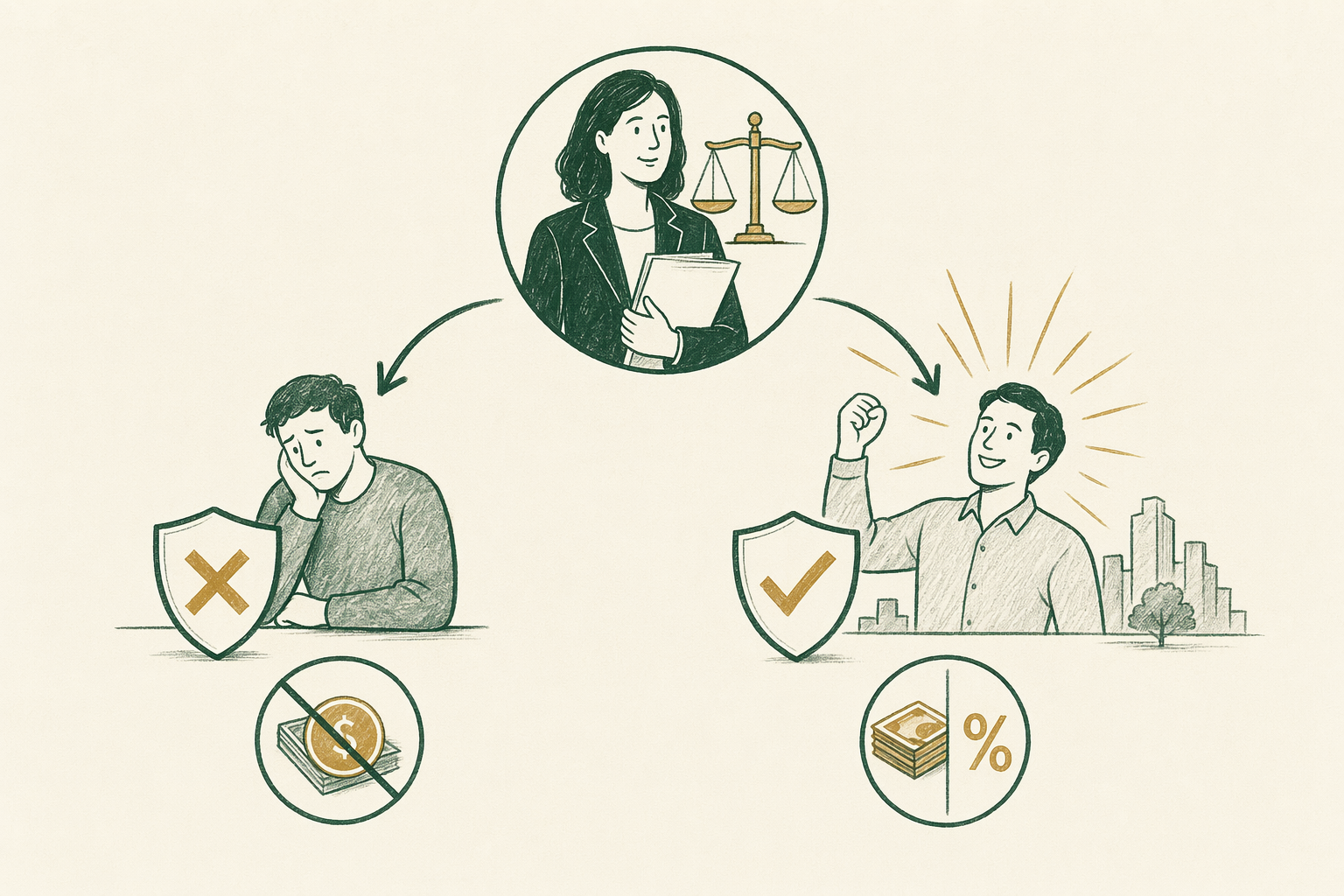
What a contingency fee means
A contingency fee is a payment method where a lawyer is paid only if the case brings in money through a settlement or a court award. A settlement is an agreement to end a case without a trial. A court award is money ordered by a judge or jury. People often call this "no win, no fee."
This payment method is common in some kinds of cases, especially injury cases. It may help people who cannot afford to pay a lawyer up front. But it does not always mean the case will cost nothing. Some expenses may still be charged, depending on the agreement.
Rules about contingency fees vary by state and by case type. Some states limit the percentage a lawyer may charge in certain cases. A licensed attorney can explain what applies to your situation.
Cases where contingency fees are common, and where they may not be
- Often used in personal injury cases, such as a car crash, slip and fall, or other accident where someone may owe you money for harm.
- Sometimes used in wrongful death cases. Wrongful death means a case brought after a person dies because of someone else's actions.
- Less common or not allowed in some family law matters, criminal defense, or immigration cases. Those cases are often billed another way, such as hourly or flat fee.
- Some lawyers may use a mixed fee arrangement. That means part up front and part later, or a lower hourly rate plus a success fee, if state rules allow it.
How the percentage usually works
In a contingency fee case, the lawyer's fee is usually a percentage of the money recovered. The exact percentage varies by state and your situation. A common range is about 25% to 40%. The percentage may be lower if the case settles early and higher if the case goes into a lawsuit or trial.
A lawsuit is a case filed in court. A trial is the formal court hearing where each side presents evidence. More work usually means more risk and more time for the lawyer, so the fee may change at different stages.
Ask for the fee agreement in writing. A fee agreement is the contract that explains how the lawyer will be paid. Read it carefully. If English is hard for you, ask for an interpreter or a translated summary if available. You can also ask the lawyer to explain each part in plain language before you sign.
What to check before you sign a fee agreement
- Ask what percentage the lawyer charges if the case settles before a lawsuit is filed.
- Ask whether the percentage changes if a lawsuit is filed, if the case goes to trial, or if there is an appeal. An appeal is a request for a higher court to review a decision.
- Ask who pays case costs. Case costs are expenses such as court filing fees, medical record fees, police reports, expert witnesses, or translation services.
- Ask whether case costs come out before or after the lawyer's percentage is taken. This can change the amount you receive.
- Ask what happens if there is no recovery. Will you owe any costs, or does the lawyer cover them?
- Ask how often you will get updates, who your main contact person will be, and whether language help is available.
No win, no fee does not always mean no costs
Costs that may still come up
Even when the lawyer's fee depends on the outcome, a case may have separate expenses. These may include getting medical records, paying court filing fees, hiring an investigator, paying for an expert witness, or making copies and mailing documents. An expert witness is a trained professional who gives an opinion in a case, such as a doctor or accident specialist.
Some lawyers pay these costs up front for the client. This is sometimes called advancing costs. Later, if money is recovered, the lawyer may ask to be paid back from the settlement or award. In other cases, the client may need to pay some costs during the case.
You should also ask about liens. A lien is a legal claim on money from a case. For example, a doctor, health insurer, or government program may claim part of a settlement to repay bills they covered. This can affect how much money the client actually receives.
Typical costs
| Type of cost | Typical range |
|---|---|
| Consultationoften free, varies by state and your situation | $0–$200 |
| Contingency fee percentageoften depends on stage of case, varies by state and your situation | 25%–40% |
| Court filing feesmore likely if a lawsuit is filed, varies by court and state | $50–$500+ |
| Medical records and reportsdepends on number of providers and records requested | $20–$500+ |
| Expert witness costsnot needed in every case, can be much higher in complex cases | $500–$10,000+ |
| Translation or interpreter helpsometimes included, sometimes separate, varies by state and your situation | $0–$500+ |
Ranges vary widely by state, city, and the details of your case. Treat these as rough guides, not quotes.
How to protect yourself from surprises
Take your time before signing. Ask for a full copy of the contract and keep it. Look for answers to these basic questions: What fee percentage applies, what costs may be charged, when money is paid out, and who decides whether to settle.
A settle decision means agreeing to end the case for a certain amount. In most cases, the client chooses whether to accept a settlement. The lawyer should advise you, but should not force you.
It is also smart to ask how money will be distributed at the end. A distribution statement is a written summary showing the total recovery, the lawyer's fee, case costs, liens, and the amount left for the client. If anything is unclear, ask for an explanation in plain language.
If you want help finding a lawyer, Legal Bearings offers a free way to get matched with a participating licensed attorney. Legal Bearings is not a law firm and does not give legal advice. It is a matching and marketing service paid a flat fee by participating attorneys. For advice about your specific case, talk with a licensed attorney.
Common questions
Does "no win, no fee" mean I pay nothing at all?
Not always. It usually means the lawyer's fee is owed only if money is recovered. But case costs, such as filing fees or medical record charges, may still apply depending on the contract.
How much do lawyers usually take in a contingency fee case?
A common range is about 25% to 40% of the money recovered, but it varies by state and your situation. The percentage may change if the case settles early or goes to court.
Can a lawyer charge a contingency fee for any kind of case?
No. It is common in personal injury and some other money-damages cases, but it may be limited or not allowed in some family law, criminal, or immigration matters. State rules matter.
What if I lose the case?
You may not owe the lawyer's fee if there is no recovery, but you could still owe some case costs if the agreement says so. Ask this question before you sign.
Can I ask for the contract in simple English or with language help?
Yes. You can ask the lawyer to explain the fee agreement in plain language and to provide interpreter help if available. It is important that you understand the contract before signing.
In plain English: A contingency fee may let you hire a lawyer without paying up front, but you should still ask who pays the costs and get every fee term in writing.