How the U.S. Legal System Works
The U.S. legal system can feel confusing at first. This guide explains the basic parts, common court types, and where a licensed lawyer may help, in clear everyday language.
Start with the big picture
The U.S. legal system is made of rules from different places. The main levels are federal and state. Federal means the national government. State means one of the 50 states. Cities and counties may also have local rules.
A legal problem may fall under federal law, state law, or both. For example, immigration is mostly federal. Divorce and child custody are mostly state matters. Housing, traffic tickets, small business issues, and many crimes are often handled in state or local courts.
This guide is general education, not legal advice. The right steps depend on your state and your facts. If you need advice for your own case, talk with a licensed attorney. If you want help finding one, you can use our free matching service.
Federal law and state law
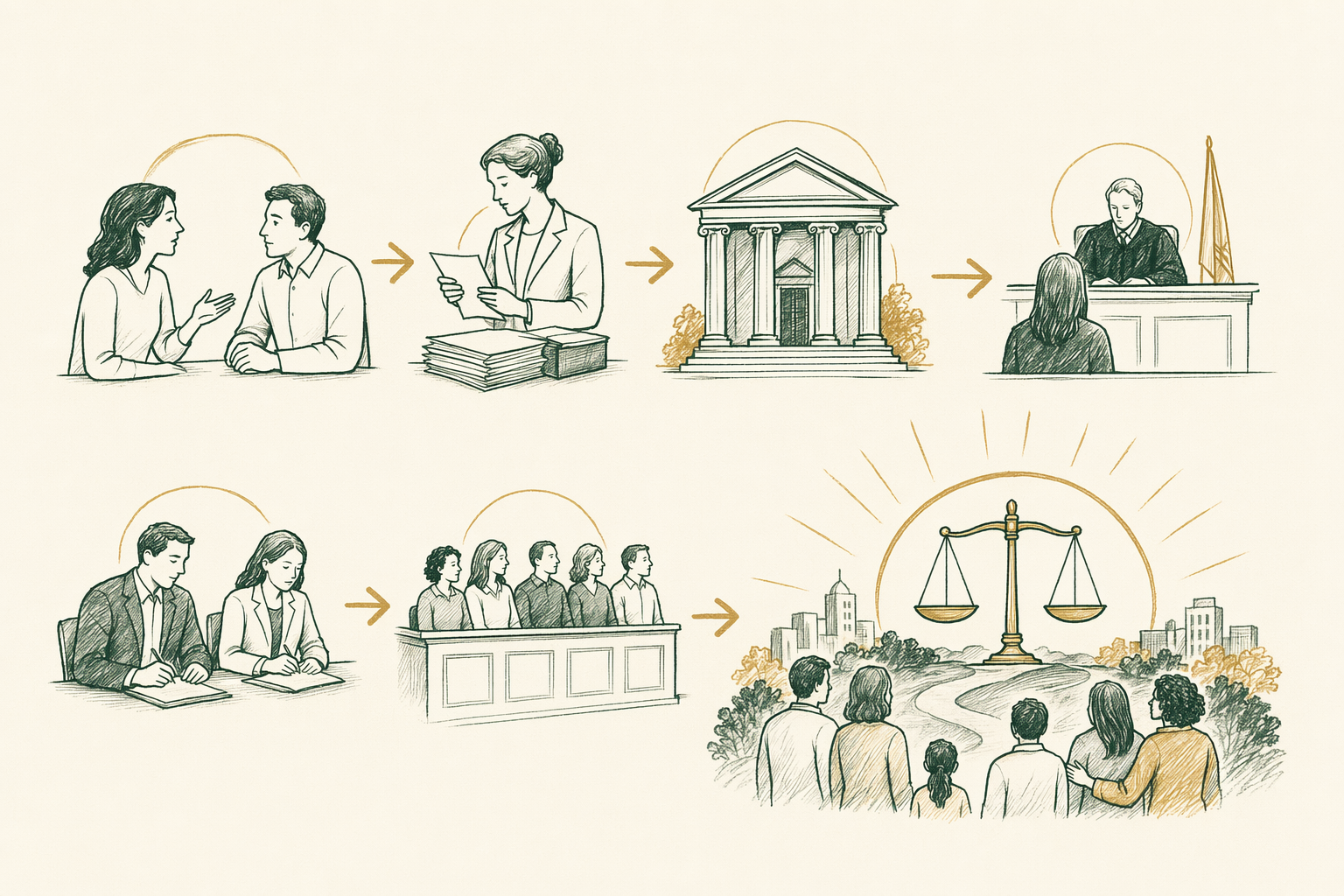
A law is a rule that governments make and enforce. Federal laws apply across the country. State laws apply inside one state. Sometimes they are similar. Sometimes they are very different.
Federal courts often handle issues like immigration, bankruptcy, taxes, federal benefits, and crimes that involve federal agencies or cross state lines. State courts often handle family law, landlord-tenant disputes, probate, many injuries, contracts, traffic cases, and most criminal charges.
This matters because the court, forms, deadlines, and possible results may change based on which law applies. Two people with similar problems in different states may have different rights and different deadlines.
If your issue touches immigration or your status in the U.S., it may help to start with an attorney who knows that area. You can read more at immigration services. If your issue involves marriage, custody, support, or protection orders, family law services may be relevant.
Civil cases and criminal cases
Most legal matters fit into one of two groups, civil or criminal. A civil case is a dispute between people, businesses, or sometimes a government agency. A criminal case is when the government says a person broke a criminal law.
In a civil case, one side usually asks for money, property, a court order, or some other fix. Examples include divorce, custody, eviction, unpaid debt, workplace disputes, and injury claims. The person who starts a civil case is often called the plaintiff, which means the party asking the court for help. The other side is often the defendant, which means the party responding to the claim.
In a criminal case, the government brings the charges. A charge is a formal accusation that someone broke the law. Possible penalties may include fines, probation, jail, prison, or other conditions. If you are arrested or charged with a crime, try to speak with a licensed criminal defense lawyer as soon as possible.
Some situations can involve both kinds of cases. For example, a fight may lead to a criminal charge by the state and also a civil lawsuit for injuries. Immigration consequences may also come from some criminal cases, so getting advice quickly can be very important.
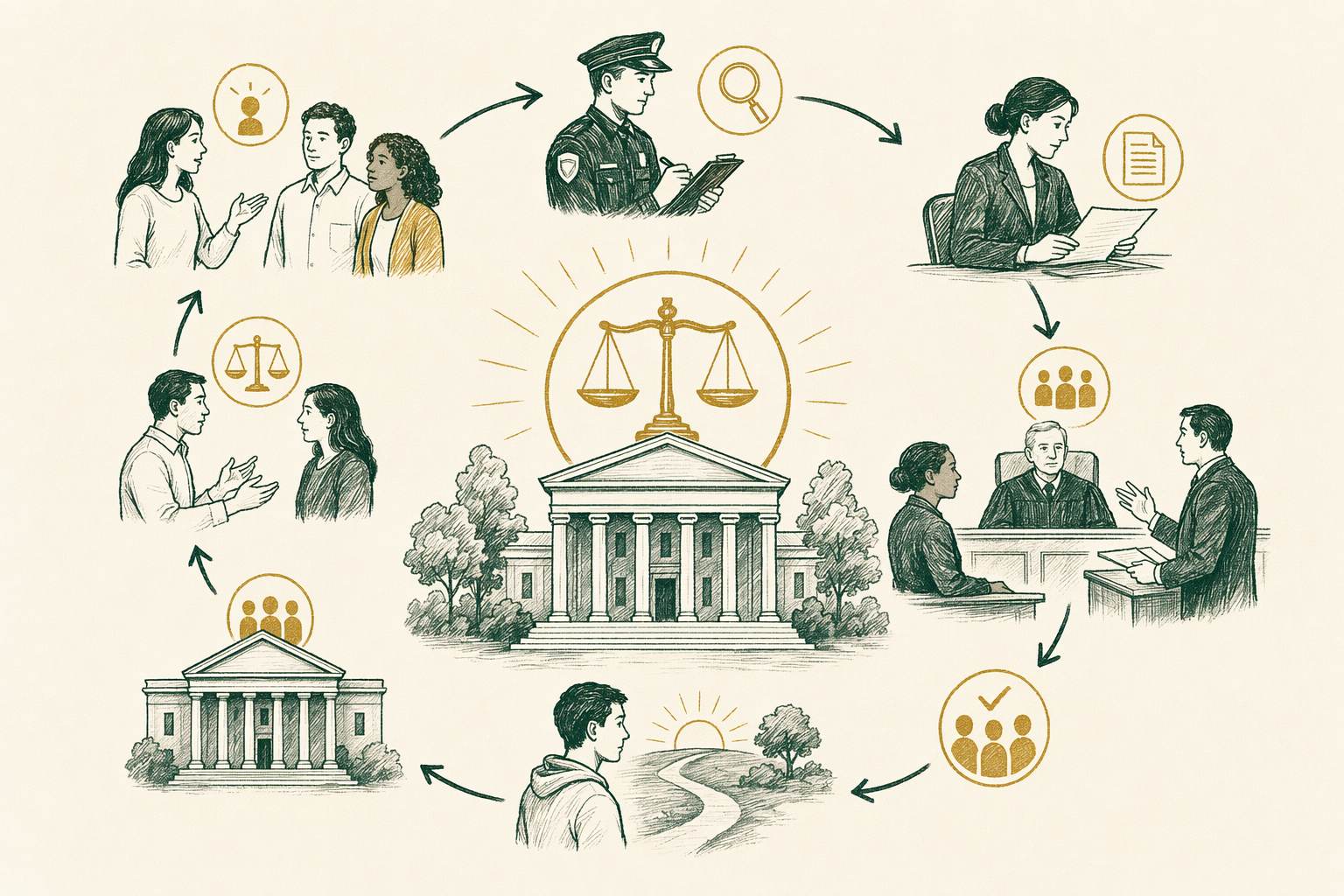
How a case often moves through the system
- A problem happens, or you receive a notice, ticket, bill, court paper, or government letter.
- You try to understand what kind of issue it is, civil, criminal, federal, state, or local.
- You gather papers, names, dates, photos, messages, contracts, receipts, and any notices. These are your records.
- You check for a deadline, which is the last day to file, respond, appeal, or appear. Missing a deadline can hurt your rights.
- You may file papers with a court or agency, or you may need to answer papers filed against you.
- The other side gets official notice. This is often called service, which means formal delivery of legal papers.
- There may be hearings, settlement talks, mediation, or exchange of evidence. Evidence means the information used to prove facts.
- A judge, jury, or agency decision-maker makes a decision, or the sides reach an agreement.
- If allowed, a party may file an appeal, which is a request for a higher court to review a lower court decision. Appeals have strict rules and short deadlines.
Who does what in court
A judge is the official who runs the courtroom and makes legal decisions. In some cases, a jury decides key facts. A jury is a group of community members chosen to hear evidence and reach a decision. Many cases do not have a jury.
A clerk is a court employee who handles filing, scheduling, and records. Clerks can often explain basic court procedures, but they cannot tell you what choice is best for your case. That would be legal advice.
A lawyer or attorney is a person licensed by a state to give legal advice and represent clients. Lawyers may explain your rights, prepare filings, speak for you in court, negotiate with the other side, and help avoid mistakes.
You may also hear about a prosecutor, who is the government lawyer in a criminal case, and a public defender, who is a lawyer appointed for some people who cannot afford a criminal defense lawyer. In immigration court, a public defender is usually not provided, because immigration cases are civil, not criminal.
Interpreters may be available in many courts if you do not feel comfortable in English. An interpreter translates spoken words from one language to another. Ask the court as early as possible if you need one. Do not assume one will be there automatically.
Common courts and agencies you may hear about
- State trial court, the main court where many civil and criminal cases begin
- Federal district court, a federal trial court for many federal disputes
- Family court, often handles divorce, child custody, child support, and protection orders, though names vary by state
- Housing or landlord-tenant court, handles eviction and rental disputes in some places
- Small claims court, a simpler court for lower-dollar disputes, with dollar limits that vary by state
- Probate court, often handles wills, estates, and guardianship matters
- Bankruptcy court, a federal court for people or businesses asking for debt relief
- Immigration court, an administrative court for many deportation and immigration hearings
- Administrative agency, a government office that decides some disputes outside regular court first, such as benefits or licensing matters
Deadlines can change everything
One of the most important parts of any legal problem is the deadline. Courts and agencies often have strict time limits. A time limit may apply to filing a lawsuit, answering a complaint, asking for a hearing, sending evidence, or appealing a decision.
You may also hear the term statute of limitations. This means the deadline to start a case. It varies by state, by issue, and sometimes by the kind of harm involved. For example, injury claims, contract disputes, and family matters may each have different rules.
Some deadlines are very short. A court date next week, a removal hearing notice in immigration court, or an eviction paper may need fast attention. Even if you think a paper is wrong, do not ignore it. Ignoring legal papers can lead to a default judgment, a missed hearing, or other serious problems. A default judgment means the court may decide against you because you did not respond.
If you receive any legal notice, write down the date you got it. Keep the envelope, take a photo, and store copies in one folder. If you need help fast, try to speak with a licensed attorney right away. Our free matching service may help you connect with one in your area.
Evidence, records, and telling your story clearly
Good records often matter as much as the law. Evidence may include contracts, leases, marriage certificates, pay stubs, tax returns, medical bills, police reports, photos, videos, emails, text messages, and witness names. A witness is a person with first-hand information about what happened.
Try to put your records in date order. Make a timeline with names, places, and what happened. If a document is not in English, ask whether the court or agency requires a certified translation. A certified translation is a translation with a statement that it is complete and accurate.
Be careful with originals. Keep the original documents in a safe place. Bring copies when possible. If you file something with the court, keep proof of filing. If you mail something, keep proof that it was sent.
If your case involves family or immigration issues, records about identity, travel, children, address history, and prior court orders may be especially important. You can learn more about possible help in family law services or immigration services.
Watch for notario scams
What legal help may cost, and free help options
Many people worry that a lawyer will cost too much. Costs vary by state and your situation. Some lawyers offer a free first meeting. Others charge a consultation fee. Some charge a flat fee for a specific task, which means one set price for that work. Others bill by the hour.
For example, a simple document review may cost much less than a full court case. Family cases, deportation defense, and contested lawsuits can cost more because they take more time. Court filing fees are separate from attorney fees. In some cases, fee waivers may be available if you have a low income. A fee waiver is court permission to file without paying some court costs.
You may also find legal aid, which is free or low-cost legal help for people who qualify. Law school clinics, nonprofit groups, and court self-help centers may also offer general information or limited help.
If you want to compare options, ask lawyers these questions: What does the fee cover. What does it not cover. Will there be court costs or interpreter costs. Who will work on my case. How will we communicate. Do you have experience with this kind of issue.
Legal Bearings is not a law firm and does not give legal advice. It is free for readers to use. If you want, you can learn how matching works or use the free matching service to hear from a participating licensed attorney.
Ways to protect yourself from mistakes and scams
- Do not ignore court papers, government letters, or hearing notices
- Ask for a written fee agreement before hiring a lawyer
- Make sure the lawyer is licensed in the state handling your matter
- Ask whether you can get an interpreter for meetings and court
- Never sign blank forms or papers you do not understand
- Keep copies of everything you send or receive
- Be honest with your lawyer and the court, even about facts that feel embarrassing
- If someone promises a guaranteed result, be cautious. Legal outcomes are rarely certain
- Use trusted sources for general education, then get advice from a licensed attorney about your own case
Common questions
Do all legal problems go to court?
No. Some disputes are resolved through negotiation, mediation, or an administrative agency. Mediation is a meeting where a neutral person helps both sides try to reach an agreement. Still, many matters have deadlines or court options, so it is wise to learn the rules early.
What if I do not speak English well?
You can ask the court or agency whether an interpreter is available. You can also ask a lawyer what language help their office offers. Try not to rely only on friends or family for important legal translation, because mistakes can happen.
Can I represent myself?
Sometimes, yes. This is often called appearing "pro se," which means without a lawyer. But some cases are more complex than they first seem, especially immigration, family, and criminal matters. A licensed attorney may help you understand risks, deadlines, and options.
How do I know whether my issue is federal or state?
It depends on the kind of problem. Immigration, bankruptcy, and many tax matters are often federal. Divorce, custody, eviction, traffic, and many contract disputes are often state or local. A licensed attorney can tell you which rules likely apply to your specific facts.
Is Legal Bearings a law firm?
No. Legal Bearings is not a law firm and does not give legal advice. It is a free matching and marketing service for readers, paid a flat fee by participating attorneys. If you want legal advice about your own case, you should speak with a licensed attorney.
In plain English: If you are confused by a legal problem in the U.S., start by finding out what kind of case it is, protect your deadlines and records, and get advice from a licensed attorney if you can.