Repair-and-Deduct and Withholding Rent: The Basics
If your landlord will not fix serious problems, you may have options in some states. This guide explains, in plain language, what repair-and-deduct and withholding rent can mean, and why local legal help matters before you act.
What these terms mean
Some renters hear that they can stop paying rent or pay for repairs themselves and take the cost out of rent. Sometimes that is true. Sometimes it is not. The rules vary a lot by state and city.
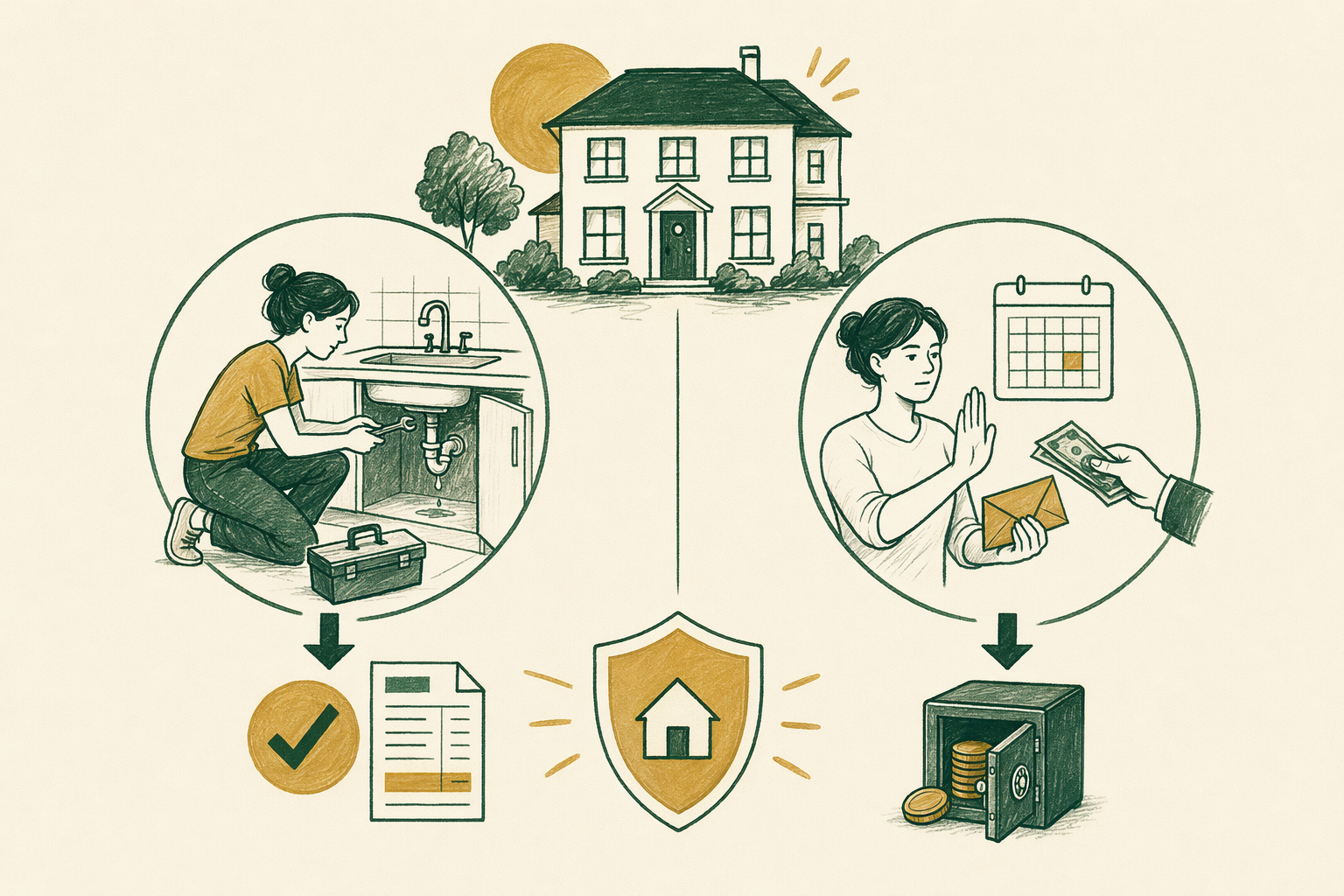
Repair-and-deduct means a renter pays for a needed repair, then subtracts that cost from the rent. Withholding rent means the renter does not pay some or all rent because the home has serious problems. These are legal rules in some places, but they usually have strict steps and limits.
A landlord is the owner or manager who rents the home to you. A lease is the rental agreement. A habitability rule means the home must be safe and fit to live in. Habitability often covers things like heat, water, electricity, working plumbing, and protection from serious health or safety dangers.
This page is general education, not legal advice. Before you withhold rent or deduct repair costs, it is smart to speak with a licensed attorney in your state. You can also learn more about housing help at services for housing issues.
When these options may come up
- No heat, water, electricity, or working toilet
- Serious leaks, mold, pests, or broken windows that affect health or safety
- Unsafe wiring, broken locks, or other danger in the home
- A landlord who got notice of the problem but did not fix it in a reasonable time
- A problem that is not your fault, or the fault of your guests
Why you should be careful before stopping rent
Many renters think, "If my home is bad, I can just stop paying." That can be risky. In some places, withholding rent is allowed only if you follow exact rules. If you do not, the landlord may say you are behind on rent and try to evict you. Eviction means a court process to remove a tenant from the home.
Repair-and-deduct can also be risky. Some states allow it only for repairs up to a certain dollar amount. Some allow it only one or two times in a year. Some require licensed workers. Some do not allow it at all.
There may also be special local rules. A city may require the landlord to get notice in writing. It may give a certain number of days to fix the problem. It may require you to keep proof, such as photos, receipts, inspection reports, and copies of messages.
If you are unsure, try not to guess. A short talk with a licensed attorney or local tenant group may help you avoid a bigger problem. If you want help finding a lawyer, you can use our free matching service to connect with a licensed attorney who may be able to help.
Common steps renters are often told to take first
- Read your lease and look for repair, notice, and payment rules.
- Document the problem. Take dated photos and videos. Save texts, emails, letters, and bills.
- Tell the landlord about the problem in writing. Be clear, polite, and specific.
- Ask for repairs within a reasonable time. For urgent safety issues, ask for fast action.
- Keep paying rent on time unless a licensed attorney tells you your state may allow another step.
- If the landlord does not act, ask your city or county housing inspector about a complaint or inspection.
- Before you repair-and-deduct or withhold rent, talk to a licensed attorney in your state about your specific facts.
Do not ignore notices
What proof can help protect you
Good records matter. If you later need to explain what happened, proof can help show that the problem was serious and that you gave the landlord a fair chance to fix it.
Useful proof may include dated photos, videos, repair estimates, receipts, witness names, inspection reports, and copies of written notices. Keep a simple timeline. Write down when the problem started, when you contacted the landlord, and what happened next.
If English is not your first language, it may help to keep notes in your own language too. Save the original message and any translation. If a friend helped you talk to the landlord, write down that person's name and what was said.
You may also want to ask for an interpreter when speaking with a lawyer or local agency. Many lawyers offer language help or can arrange it. Cost and availability vary by state and your situation.
Questions to ask a lawyer or housing helper
- Does my state or city allow repair-and-deduct, withholding rent, or both?
- What kinds of problems count as serious enough?
- Do I need to give written notice, and what should it say?
- How long does the landlord get to fix the problem?
- Do I need an inspection report or other official proof?
- If I pay for repairs, is there a limit on how much I can deduct?
- Could the landlord try to evict me if I do this?
- Are there safer options, like breaking the lease, asking for repairs in court, or reporting code violations?
Common questions
Can I stop paying rent if my apartment has bad problems?
Maybe, but it depends on your state and city. Withholding rent is allowed only in some places and often has strict rules. If you do it the wrong way, the landlord may claim you owe rent and start an eviction case. A licensed attorney can advise you about your specific situation.
What kinds of problems usually count as serious?
Problems that affect health or safety often matter most. Examples may include no heat, no water, major leaks, unsafe wiring, pests, or a broken toilet. Small cosmetic problems usually do not qualify. The exact rule varies by state and your situation.
Can I hire someone to fix the problem and take the cost out of rent?
Sometimes, but only in some states and usually only after specific steps. You may need to give written notice first, wait a certain amount of time, use a qualified repair person, and stay within a dollar limit. Keep receipts and records.
What if I am worried about cost or language barriers?
Many lawyers offer a low-cost or free first consultation, but fees vary by state and your situation. You can ask whether the office has an interpreter or bilingual staff. If you want, Legal Bearings offers a free way to get matched with a licensed attorney. Legal Bearings is not a law firm and does not give legal advice.
Can my landlord evict me for complaining about repairs?
Retaliation, which means punishing a tenant for asserting legal rights, may be illegal in many places. But landlords may still try to give notices or file cases. Save your records and get legal advice quickly if you receive court papers or an eviction notice.
In plain English: Do not stop paying rent or deduct repair costs until you learn your local rules, because the wrong step could put your housing at risk, and our free lawyer-matching service may help you find licensed legal help.